

1. No turning left in this situation.
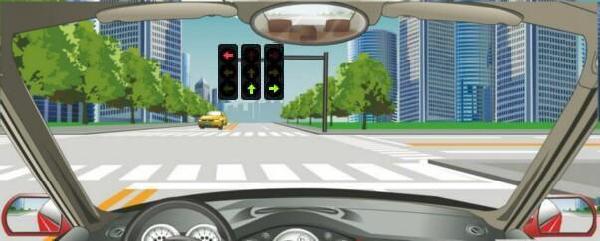
A. Right
B. Wrong
Answer: A
2. This sign indicates obstacle ahead and bypassing from left side.
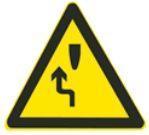
A. Right
B. Wrong
Answer: A
3. Which is subject to a 6-point penalty?
A. use other vehicles vehicle license
B. run 50% faster than the prescribed speed limit
C. illegally occupy emergency lane
D. drive after drinking
Answer: C
4. A motorized vehicle driver who drives the vehicle which permission is different is subject to a ________.
A. 2-point penalty
B. 3-point penalty
C. 6-point penalty
D. 12-point penalty
Answer: D
5. As the road is wet and slippery after rain, brake application when driving can easily ___.
A. Cause sideways slide and traffic accident
B. Cause collision due to poor visibility
C. Be ignored by the drivers of other vehicles
D. Cause engine kill
Answer: A
6. Whats the meaning of the yellow broken line on curbstone?
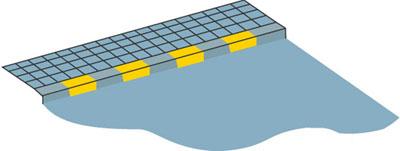
A. no temporary stopping
B. no taking and dropping people
C. no loading and unloading cargos
D. no long stopping
Answer: D
7. A vehicle is not allowed to reverse on the ramp of an expressway.
A. Right
B. Wrong
Answer: A
8. How to run when seeing this traffic light at level crossing?
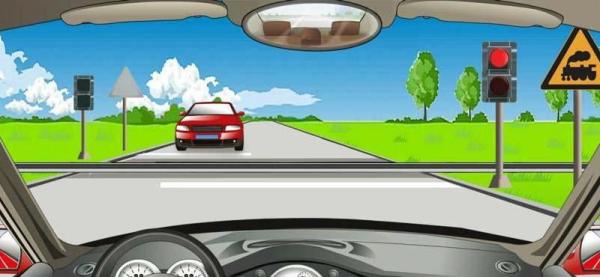
A. pass before the train comes
B. no exceeding the stop line
C. observe and pass slowly
D. speed up and pass without changing gear
Answer: B
9. What does this sign mean?
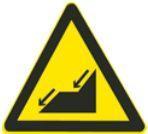
A. Reminding continuous two or more up slopes ahead
B. Reminding the steep uphill road ahead
C. Reminding the steep downhill road ahead
D. Reminding continuous two or more down slopes ahead
Answer: D
10. The main impact of mountain roads on safe driving is _______.
A. The traffic conditions are boring
B. The slopes are long, the curves are sharp and visibility range is shorter.
C. The traffic flow is heavy
D. The road signs are fewer
Answer: B
11. What will be subject to if driving the vehicle reached write-off standard?
A. a 20~200 yuan fine
B. being held for criminal liabilities
C. being detained for less than 15 days
D. being revoked the driving license
Answer: D
12. When encountering an overflowing bridge, the driver should look at the situation, and passes through slowly before he makes sure that it is safe to do so.
A. Right
B. Wrong
Answer: A
13. Which of the following vehicle in front in the same lane is not allowed to be overtaken?
A. large bus or large truck
B. fire engine on duty
C. public bus
D. taxis
Answer: B
14. This set of the hand signals of the traffic police indicates that the vehicles should ___ .
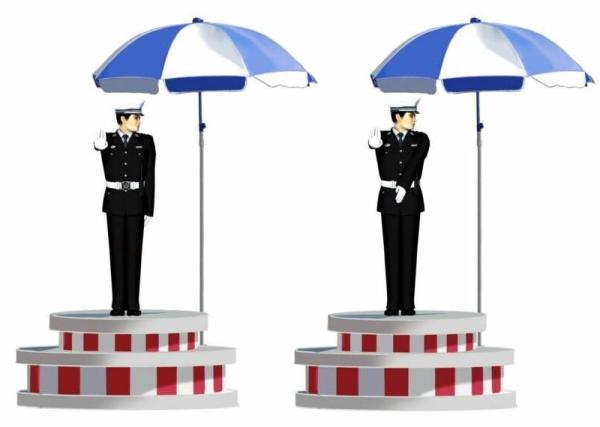
A. wait to turn left
B. pull over
C. reduce speed and pass slowly
D. turn left
Answer: D
15. When the traffic conditions at an intersection are complicated, the driver should be patiently waiting instead of taking chance.
A. Right
B. Wrong
Answer: A
16. What is the max speed on the expressway when the visibility is lower than 200m?
A. less than 100km/hr
B. less than 90km/hr
C. less than 60km/hr
D. less than 80km/hr
Answer: C
17. Traffic Police can detain the vehicle according to law if it uses other vehicles license plate and vehicle license.
A. Right
B. Wrong
Answer: A
18. When driving a vehicle through an inundated road with non-motorized vehicles on both sides, the driver should _________.
A. Reduce speed and go slowly
B. Go forward normally
C. Speed up and pass
D. Continuously honk
Answer: A
19. Whats the meaning of this sign?
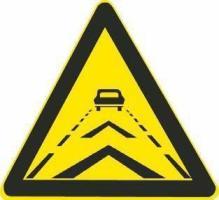
A. section narrows on both sides
B. section for speed test
C. section for ascertaining the distance between the vehicles
D. pay attentions to keeping distance
Answer: D
20. If the registration paper, license plate and vehicle license of a motorized vehicle are lost or destroyed, the vehicle owner should apply for reissuing or replacing them to the vehicle management station at the residential place.
A. Right
B. Wrong
Answer: B