

1. What is the most frequent problem for driving on a muddy road?
A. High resistance force
B. Sideways slide
C. The motor vehicle bumps
D. Steering failure
Answer: B
2. When following other vehicles on a foggy day, what should the driver do?
A. Maintain a large safety distance
B. Turn on the high-beam
C. Turn on the low-bea
D. Sound the horn in due time
Answer: A
3. Under such circumstances, motor vehicle drivers should bypass on the left quickly.
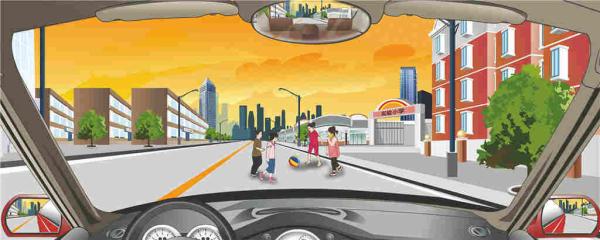
A. Right
B. Wrong
Answer: B
4. How should lamps be used by the motor vehicle driver who follows a vehicle on a road section at night where he street light condition is good?
A. Turn off the headlamp
B. Use high-beam
C. Turn off all lamps
D. Use low-beam
Answer: D
5. Whats the meaning of the double white solid lines in far front of the intersection?
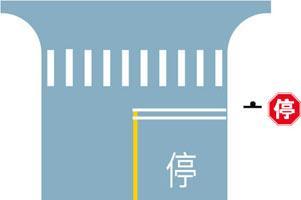
A. Stopping and yield line
B. Slowdown and yield line
C. Left-turn waiting line
D. Waiting to run line
Answer: A
6. When running in a high speed, if only use the front brake, the driver can be easily thrown out due to the inertia.
A. Right
B. Wrong
Answer: A
7. There is a risk of overtaking when driving a motor vehicle approaches the top of the slope on a mountainous road, because _____.
A. When approaching the top of the slope, the line of sight is blocked and it is impossible to observe the traffic situation.
B. When approaching the top of the slope, the line of sight is blocked. It is impossible to observe whether there are obstacles behind the top of the slope.
C. The speed is slower when approaching the top of the slope.
D. When approaching the top of the slope, the line of sight is blocked and the road direction behind the top of the slope can not be observed.
Answer: ABD
8. When a motorcycle goes down a long slope, it should run at a lower gear and fully use the engine to brake.
A. Right
B. Wrong
Answer: A
9. When rescuers enter the scene to rescue the wounded after harmful gas leakage caused by traffic accidents, they must wear air respirators or cover their mouth and nose with wet towels.
A. Right
B. Wrong
Answer: A
10. What is the meaning of this sign?
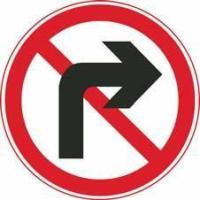
A. No entering the intersection
B. No right turn
C. No changing lane
D. No U turn
Answer: B
11. The article that cannot be used to stop bleeding by dressing is _________.
A. Bondage
B. Sling
C. Tourniquet
D. Hemp rope
Answer: D
12. Under such circumstances, motor vehicle drivers should stop and yield
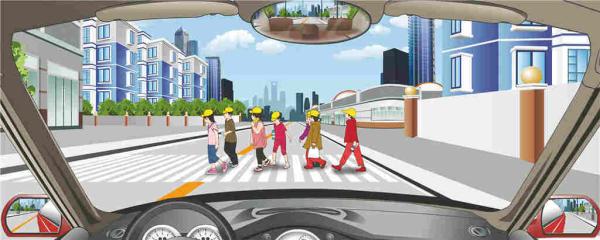
A. Right
B. Wrong
Answer: A
13. Which of the following is an inflammable solid material?
A. Matches
B. Fireworks
C. Calcium carbide
D. Explosives
Answer: A
14. When a tire blowout on the road, the driver should control the direction of the vehicle and use emergency braking to bring the motorcycle swiftly to a stop.
A. Right
B. Wrong
Answer: B
15. Matches, sulfur and red phosphorus are _________.
A. Explosives
B. Inflammable solid materials
C. Self-igniting articles
D. Oxidizing materials
Answer: B
16. According to regulations, motorcycle driver and passenger should wear helmets.
A. Right
B. Wrong
Answer: A
17. According to regulations, motorcycle driver should wear _______.
A. Glasses
B. A special safety helmet
C. Gloves
D. Safety kneepads
Answer: B
18. While driving a motorcycle, it is permitted to keep one hand on the handlebar but not allowed two hands leave handle bars at the same time.
A. Right
B. Wrong
Answer: B
19. Violent wind can cause a sideways swerve to a running vehicle.
A. Right
B. Wrong
Answer: A
20. What is the meaning of this sign?
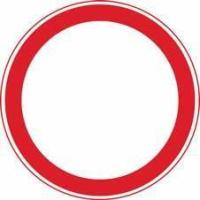
A. No passing
B. Driving at reduced speed
C. Time limit for entering
D. No entering
Answer: A