

1. How to do when the vehicle breaks down on road and needs to stop to solve the problem?
A. stop in the middle of the road
B. stop the vehicle where will not interfere the traffic
C. turn on the low beam lights or fog lights
D. stop on the spot to solve the problem
Answer: B
2. It lights to remind that engine coolant may be insufficient.

A. Right
B. Wrong
Answer: A
3. You may speed up to go through the intersection in this case.Answer£o
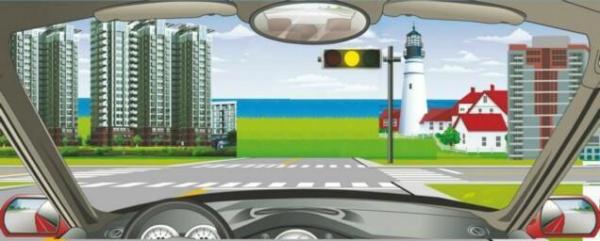
A. Right
B. Wrong
Answer: B
4. What does the traffic light mean?
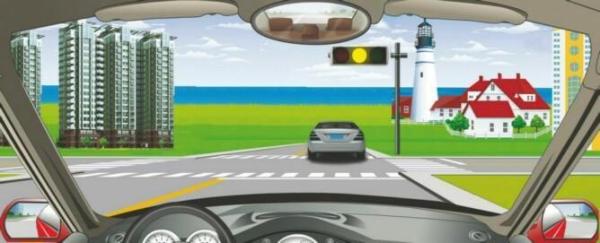
A. no right turn
B. intersection warning
C. going straight is allowed
D. speed up and pass
Answer: B
5. When a motorized vehicle goes at night through an intersection that has no traffic lights, the driver should not use the high and low beam lights alternately.
A. Right
B. Wrong
Answer: B
6. The light switch is in this position, front fog lights turn on

A. Right
B. Wrong
Answer: A
7. What should a motorized vehicle has while running on the road?
A. a label of keeping distance
B. a label of reminding danger
C. a label of inspection
D. a label of product qualification
Answer: C
8. No turning left in this situation.
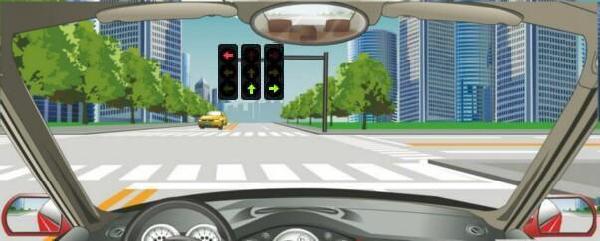
A. Right
B. Wrong
Answer: A
9. When driving during the period of probation, the driver should paste or hang _____ on the rear part of the vehicle
A. a mark of avoiding with care
B. a mark of paying attention of beginner
C. a uniform probation mark
D. a mark of paying attention of vehicle distance
Answer: C
10. May directly turn left in front of the vehicle coming opposite when encountering this traffic light.
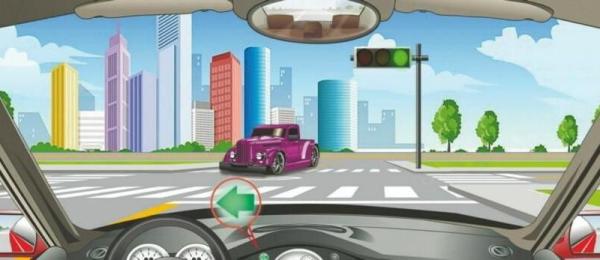
A. Right
B. Wrong
Answer: B
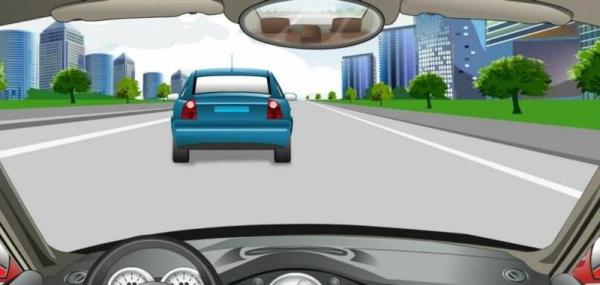
11. You can overtake from right side in this case.
A. Right
B. Wrong
Answer: B
12. Which of the following vehicle in front in the same lane is not allowed to be overtaken?
A. large bus or large truck
B. fire engine on duty
C. public bus
D. taxis
Answer: B
13. Whats the meaning of this guide arrow?

A. changing to left lane
B. going straight ahead
C. left turn ahead
D. right turn ahead
Answer: C
14. This sign reminds strong side wind ahead.

A. Right
B. Wrong
Answer: A
15. If a motorized vehicle has reached the states mandatory write-off standard, its registration will not be handled.
A. Right
B. Wrong
Answer: A
16. When a vehicle goes downhill, it may fully use the neutral gear and slide.
A. Right
B. Wrong
Answer: B
17. When a vehicle overtakes the bike riders going in the same direction, the rational way to deal with is to ________.
A. Continuously honk to remind them to yield
B. Continuously honk and speed up to overtake
C. Yield to the bike riders
D. Observe them, reduce speed and go slowly, while keeping a sufficient safe distance.
Answer: D
18. If a motorized vehicle driver allows his vehicle to be driven by a person whose driving license has been revoked, the traffic police will detain the driving license.
A. Right
B. Wrong
Answer: A
19. The validity of the driving license which is initially applied for is ______
A. 3 years
B. 5 years
C. 6 years
D. 12 years
Answer: C
20. When driving in thick or extremely thick fog, the driver should ____ due to low visibility.
A. Turn on the head light and keep driving
B. Turn on the contour light, fog light and drive along the right side
C. Turn on the hazard lights and keep driving
D. Turn on the hazard lights, fog light, and stop at a safe place
Answer: D