

1. Whats the meaning of this sign?
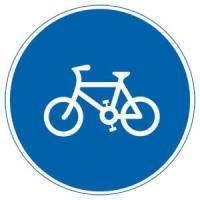
A. electric bicycles may go
B. parking space for non-motorized vehicles
C. parking area for non-motorized vehicles
D. non-motorized vehicles may go
Answer: D
2. How to do when the vehicle breaks down on road and needs to stop to solve the problem?
A. stop in the middle of the road
B. stop the vehicle where will not interfere the traffic
C. turn on the low beam lights or fog lights
D. stop on the spot to solve the problem
Answer: B
3. When reaching an intersection, the driver should _____ if a turning vehicle cuts in.
A. Stop to evade
B. Maintain the normal speed
C. Speed up and pass ahead of it
D. Honk and pass ahead of it
Answer: A
4. It lights when turning on the right-turn signal.

A. Right
B. Wrong
Answer: B
5. Whats the meaning of the double white solid lines in far front of the intersection?
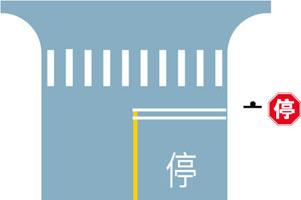
A. stopping and yield line
B. slowdown and yield line
C. left-turn waiting line
D. waiting to run line
Answer: A
6. Driving a motorized vehicle in the city road which has no central line, the maximum speed can not exceed 50 kilometers per hour.
A. Right
B. Wrong
Answer: B
7. What is the max speed when in or out of the lane for non-motorized vehicles?
A. 40km/hr
B. 50km/hr
C. 60km/hr
D. 30km/hr
Answer: D
8. It lights to remind that engine needs to add oil.

A. Right
B. Wrong
Answer: B
9. What is the max speed on this expressway?
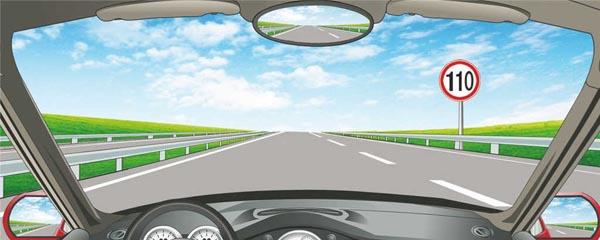
A. 110km/hr
B. 120km/hr
C. 90km/hr
D. 100km/hr
Answer: A
10. Whats the meaning of this sign?
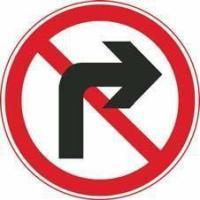
A. no entering the intersection
B. no right turn
C. no changing lane
D. no U turn
Answer: B
11. Whats the meaning of this sign?
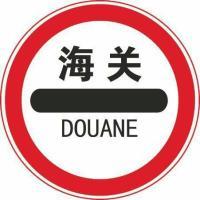
A. national boundaries
B. border defense
C. boundaries
D. customs
Answer: D
12. It lights to indicate that ______

A. the tail fog light is turned on
B. the low beam light is turned on
C. the high beam light is turned on
D. the head fog light is turned on
Answer: D
13. Whats the meaning of this sign?
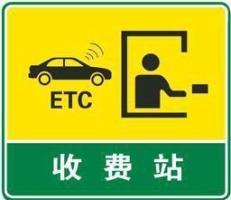
A. expressway toll station
B. expressway checkpoint
C. toll station with ETC
D. expressway card-getting point
Answer: C
14. Whats the meaning of this sign?
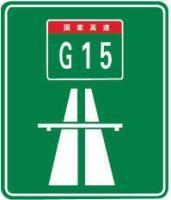
A. expressway exit
B. expressway beginning
C. expressway entry
D. expressway ending
Answer: B
15. Driving this motorized vehicle on road is not an illegal act.
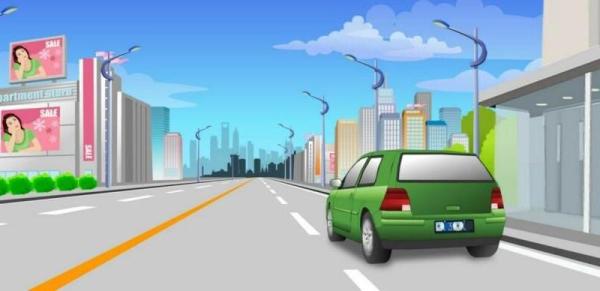
A. Right
B. Wrong
Answer: B
16. If a vehicle has the right of way at an intersection but encounters a vehicle cutting in, the driver should _________.
A. Rush to pass
B. Speed up in advance and pass
C. Reduce speed and evade, or stop to yield when necessary
D. Go forward at the normal speed according to the right of way and refuses to evade
Answer: C
17. The main feature of pedestrians participating in road traffic is that _________.
A. They move slowly
B. They like to get together and look on
C. They walk around at will and can easily change directions
D. All the above
Answer: C
18. Which lane to choose when turning left in this intersection?
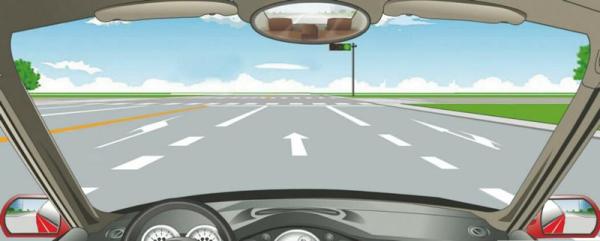
A. the far left lane
B. middle lane
C. not need to change lane
D. the far right lane
Answer: A
19. It is not safe for a woman driver to wear high heels to drive a vehicle.
A. Right
B. Wrong
Answer: A
20. A motorized vehicle driver who uses falsified and altered license plate is subject to a ________.
A. 2-point penalty
B. 3-point penalty
C. 12-point penalty
D. 6-point penalty
Answer: C