

1. If the driver finds there is no vehicle following, he can change lanes without turning on the turn signal.
A. Right
B. Wrong
Answer: B
2. If a motorized vehicle driver escapes after causing a major traffic accident which has caused human death, the driver is subject to a prison term of ________.
A. more than 7 years
B. less than 3 years
C. 3 ~ 7 years
D. more than 10 years
Answer: C
3. How far should be the distance from the vehicle in front at the speed of more than 100 km/hr when driving a small passenger vehicle on the expressway?
A. more than 50 meters
B. more than 60 meters
C. more than 100 meters
D. more than 80 meters
Answer: C
4. If a person escapes after causing a traffic accident and constitutes a crime, his driving license should be revoked and he is banned _____ from re-obtaining a driving license.
A. within 5 years
B. within 10 years
C. within 20 years
D. for lifetime
Answer: D
5. The child in the motorized vehicle does not need to buckle up when the vehicle runs.
A. Right
B. Wrong
Answer: B
6. Whats the meaning of this sign?
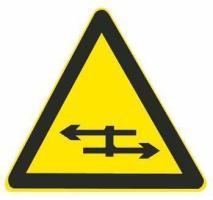
A. flat intersection
B. flat ring intersection
C. attention to interactive intersection
D. attention to separate intersection
Answer: D
7. What mark is the inclined yellow and black lines?
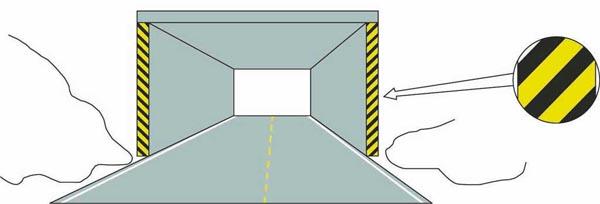
A. entity mark
B. protrusions mark
C. three-dimensional mark
D. deceleration mark
Answer: C
8. Whats the meaning of this sign?
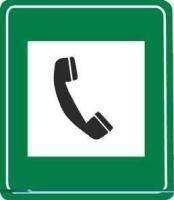
A. expressway public phone
B. expressway police phone
C. expressway emergency phone
D. expressway rescue phone
Answer: C
9. No running into the middle lane when encountering this situation.
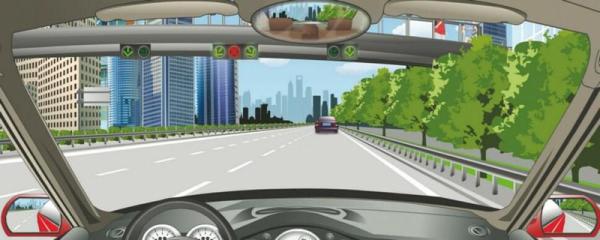
A. Right
B. Wrong
Answer: A
10. When a vehicle goes uphill, the driver should observe the road conditions and the length of the slope in advance and shift to the lower gear in a timely manner to ensure the vehicle has sufficient power.
A. Right
B. Wrong
Answer: A
11. Whats the meaning of this sign?

A. tunnel entry
B. observatory
C. mind side wind
D. wind vane
Answer: C
12. A person who has the expired driving license can drive motorized vehicle within 1 year.
A. Right
B. Wrong
Answer: B
13. How to use lights when entering the speed-reducing lane?
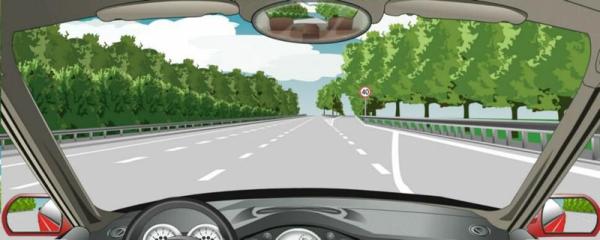
A. turn on the hazard lights
B. turn on the head light
C. turn on the left-turn signal
D. turn on the right-turn signal
Answer: D
14. What to do besides controlling speed less than 20km/hr when the visibility is lower than 50 meters on the expressway?
A. run in the emergency lane
B. leave the expressway as soon as possible
C. stop by the roadside as soon as possible
D. run slowly in the road shoulder
Answer: B
15. It lights to indicate that engine oil may be insufficient.

A. Right
B. Wrong
Answer: A
16. Whats the meaning of this sign?
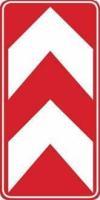
A. Passing on both sides
B. Passing is prohibited
C. Passing by the left side
D. Passing by the right side
Answer: A
17. When a vehicle changes lane, the driver should turn on the turn signal and rapidly enter the new lane.
A. Right
B. Wrong
Answer: B
18. Whats the meaning of the yellow broken line on curbstone?
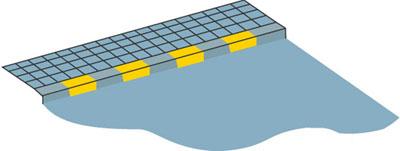
A. no temporary stopping
B. no taking and dropping people
C. no loading and unloading cargos
D. no long stopping
Answer: D
19. Whats the meaning of this sign?
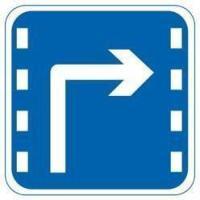
A. right-turn lane
B. U turn lane
C. left-turn lane
D. lanes for going in different directions
Answer: A
20. It lights to indicate that luggage compartment is open.

A. Right
B. Wrong
Answer: B