

1. When driving on an expressway, which of the following statements is not correct?
A. Drivers are not allowed to drive by riding or rolling on the lane dividing line
B. Drivers are prohibited from driving on road shoulders
C. Drivers may overtake on the ramp, the acceleration lane or the deceleration lane
D. Drivers are prohibited from learning to drive
Answer: C
2. When a bicycle occupies the motor vehicle lane and obstructs the traffic, the driver should sound the horn continuously and speed up to bypass on the left of the bicycle.
A. Right
B. Wrong
Answer: B
3. When a motor vehicle temporarily stops at night, which lamp should be turned on?
A. Front and rear fog lamp, clearance lamp and rear position lamp
B. Head lamp, clearance lamp and rear position lamp
C. Hazard lamp, clearance lamp and rear position lamp
D. Reverse lamp, clearance lamp and rear position lamp
Answer: C
4. When fixing the unexposed bones in position, it is necessary to exceed the upper and lower joints of the wounded body part.
A. Right
B. Wrong
Answer: A
5. The marking on the road surface indicates that the speed limit of this road section is 80 km/hour.
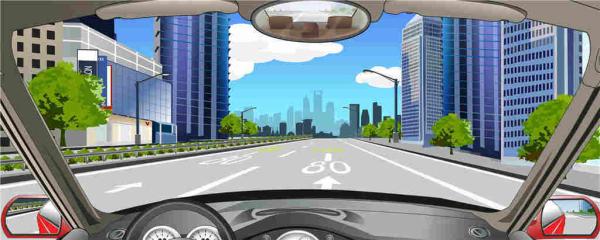
A. Right
B. Wrong
Answer: B
6. When the motor vehicle stops on an uphill section, how should the driver use the foot brake?
A. Earlier than on a level road
B. Later than on a level road
C. As timely as on a level road
D. Strongly depress the foot brake pedal
Answer: B
7. Upon encountering this traffic signal, how should a driver react?
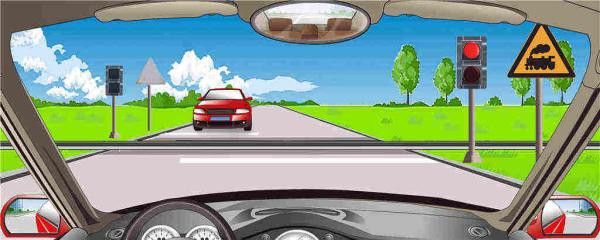
A. Observe the traffic situation and pass at a reduced speed
B. Pass at an increased speed without changing gears
C. Pass before the train comes
D. Crossing the stop line is prohibited
Answer: D
8. Which lamp should be turned on when motor vehicles pass through a road section at night where the street light condition is good?
A. Front and rear fog lamps
B. Low-beam
C. High-beam
D. Hazard lamp
Answer: B
9. The stop-and-yield line at the intersection ahead indicates that vehicle drivers should reduce speed and give the right of way to vehicles on the trunk road.
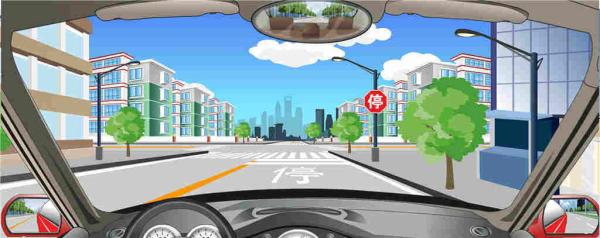
A. Right
B. Wrong
Answer: B
10. The sign on the right warns for children on the section ahead.
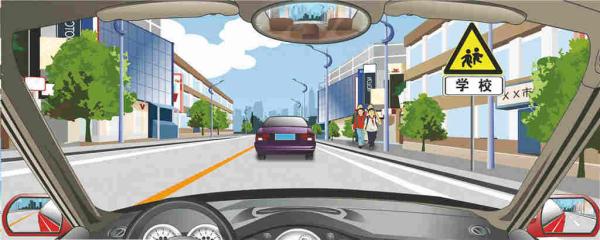
A. Right
B. Wrong
Answer: A
11. When approaching another vehicle at night, why should the driver alternate between high-and-low-beam at a distance more than 150 meters?
A. Warn each other before passing
B. Driving habit
C. Easy to observe the situation ahead from either side
D. Courtesy
Answer: C
12. The motor vehicle equipped with ABS may sideslip during an emergency brake.
A. Right
B. Wrong
Answer: A
13. Driving and smoking has no negative effect on safe driving
A. Right
B. Wrong
Answer: B
14. The sign on the right warns of a dangerous mountainside road ahead.
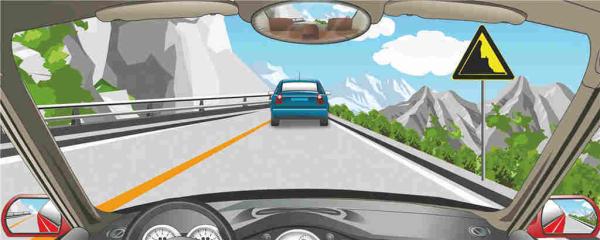
A. Right
B. Wrong
Answer: A
15. Which is the wrong measure to avoid tire burst?
A. Reduce tire pressure
B. Check tires regularly
C. Remove foreign matters from the tire tread grooves timely
D. Replace tires that have cracks or deep cuts
Answer: A
16. If a driver finds there is no vehicle behind, he may change lanes without turning on the indicator.
A. Right
B. Wrong
Answer: B
17. When a motor vehicle passes over an overflowing bridge, what should the driver do after stopping and observing closely?
A. Change to a high gear and pass rapidly
B. Constantly observe the changes of the flow
C. Prepare to stop at any time
D. Change to a low gear and pass through at a constant speed
Answer: D
18. What should be done when drivers evade an emergency on the highway?
A. Take braking measures to reduce speed
B. Yield by turning to the left side
C. Evade by swiftly turning the steering wheel
D. Yield by turning to the right side
Answer: A
19. When there is a braking failure on a downhill road, what should not be done by the driver?
A. Steering the motor vehicle to the uphill direction
B. Stopping the vehicle by rubbing the vehicle body against the rocks or trees on roadside
C. Driving to the emergency lane and stop the vehicle there
D. Pulling up the stopping brake or change the gear to two positions lower
Answer: D
20. The sign on the right side warns of a sharp right turn ahead.
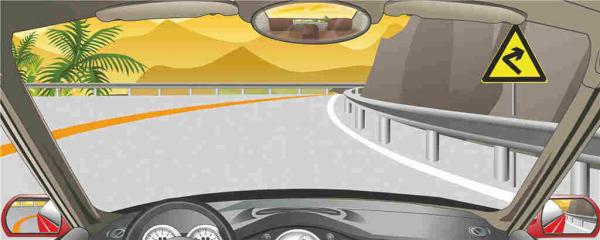
A. Right
B. Wrong
Answer: A