

1. Motor vehicle drivers are allowed to overtake as long as there are no oncoming vehicles.
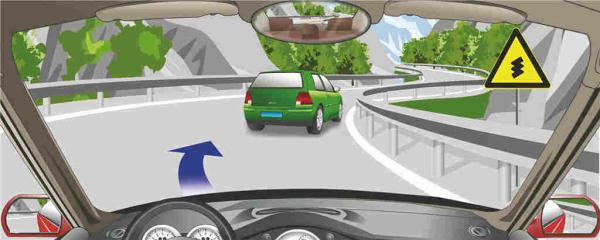
A. Right
B. Wrong
Answer: B
2. Drivers are not allowed to drive on or across these filled-in slanted yellow lines.
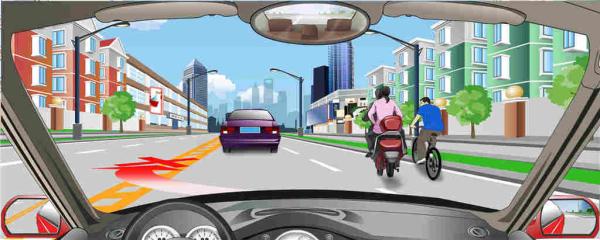
A. Right
B. Wrong
Answer: A
3. When the driver discovers a tire is leaking and steers the vehicle off the main driving lane, he/she should refrain from applying emergency braking so as to avoid a vehicle turnover or a rear-end collision arising from the late braking of the vehicle behind.
A. Right
B. Wrong
Answer: A
4. Under such circumstances, what should be done by the motor vehicle driver?
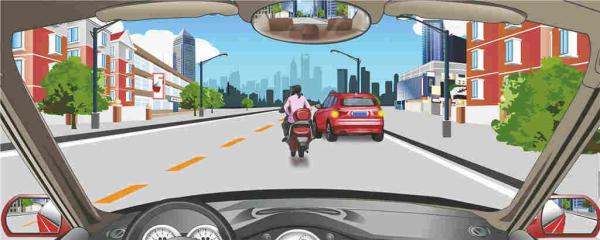
A. Reducing speed to give the right of way to the non-motor vehicle
B. Continuously sounding the horn to warn the vehicle in front to yield
C. Bypassing on the left of the non-motor vehicle
D. Accelerating to overtake by occupying the opposite lane
Answer: A
5. Having driven a large passenger vehicle (carrying 44 passengers, permitted carrying capacity 44) equipped with sleepers at 44km/hour on a frozen road, at 58 km mark by 500m on 540 County Road in Yanhe County, Mr. Luo sideslipped and left the road, killing 15 people and injuring 27. Which of the following law-breaking acts did Mr. Luo commit?
A. Exceeding the carrying capacity of the passenger vehicle
B. Speeding
C. Fatigued driving
D. Improper driving
Answer: B
6. Under such circumstances, motor vehicle drivers should bypass on the left quickly.

A. Right
B. Wrong
Answer: B
7. What influence does smoking have upon driving?
A. Harmful for safe driving
B. Increase concentration
C. Help relaxation
D. No effect on driving
Answer: A
8. Under such circumstances, what should motor vehicle drivers do?
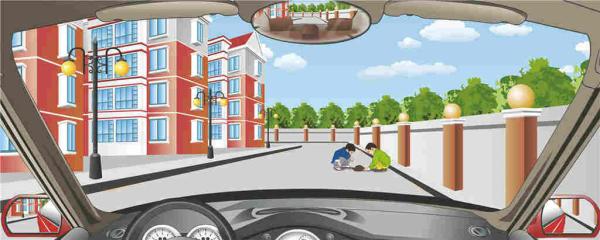
A. Continuously sound the horn
B. Pass quickly
C. Pass at a lower speed
D. Bypass from either side
Answer: C
9. What should the motor vehicle driver do when the motor vehicle encounters the crosswalk in this situation?

A. Slow down and pass
B. Speed up and pass
C. Sound the horn and pass
D. Stop immediately
Answer: A
10. When driving on a foggy day, the driver should turn on the fog lamp.
A. Right
B. Wrong
Answer: A
11. Matches, sulfur and red phosphorus belong to which of the following dangerous chemicals?
A. Explosives
B. Oxidizing materials
C. Self-igniting articles
D. Inflammable solid materials
Answer: D
12. Under such circumstances at a congested intersection, what should motor vehicle drivers do?
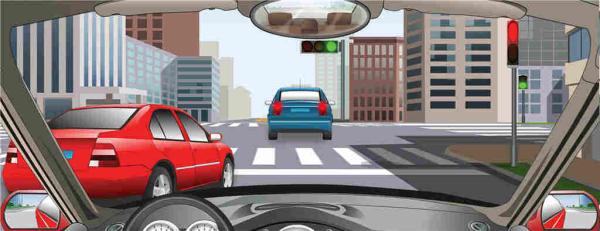
A. Force the vehicle to go back to its original lane
B. Closely follow the vehicle in front and refuse to yield
C. Politely yield and pass through
D. Sound the horn and turn on the head lamps
Answer: C
13. The road marker indicates that vehicles are not allowed to make a U-turn at the intersection ahead.
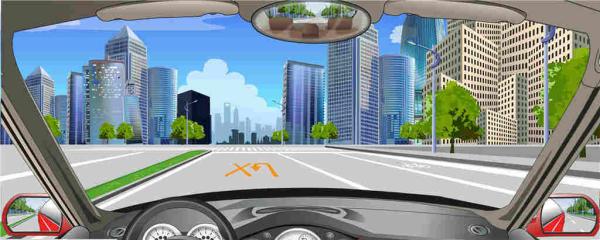
A. Right
B. Wrong
Answer: A
14. When a motor vehicle passes over an inundated road, what should the driver do for safe driving?
A. Slow down and drive with special care
B. Speed up and pass rapidly
C. Maintain a normal speed and pass through
D. Change to a low gear and speed up to pass
Answer: A
15. If a motor vehicle misses an exit on the expressway, the driver may reverse along the road shoulder.
A. Right
B. Wrong
Answer: B
16. Motor vehicle drivers are allowed to overtake on this road section.
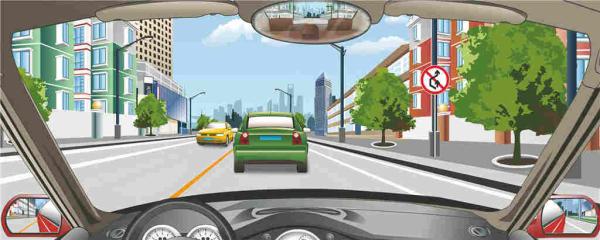
A. Right
B. Wrong
Answer: B
17. As shown in this flash, what should the motor vehicle driver do when encounters this situation?
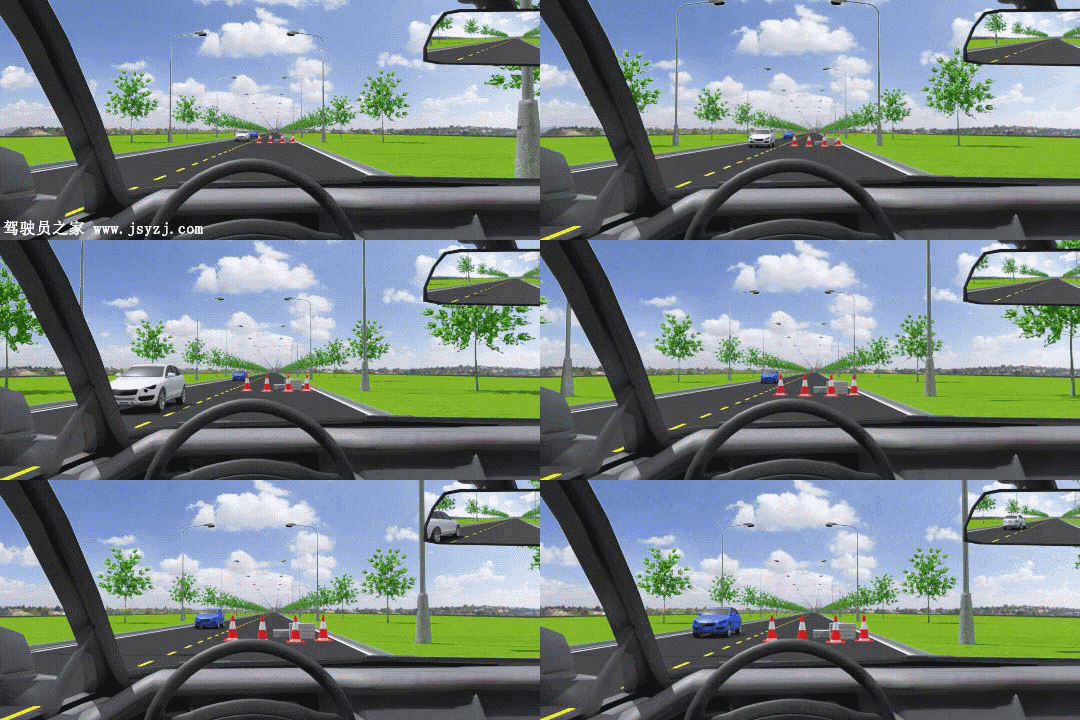
A. Use the mergency brake
B. Turn sharply and pass rapidly
C. Slide over rapidly without encountering collision
D. Stop smoothly
Answer: D
18. When a motor vehicle catches fire, the driver should manage to park the vehicle in an open place far away from urban areas, buildings, trees, other motor vehicles and flammable materials.
A. Right
B. Wrong
Answer: A
19. What should the driver do if he wants to turn right at this intersection?
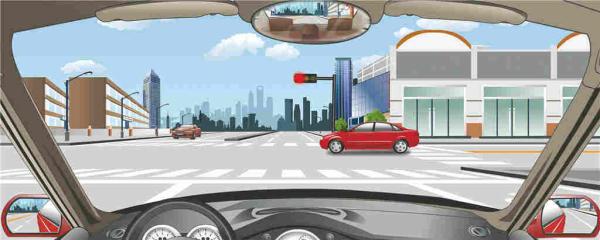
A. Turn right along the straight-going lane
B. Wait behind the stop line
C. Turn right along the right lane
D. Borrow the non-motor vehicle lane and turn right
Answer: C
20. The sign in front is an advance announcement of famous places and distances en route.
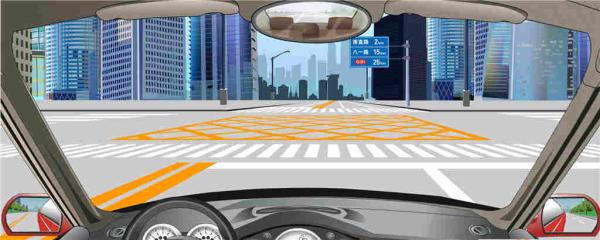
A. Right
B. Wrong
Answer: A