

1. A light motorcycle ______________.
A. can carry children who do not reach 12 years old
B. can carry adults who are more than 18 years old
C. cannot carry people
D. can carry preschoolers
Answer: C
2. A motorized vehicle runs on the road without a label of inspection, the traffic police can detain the vehicle.
A. Right
B. Wrong
Answer: A
3. Serious wave will appear when the front tire blows out; the driver should release the accelerator, firmly hold the steering wheel with both hands, quickly gradually break down, and stop to yield.
A. Right
B. Wrong
Answer: A
4. Turning on the high-beam is an effective way to improve visibility in fog weather.
A. Right
B. Wrong
Answer: B
5. The motorcycles should be inspected once every year when it exceeds ____ as from the date of registration.
A. 1 year
B. 2 years
C. 3 years
D. 4 years
Answer: D
6. How should lamps be used by the motor vehicle driver who follows a vehicle on a road section at night where he street light condition is good?
A. Turn off the headlamp
B. Use high-beam
C. Turn off all lamps
D. Use low-beam
Answer: D
7. What is the meaning of this sign?
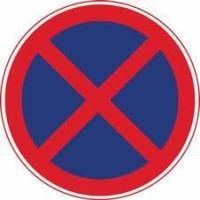
A. stopping temporarily is allowed
B. long stopping is allowed
C. no long stopping
D. no stopping
Answer: D
8. A person who has falsified or altered the motorized vehicle driving license and if his act constitutes a crime, he should be held for criminal liabilities according to law.
A. Right
B. Wrong
Answer: A
9. When driving on a foggy day, the driver should turn on the fog lamp.
A. Right
B. Wrong
Answer: A
10. It is not safe for a female driver to wear high heels to drive a vehicle.
A. Right
B. Wrong
Answer: A
11. Which of the following is a bad habit when changing lanes?
A. Turning on the indicator in advance
B. Observing closely before changing a lane
C. Change lanes at will
D. Not obstructing the passing of other normally moving vehicles
Answer: C
12. What is the main impact of foggy weather on safe driving?
A. Easy to slide sideways
B. Low visibility
C. Increase the resistance
D. Widen the field of vision
Answer: B
13. What is the meaning of this sign?

A. bump road
B. high outburst road
C. low-lying road
D. hump bridge
Answer: B
14. When a motor vehicle passes over an inundated road drivers should change to a high gear and pass rapidly.
A. Right
B. Wrong
Answer: B
15. Traffic Signs and traffic markings are not traffic signals.
A. Right
B. Wrong
Answer: B
16. If a driver has not received full penalty points, and the fine has not been paid, the penalty points will be transferred into the next scoring cycle.
A. Right
B. Wrong
Answer: A
17. Traffic Police can detain the vehicle which is suspected of using other vehicle’s license plate and vehicle license.
A. Right
B. Wrong
Answer: A
18. What is the max speed when in or out of the lane for non-motorized vehicles?
A. 40km/hr
B. 50km/hr
C. 60km/hr
D. 30km/hr
Answer: D
19. What is the meaning of this sign?
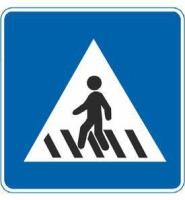
A. crosswalk
B. students’ passage
C. watch for pedestrians
D. children’s passage
Answer: A
20. A motorized vehicle driver who violates of traffic lights is subject to a 6-point penalty.
A. Right
B. Wrong
Answer: A