

1. The sign in front indicates a one-kilometer distance from the next left exit.
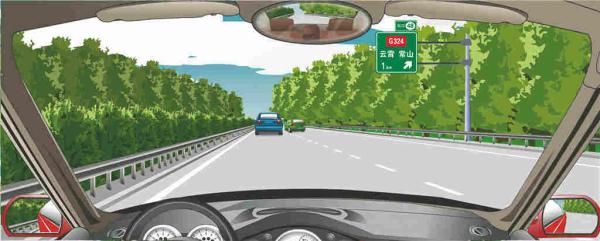
A. Right
B. Wrong
Answer: B
2. The sign on the right indicates the road width ahead is limited to 3 meters.
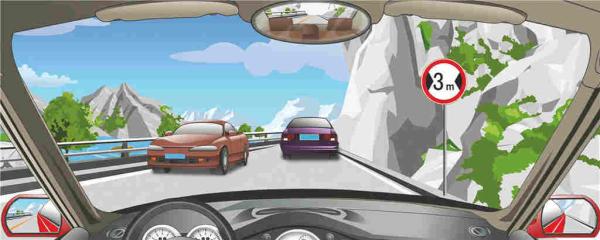
A. Right
B. Wrong
Answer: A
3. What should the driver do in case the public bus suddenly pulls out from this bus station?
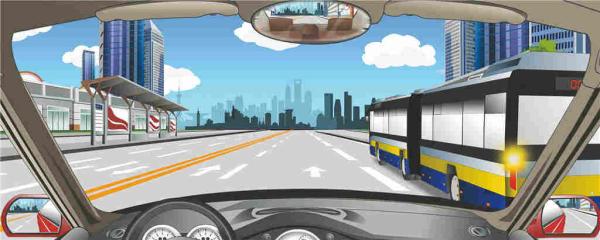
A. Stop behind the public bus
B. Overtake the public bus rapidly
C. Slow down and overtake the public bus slowly
D. Sound the horn continuously to warn the public bus
Answer: C
4. What is the function of ABS during emergency braking?
A. Shortening the braking distance
B. Keeping steering capacity of the motor vehicle
C. Relief the braking inertia
D. Controlling directions automatically
Answer: B
5. What should the driver do when seeing these hand signals?
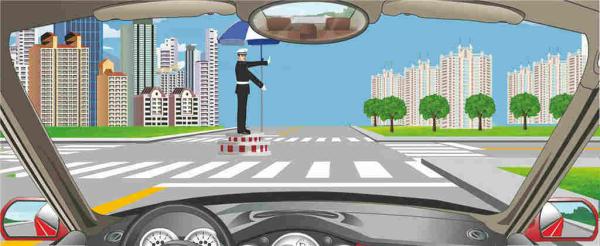
A. Go straight and pass through the intersection
B. Pull over
C. Drive to the waiting area for turning left
D. Turn right at the intersection
Answer: D
6. When driving on a road covered with ice and snow, drivers tend to encounter glare caused by reflection of light rays from the road surface.
A. Right
B. Wrong
Answer: A
7. Motor vehicles are prohibited from stopping on the ramp of an expressway.
A. Right
B. Wrong
Answer: A
8. When a motor vehicle breaks down and cannot be moved away from the emergency lane or the road shoulder, the driver and all passengers should get off the vehicle and wait on the road side instead of leaving the expressway.
A. Right
B. Wrong
Answer: B
9. When encountering this situation in a residential area, the driver should follow them closely.
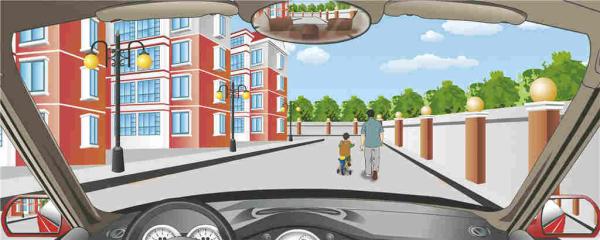
A. Right
B. Wrong
Answer: B
10. The guide arrow on the road surface of this lane indicates that only U-turns are permitted at the intersection ahead.
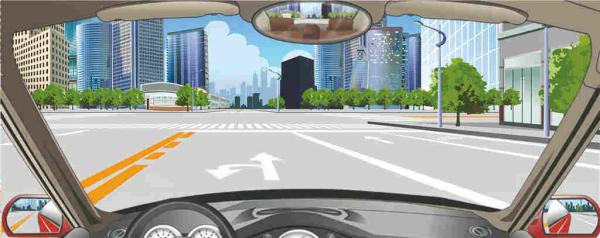
A. Right
B. Wrong
Answer: B
11. What should the driver do when a motor vehicle encounters this situation on a mountain road?
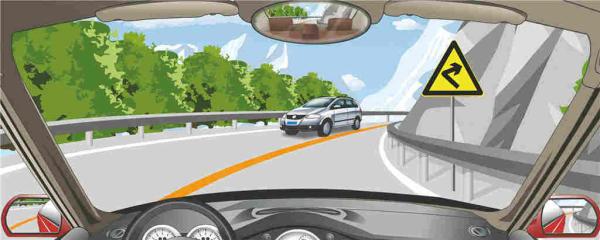
A. Stick to respective lanes and speed up to approach each other
B. Drive close to the central line of the road
C. Retain the normal speed
D. Slow down
Answer: D
12. The sign in front indicates that vehicles except public buses are not allowed to drive in this lane.
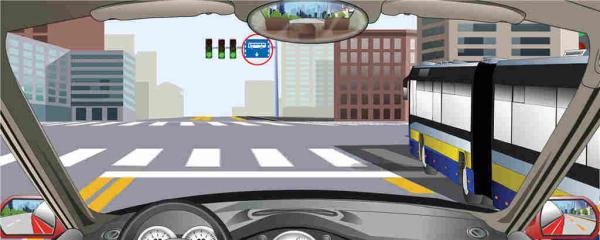
A. Right
B. Wrong
Answer: A
13. The road marker indicates that vehicles are only allowed to turn right at the intersection ahead.
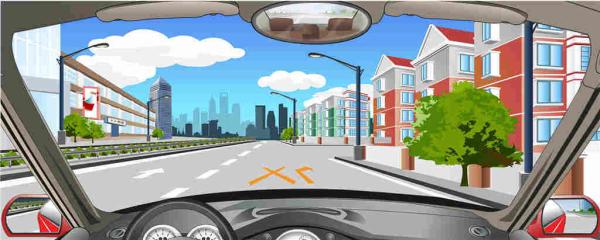
A. Right
B. Wrong
Answer: B
14. The sign on the right warns of a non-motor vehicle lane.
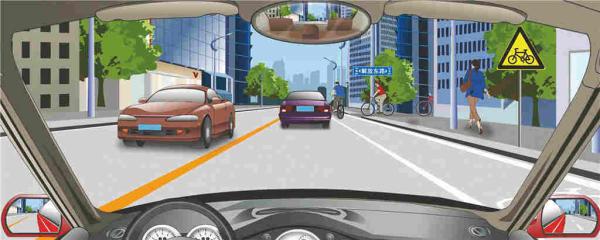
A. Right
B. Wrong
Answer: B
15. These traffic police signals indicate that passing is prohibited.
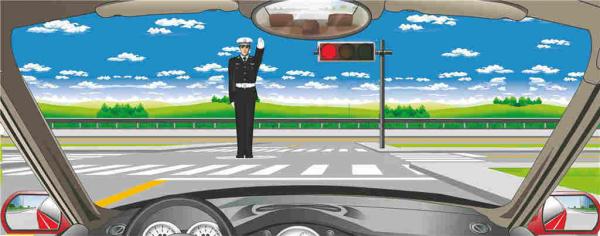
A. Right
B. Wrong
Answer: A
16. At 13: 10 pm, Mr. Luo set out in his medium bus from 0 km mark on the highway, and by 14: 10 had passed the 125km mark by 200 meters, he caused a rear-end collision with a motor vehicle that ran into the side slope on the southwest side, killing 11 people and injuring 2. Which of the following law-breaking acts did Mr. Luo commit?
A. Speeding
B. Driving not in accordance with traffic markings
C. Exceeding carrying capacity
D. Fatigued driving
Answer: A
17. The sign on the right indicates that the number of the lanes ahead will increase.
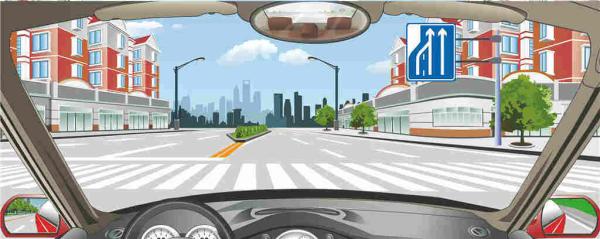
A. Right
B. Wrong
Answer: B
18. Under such circumstances at a congested intersection, what should motor vehicle drivers do?
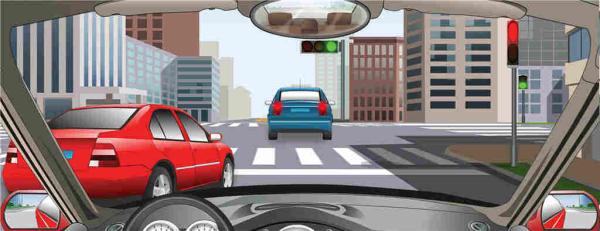
A. Force the vehicle to go back to its original lane
B. Closely follow the vehicle in front and refuse to yield
C. Politely yield and pass through
D. Sound the horn and turn on the head lamps
Answer: C
19. The sign on the right warns to keep a safe distance on the road ahead.
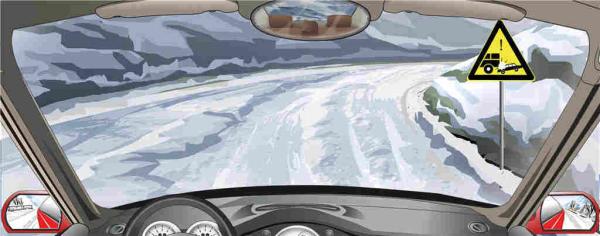
A. Right
B. Wrong
Answer: B
20. Under such circumstance at an intersection. motor vehicle drivers should be prepared to stop and yield at any time.
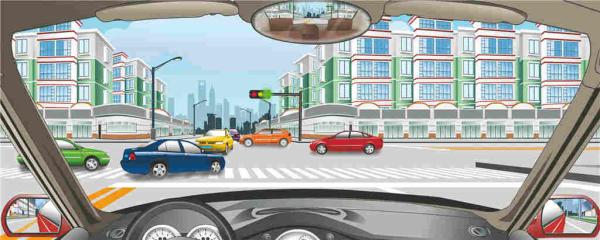
A. Right
B. Wrong
Answer: A