

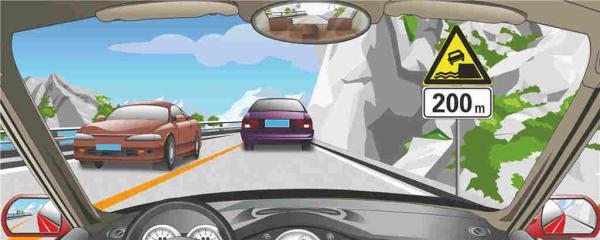
1. The sign on the right warns of an embankment road 200 meters ahead.
A. Right
B. Wrong
Answer: A
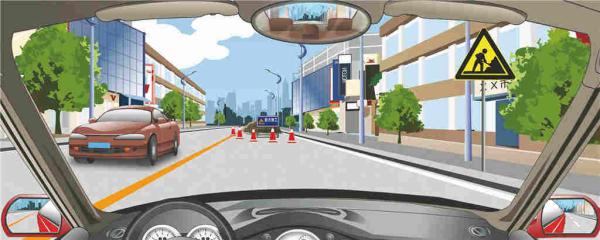
2. The sign on the right warns of a road section ahead under construction.
A. Right
B. Wrong
Answer: A
3. Under such circumstances, what should be done by the motor vehicle driver?
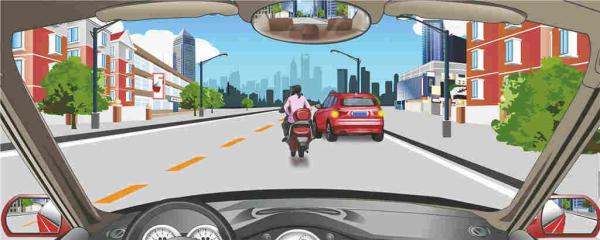
A. Reducing speed to give the right of way to the non-motor vehicle
B. Continuously sounding the horn to warn the vehicle in front to yield
C. Bypassing on the left of the non-motor vehicle
D. Accelerating to overtake by occupying the opposite lane
Answer: A
4. What kind of harmful effect will be brought about by continuously using the foot brake on a long downhill road?
A. Shorten the engine?ˉs service life
B. Make the driver feel tired
C. Easily cause the vehicle to overturn
D. Reduce the braking efficiency
Answer: D
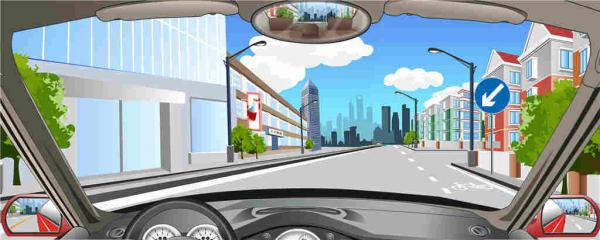
5. The sign on the right indicates that driving along left side only.
A. Right
B. Wrong
Answer: A
6. The sign in front indicates a one-kilometer distance from the highway entry.

A. Right
B. Wrong
Answer: A
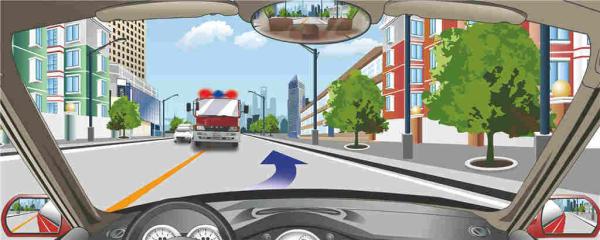
7. Under such circumstances, motor vehicle drivers should reduce speed by the right side swiftly and yield.
A. Right
B. Wrong
Answer: A
8. Under such circumstances, motor vehicle drivers should bypass on the left quickly.

A. Right
B. Wrong
Answer: B
9. Rescue personnel should check the breath of the unconscious person before applying any other emergency treatment.
A. Right
B. Wrong
Answer: A
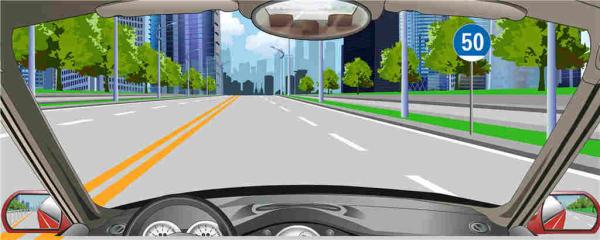
10. The sign on the right indicates that the speed limit is 50km/hour.
A. Right
B. Wrong
Answer: B
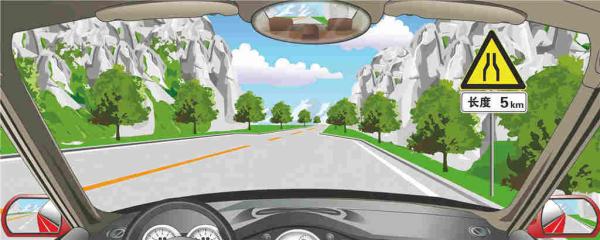
11. The sign on the right warns that the road will narrow over the next 5 kilometers.
A. Right
B. Wrong
Answer: A
12. If a motor vehicle experiences a water sliding phenomenon when running on an expressway in rain, what should the driver do?
A. Slow down by suddenly depressing the brake pedal
B. Slow down by slowly releasing the accelerator pedal
C. Turn the steering wheel immediately to adjust the direction
D. Speed up to increase the displacement of the wheels
Answer: B
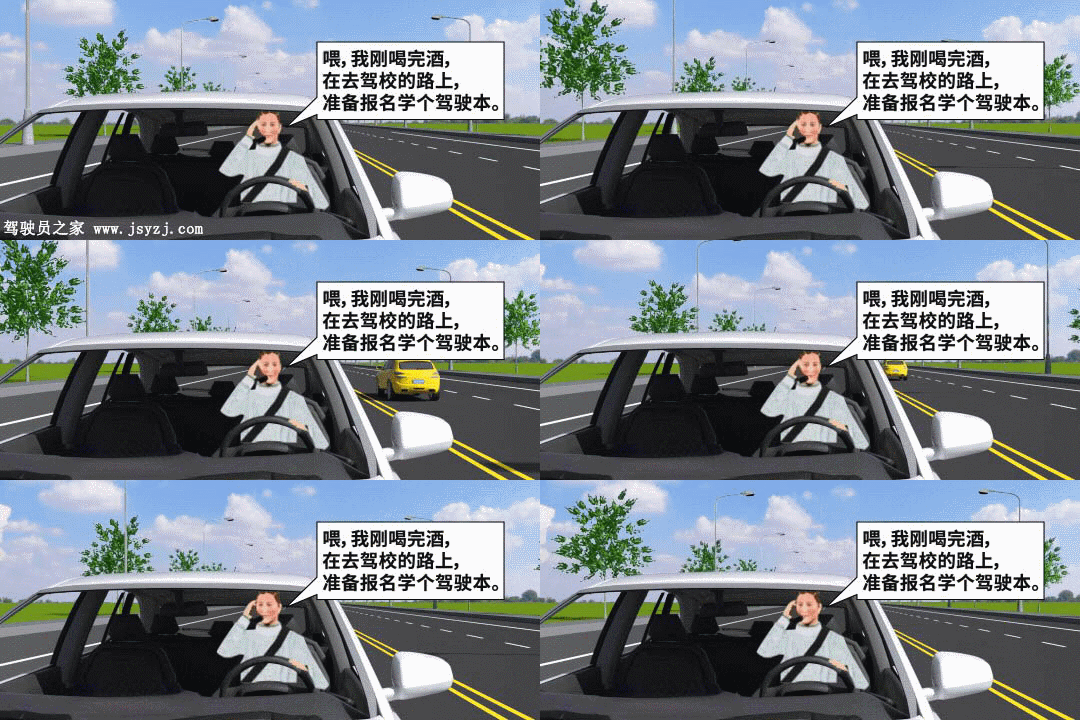
13. How many kinds of law-breaking acts are displayed in flash 5?
A. One
B. Two
C. Three
D. Four
Answer: C
14. Motor vehicle drivers are allowed to overtake on this road section.
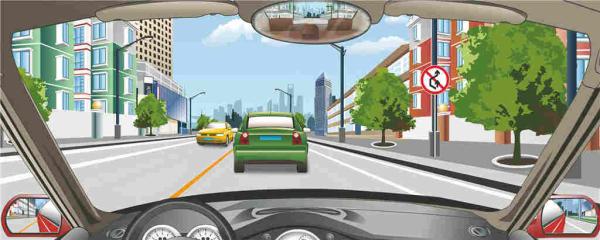
A. Right
B. Wrong
Answer: B
15. The guide arrow on the road surface of this lane indicates that there is an intersection on the right side of the road.
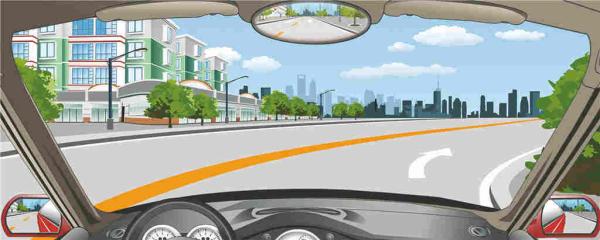
A. Right
B. Wrong
Answer: B
16. What should motor vehicle drivers do when parking temporarily on a rainy day?
A. Turn on hazard lamp
B. Turn on front and back fog lamp
C. Turn on low-beam
D. Set up warning sign at the back of the vehicle
Answer: A
17. The sign on the right indicates a one-kilometer distance from the ETC toll station.
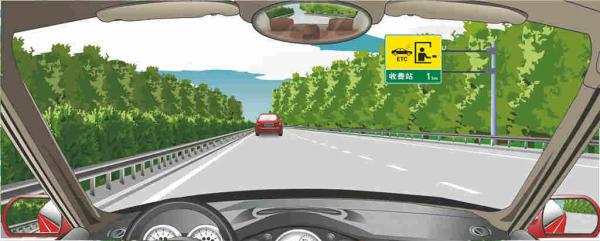
A. Right
B. Wrong
Answer: A
18. Motor vehicle drivers may reverse at an intersection.
A. Right
B. Wrong
Answer: B
19. In this driving condition, drivers should turn on the high-beam when setting off.
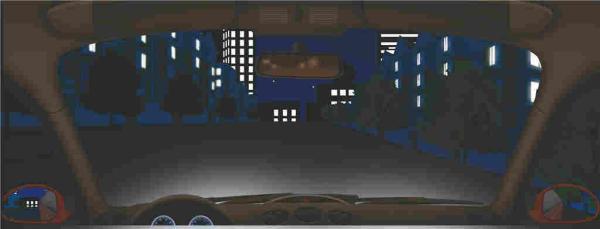
A. Right
B. Wrong
Answer: B
20. Mr. Tong drove a large bus (capacity 55 people and carrying 54) to Taiyuan City. When he drove on a muddy road at the speed of 45 kilometers per hour, the bus skidded into a deep ditch, killing 14 people dead and badly injuring 40 What is the main illegal act committed by Mr. Tong?
A. Overloaded
B. Speeding
C. Driving after drinking
D. Fatigued driving
Answer: B