

1. Those traffic police signals mean turning right.
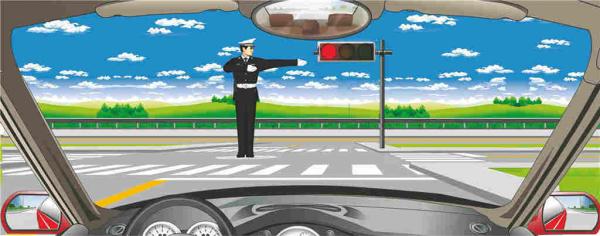
A. Right
B. Wrong
Answer: B
2. The sign on the left indicates no U-turn at the intersection ahead.

A. Right
B. Wrong
Answer: A
3. When there is a braking failure on a downhill road, if there is no other alternative, the driver may rub the vehicle body against the rocks and trees on roadside to force the vehicle to slow down and stop.
A. Right
B. Wrong
Answer: A
4. The sign on the right indicates to stop and yield at the intersection ahead.
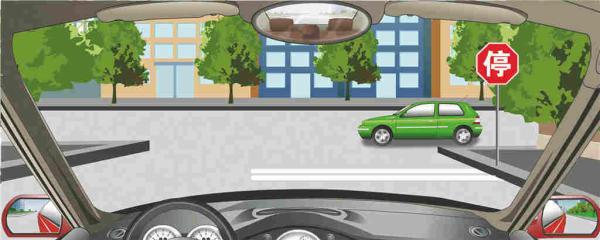
A. Right
B. Wrong
Answer: A
5. What should the driver pay attention to when the motor vehicle on the main road approaches a junction with a feeder road?
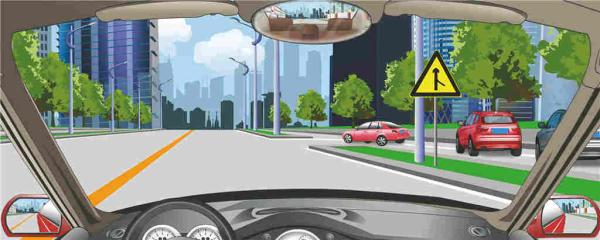
A. Slow down in advance and pay attention to other motor vehicles
B. Maintain the normal speed
C. Sound the horn and pass rapidly
D. Speed up and pass rapidly
Answer: A
6. The sign on the right warns for children on the section ahead.
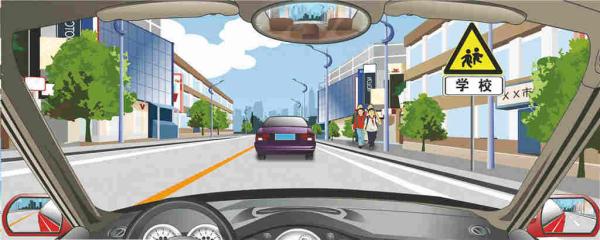
A. Right
B. Wrong
Answer: A
7. What kind of harmful effect will be brought about by continuously using the foot brake on a long downhill road?
A. Shorten the engine?ˉs service life
B. Make the driver feel tired
C. Easily cause the vehicle to overturn
D. Reduce the braking efficiency
Answer: D
8. When driving in a heavy rain, drivers should contro their speed to prevent their vehicles from sliding.
A. Right
B. Wrong
Answer: A
9. When a motor vehicle passes over an inundated road, what should the driver do for safe driving?
A. Slow down and drive with special care
B. Speed up and pass rapidly
C. Maintain a normal speed and pass through
D. Change to a low gear and speed up to pass
Answer: A
10. When the tire pressure is too low, what can happen when driving at a high speed?
A. Tire pressure will be unstable
B. Tire pressure will increase
C. Driving resistance will decrease
D. The tire will burst
Answer: D
11. What should the driver do if he encounters this situation at the intersection when driving straight?
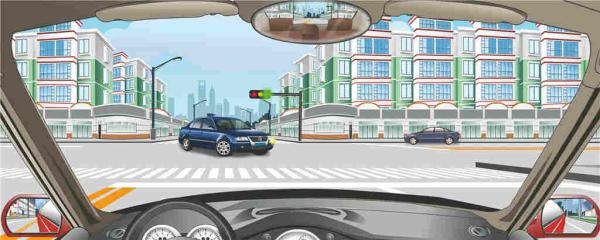
A. Sound the horn to warn the other vehicle to yield
B. Speed up and pass in the front of the vehicle
C. Turn on the headlamp to warn the other vehicle to yield
D. Slow down or stop to yield
Answer: D
12. What should be done by the driver who intends to overtake but finds that the vehicle in front is also overtaking?
A. Following the vehicle in front closely and finding a chance to overtake it
B. Accelerating to overtake forcefully
C. Continuously sounding the horn to urge the vehicle in front to yield
D. Refraining from overtaking and letting the vehicle in front overtake first
Answer: D
13. When following other vehicles on a foggy day, what should the driver do?
A. Maintain a large safety distance
B. Turn on the high-beam
C. Turn on the low-beam
D. Sound the horn in due time
Answer: A
14. The sign on the right indicates right-hand turn only.
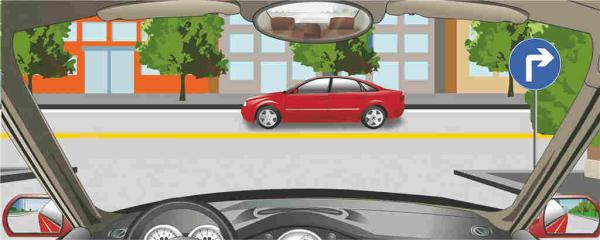
A. Right
B. Wrong
Answer: A
15. Mr. Peng drove a heavy semi-trailer tractor with 37.7 tons of cargo (capacity 25 tons). When descending a slope on the Daguang Expressway, the tractor had a rear-end collision with Mr. Li?ˉs heavy dump truck (carrying 3.17 cubes of loess and 24 passengers in the container) occupying the emergency lane. As a result of this accident, 16 people were killed and 13 injured. What are the main illegal acts in this case?
A. Mr Peng exceeded the speed limit
B. Mr. Peng?ˉs tractor carried more cargo than limited
C. Mr Li illegally drove in the emergency lane
D. Mr. Li?ˉs truck illegally carried passengers in the container
Answer: BCD
16. During normal driving, the driver should do his best to run close to or on the central line so as not to allow oncoming vehicles any opportunity to occupy his own route.
A. Right
B. Wrong
Answer: B
17. The stop-and-yield line at the intersection ahead indicates that vehicle drivers should reduce speed and give the right of way to vehicles on the trunk road.
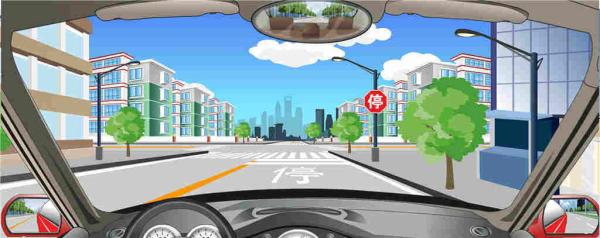
A. Right
B. Wrong
Answer: B
18. When removing a wounded person suffering spinal fracture, the rescuer should never help the wounded person to walk. He may be carried away with a soft stretcher.
A. Right
B. Wrong
Answer: B
19. What should the driver do when he encounters an oncoming ambulance in the same lane?
A. Keep to the side and reduce speed or stop to yield
B. Drive ahead by occupying another lane
C. Yield by speeding up and changing lanes
D. Drive ahead in the original lane
Answer: A
20. What should the driver do if he wants to turn left at this intersection?
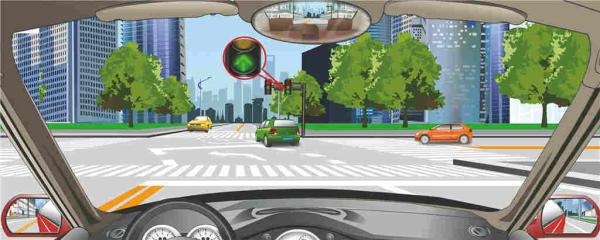
A. Turn left along the straight-going lane
B. Enter the left turn waiting area
C. Enter the straight-moving waiting area
D. Turn left along the left lane
Answer: B