

1. When overtaking on a rainy day, drivers should turn on headlamps and sound a long horn.
A. Right
B. Wrong
Answer: B
2. If a motor vehicle breaks down or causes a traffic accident on the expressway and cannot run normally the vehicle may be towed by any accompanying motor vehicles.
A. Right
B. Wrong
Answer: B
3. Which of the following acts are prohibited when passing through a tunnel?
A. Overtaking
B. Stopping
C. Making a U-turn
D. Reversing
Answer: ABCD
4. Before setting off, it is necessary to check the driving cabin, engine cabin, external and tires of the motor vehicle.
A. Right
B. Wrong
Answer: A
5. The sign on the right warns of no passing on either side of the road ahead.
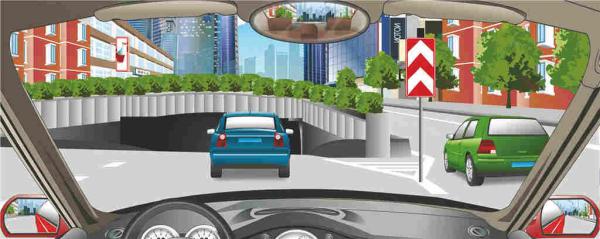
A. Right
B. Wrong
Answer: B
6. Under this circumstance, motor vehicle drivers should give the right of way to oncoming vehicle.

A. Right
B. Wrong
Answer: A
7. When encountering this situation, which of the following is the correct way to overtake other vehicles?
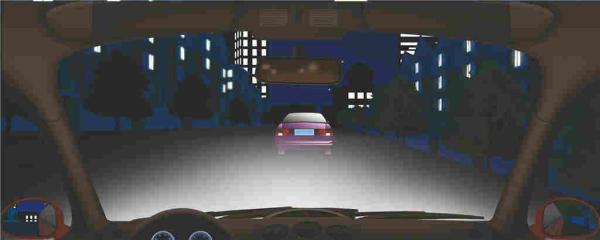
A. Turn on high-beam
B. Use high-beam and low-beam alternatively
C. Turn on low-beam
D. Turning on hazard lamp
Answer: B
8. When encountering a road like this, motor vehicle drivers may make good use of neutral gear to coast.
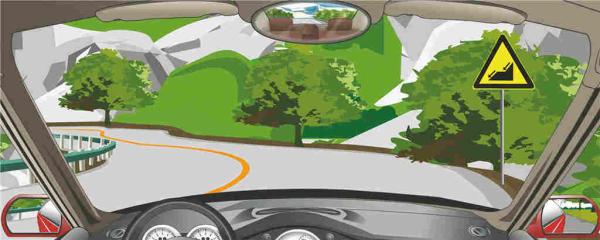
A. Right
B. Wrong
Answer: B
9. What should the driver do when the motor vehicle encounters this situation?
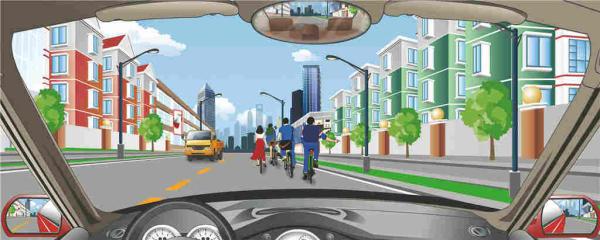
A. Overtake immediately
B. Sound the horn continuously to warn
C. Maintain safety distance and overtake
D. Sound horn and speed up to overtake
Answer: C
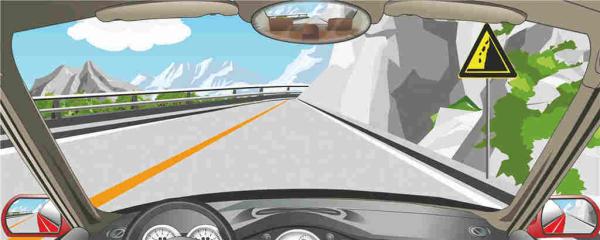
10. The sign on the right warns of a dangerous mountainside road on the left of the road ahead.
A. Right
B. Wrong
Answer: B
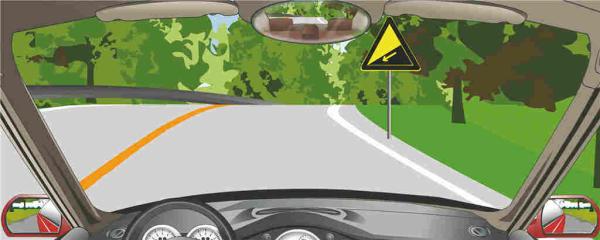
11. When encountering a road like this, motor vehicle drivers should downshift in advance and control speed by braking the engine.
A. Right
B. Wrong
Answer: A
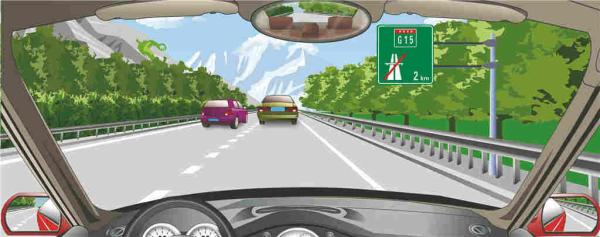
12. The sign in front indicates a 2-kilometer distance from the destination of the highway ahead.
A. Right
B. Wrong
Answer: A
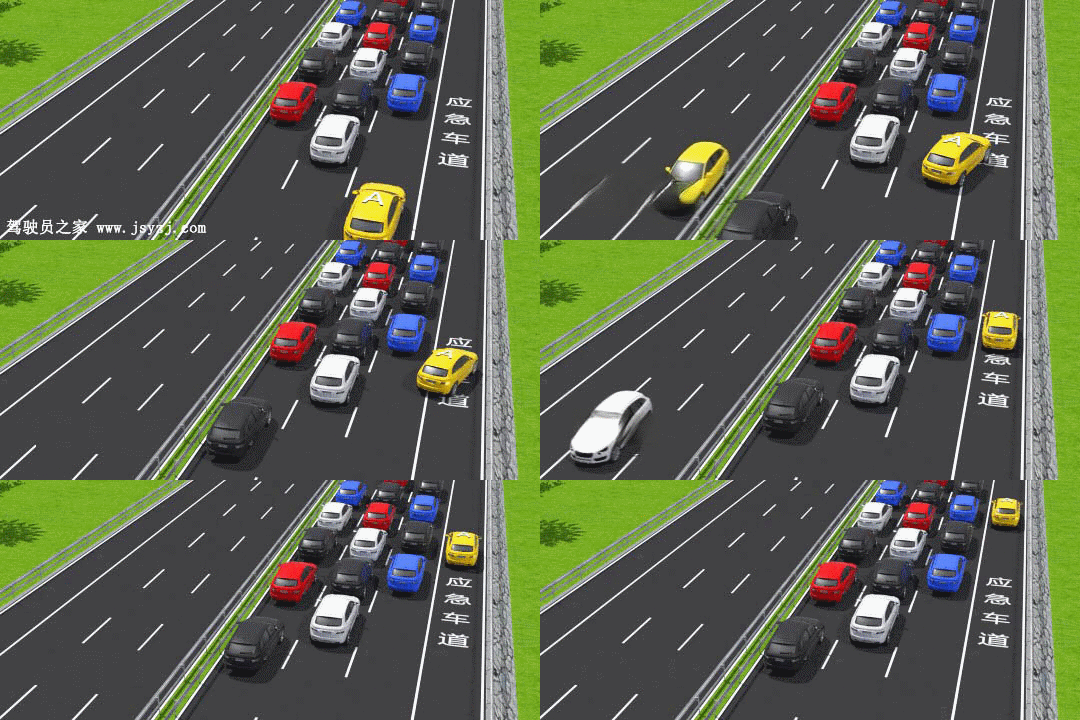
13. In the flash, it is correct for the driver to behave this way when there is a traffic jam caused by an accident on the expressway.
A. Right
B. Wrong
Answer: B
14. What should be done to keep safe when a motor vehicle driver is overtaking in this condition?
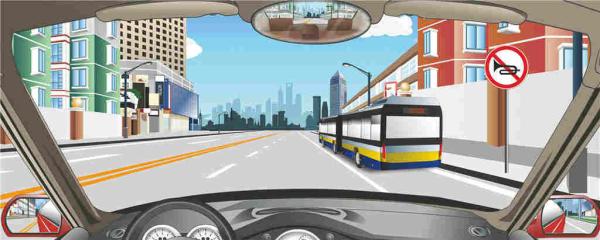
A. Reducing speed and keeping a safe distance
B. Continuously sounding the horn to indicate the vehicle in front
C. Accelerating to pass while keeping a certain distance
D. Overtaking by occupying the opposite lane
Answer: A
15. The sign on the right indicates left turn only at the intersection ahead.
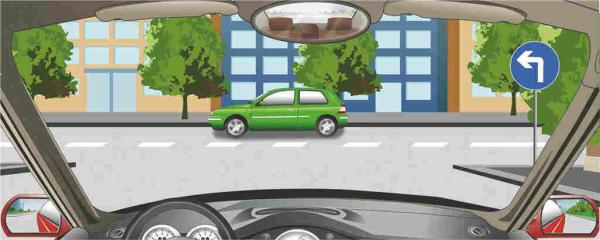
A. Right
B. Wrong
Answer: A
16. Mr. Qi drove a large bus with 28 passengers (capacity 55 people). When arriving at an intersection without any traffic signals from south to north at a speed of 50 kilometers per hour, the bus had a side collision with Mr. Li?ˉs heavy semi-trailer tractor (capacity 40 tons and carrying 55.2 tons) running from east to west. As a result of this accident, 12 people were killed and 17 injured. What are the main illegal acts in this case?
A. The bus carried more passengers than capacity
B. The bus exceeded the speed limit
C. The tractor carried more cargo than capacity
D. The driver of the tractor was inexperienced
Answer: BC
17. The sign on the right indicates that no restriction for temporary parking.
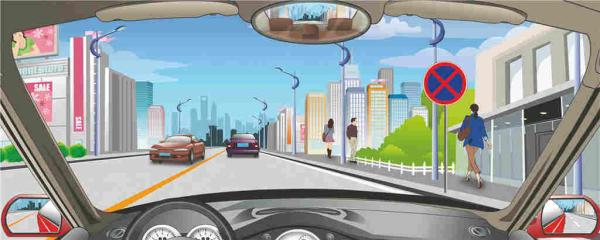
A. Right
B. Wrong
Answer: B
18. When a motor vehicle encounters this situation at a crosswalk, the driver must slow down and pass slowly.
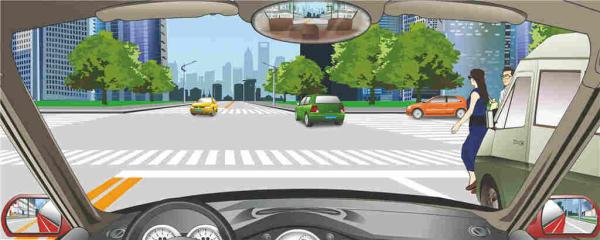
A. Right
B. Wrong
Answer: B
19. When a tire suddenly bursts on the road, what should not be done by the driver?
A. Keep calm and release the accelerator pedal slowly
B. Hold the steering wheel firmly to ensure the vehicle goes straight
C. Apply emergency braking and stop the vehicle in the shortest possible time
D. Gently depress the brake pedal after the vehicle slows down
Answer: C
20. Under such circumstances, motor vehicle drivers should reduce speed by the right side swiftly and yield.
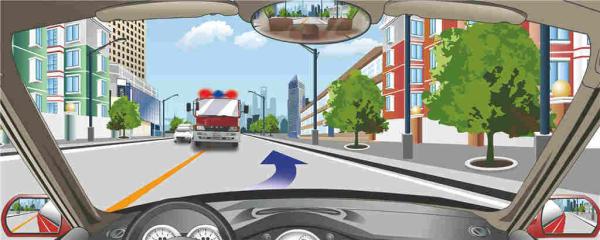
A. Right
B. Wrong
Answer: A