

1. What should motor vehicle drivers do when approaching an oncoming vehicle on a frozen road?
A. Cut speed as approaching each other
B. Pass each other by speeding up properly
C. Pass each other slowly by cutting speed in advance
D. Pass each other along the central line to the best
Answer: C
2. When driving on a road covered with ice and snow drivers should not use the emergency brake but can apply a sharp turn.
A. Right
B. Wrong
Answer: B
3. Before riding a motorcycle, the driver should wear a safety helmet and adjust the angle of the rearview mirror till he can clearly watch the left side and the right side of the back.
A. Right
B. Wrong
Answer: A
4. You can not drive a motorized vehicle into the lane where the red X-shaped light or the red arrow light is on.
A. Right
B. Wrong
Answer: A
5. What is the meaning of this sign?
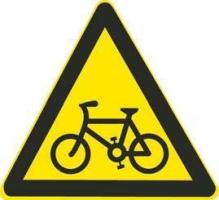
A. the lane for non-motorized vehicles
B. yield non-motorized vehicles
C. no passing for non-motorized vehicles
D. watch for non-motorized vehicles
Answer: D
6. Drivers who ride motorcycles are able to not wear safety helmets.
A. Right
B. Wrong
Answer: B
7. A motorized vehicle driver who drives after drinking is subject to a 12-point penalty.
A. Right
B. Wrong
Answer: A
8. What will be subject to if submitting false materials to apply for driving license?
A. a 20~200 yuan fine
B. disqualification for applying for
C. cannot re-apply for within 1 year
D. cannot re-apply for within 2 years
Answer: C
9. When encountering slow-moving vehicles at an intersection that has no traffic signals, the motorized vehicle should pass alternately.
A. Right
B. Wrong
Answer: A
10. When a motorized vehicle runs in a foggy weather, the driver should turn on the fog light and the hazard lights.
A. Right
B. Wrong
Answer: A
11. Change driving license before of expiration.
A. 60 days
B. 30 days
C. 90 days
D. 6 months
Answer: C
12. If the driver’s accumulated penalty points reach the stipulated limit, he will be _______ by the traffic control department of the public security organ.
A. detained for less than 15 days
B. banned for lifetime from driving
C. educated on the law and regulations and take the exam again
D. held for criminal liabilities according to law
Answer: C
13. What is the meaning of this sign?
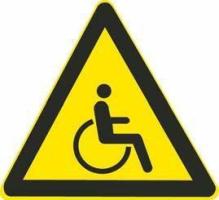
A. exit and entry for disabled people
B. watch for disabled people
C. rest area for disabled people
D. special passage for disabled people
Answer: B
14. What is the meaning of this sign?
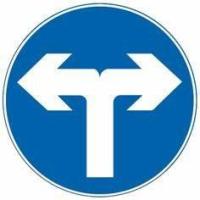
A. no left turn
B. leftt and right turn
C. no leftt and right turn
D. no right turn
Answer: B
15. Before the motorized vehicle runs on the road, the driver should check the safety and technical performance of the vehicle.
A. Right
B. Wrong
Answer: A
16. A driver should accelerate in advance to overtake then it is likely to meet with oncoming vehicles.
A. Right
B. Wrong
Answer: B
17. When a motorcycle goes down a long slope, it should run at a lower gear and fully use the engine to brake.
A. Right
B. Wrong
Answer: A
18. When use the brake of a motorcycle, use the front-wheel brake first, then use the back-wheel brake.
A. Right
B. Wrong
Answer: B
19. When the driver discovers a tire is leaking and steers the vehicle off the main carriageway, he should refrain from applying emergency so as to avoid a vehicle turnover or a rear-end collision arising from the late braking of the following vehicle.
A. Right
B. Wrong
Answer: A
20. If a motorized vehicle driver allows his vehicle to be driven by a person whose driving license has been revoked, the traffic police will detain the driving license.
A. Right
B. Wrong
Answer: A