

1. What should the driver do when he sees this sign on the road?
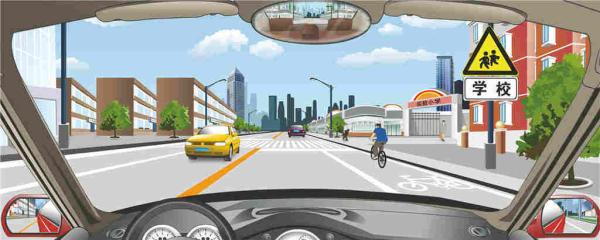
A. Use emergency braking
B. Slow down and take a look
C. Sound the horn intermittently
D. Prepare to bypass
Answer: B
2. Mr. Ran drove his car from 6am until 11 am without rest, falling down a steep 8.5-meter ridge at one side of a highway 1 km from Xunan Road in Xuahan County, killing 13 people and injuring 9. Which of the following law-breaking acts did Mr Ran commit?
A. Speeding
B. Driving not in accordance with the traffic markings
C. Exceeding carrying capacity
D. Fatigued driving
Answer: D
3. When a tire suddenly bursts on the road, the driver should violently depress the brake pedal to reduce speed and stop the vehicle.
A. Right
B. Wrong
Answer: B
4. The sign in front indicates that the highway entry is on the right side of the road.
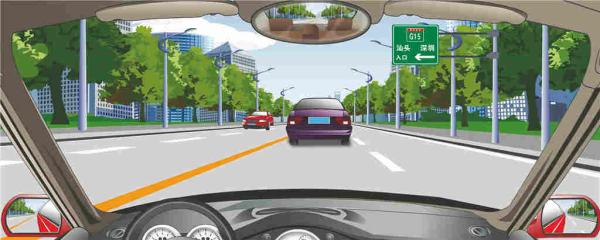
A. Right
B. Wrong
Answer: B
5. Motor vehicles are prohibited from driving straight or turning left in this situation.
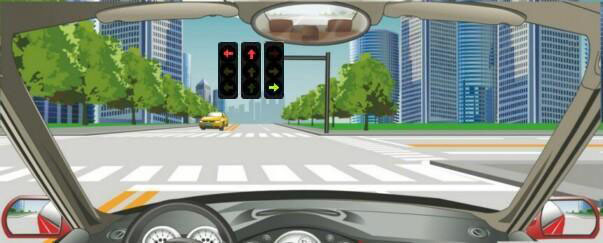
A. Right
B. Wrong
Answer: A
6. When putting out a fire disaster that gives out corrosive steam or poisonous gas, the firefighters should wear gas masks and other related protective articles and operate from the windward side.
A. Right
B. Wrong
Answer: A
7. When the speed indicated by the speed limit sign on the highway contradicts the speed indicated for the specific lanes the speed indicated for the specific lanes should prevail.
A. Right
B. Wrong
Answer: B
8. Motor vehicle drivers should use the windscreen wiper when setting off on a rainy day
A. Right
B. Wrong
Answer: A
9. What should the driver do if the back wheel slides to the right on a muddy road?
A. Continuously speed up
B. Turn right
C. Turn left
D. Apply emergency brake
Answer: B
10. Drivers may go ahead when traffic polices posture is like this.
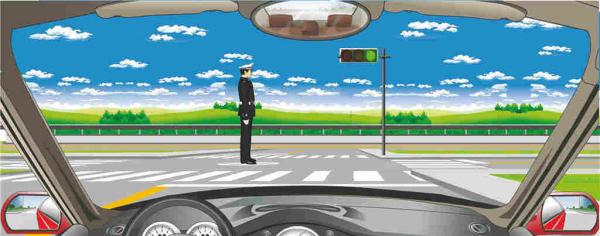
A. Right
B. Wrong
Answer: A
11. When driving in a heavy rain, drivers should contro their speed to prevent their vehicles from sliding.
A. Right
B. Wrong
Answer: A
12. How many kinds of law-breaking acts are displayed in flash 4?
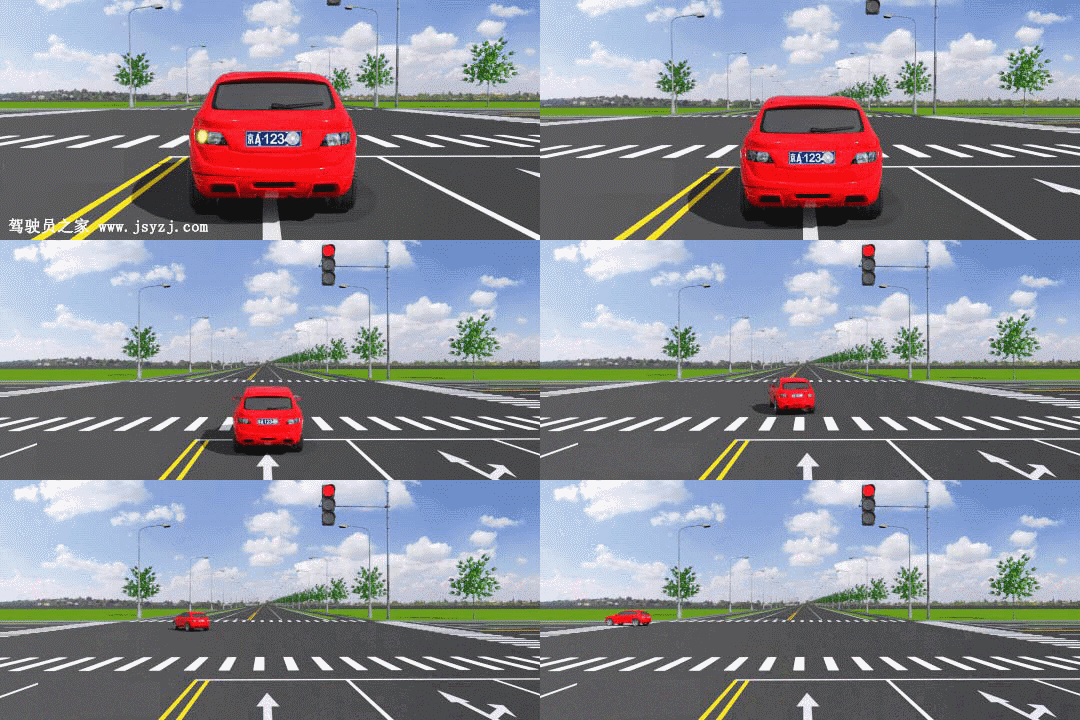
A. One
B. Two
C. Three
D. Four
Answer: C
13. Under such circumstances, what should be done by the motor vehicle driver?

A. Overtaking the vehicle in front on its left
B. Overtaking by occupying the opposite lane
C. Overtaking the vehicle in front on its right
D. Following the vehicle in front
Answer: D
14. When passing another vehicle on a foggy day, what should drivers do?
A. Slow down and pass slowly
B. Maintain a safety distance
C. Properly use lamps
D. Drive at a high speed
Answer: ABC
15. When encountering a road like this, motor vehicle drivers may make good use of neutral gear to coast.
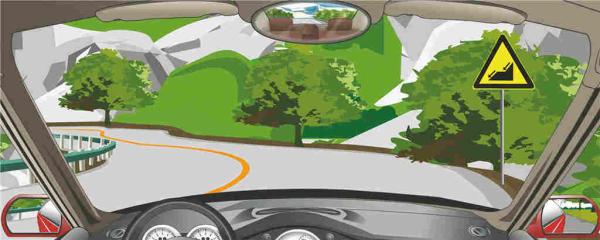
A. Right
B. Wrong
Answer: B
16. At 13: 10 pm, Mr. Luo set out in his medium bus from 0 km mark on the highway, and by 14: 10 had passed the 125km mark by 200 meters, he caused a rear-end collision with a motor vehicle that ran into the side slope on the southwest side, killing 11 people and injuring 2. Which of the following law-breaking acts did Mr. Luo commit?
A. Speeding
B. Driving not in accordance with traffic markings
C. Exceeding carrying capacity
D. Fatigued driving
Answer: A
17. Under such circumstances, motor vehicles are not allowed to overtake.
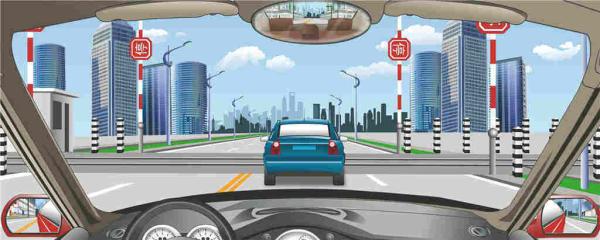
A. Right
B. Wrong
Answer: A
18. The sign on the right indicates to stop and yield at the intersection ahead.
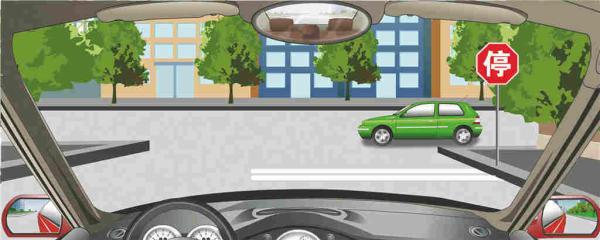
A. Right
B. Wrong
Answer: A
19. What should the driver do when he encounters an oncoming ambulance in the same lane?
A. Keep to the side and reduce speed or stop to yield
B. Drive ahead by occupying another lane
C. Yield by speeding up and changing lanes
D. Drive ahead in the original lane
Answer: A
20. The sign on the right indicates an inspection station 100 meters ahead.
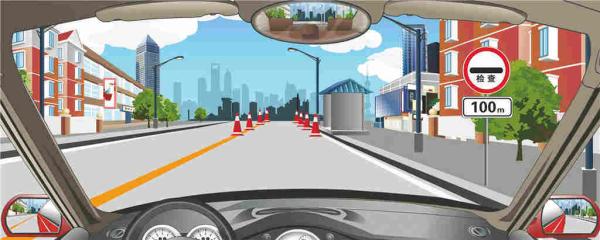
A. Right
B. Wrong
Answer: A