

1. When going straight or turning right, drivers are not allowed to drive on or across the guide lines on both sides of the intersection.
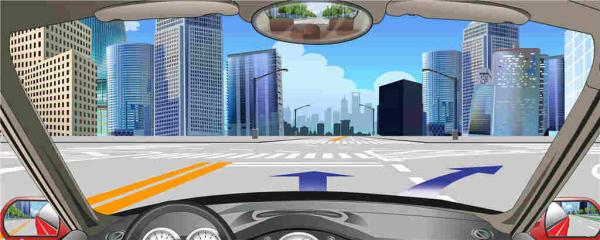
A. Right
B. Wrong
Answer: A
2. Which one of the following is a safe way for motor vehicles to pass an intersection marked with this sign?
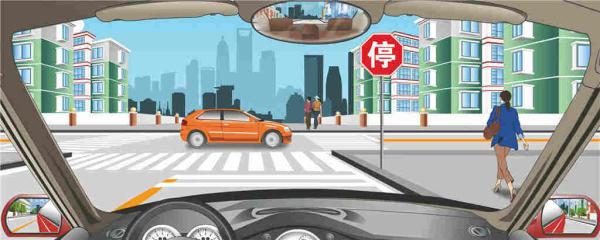
A. Stopping and observing the traffic situation around the intersection
B. Approaching the intersection by speeding up
C. Approaching the intersection at a reduced speed
D. Observing the traffic situation on the left rear side
Answer: A
3. What should the driver do to ensure safe driving when the motor vehicle encounters this situation in a residential area?

A. Sound the horn to warn the pedestrians
B. Speed up and pass as quickly as possible
C. Retain a normal speed
D. Slow down and prepare to stop
Answer: D
4. When a motor vehicle deviates from the normal direction due to steering failure, what should the driver do?
A. Immediately steer and adjust
B. Reduce speed and stop the vehicle as early as possible
C. Steer to the side where there is no obstacle to evade
D. Steer to the side where there is an obstacle to evade
Answer: B
5. When encountering a situation like changing to a left lane, motor vehicle drivers should yield.

A. Right
B. Wrong
Answer: A
6. Under such circumstances, what should be done by motor vehicle drivers in order to yield to the pedestrians politely?
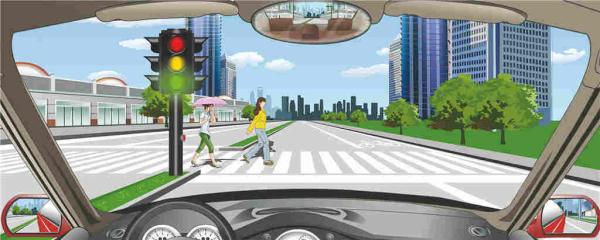
A. Set off after pedestrians pass
B. Set off and bypass in front of the pedestrians
C. Sound the horn to warn the pedestrians to yield
D. Set off and approach the pedestrians slowly
Answer: A
7. How to run when encountering this situation at the intersection?
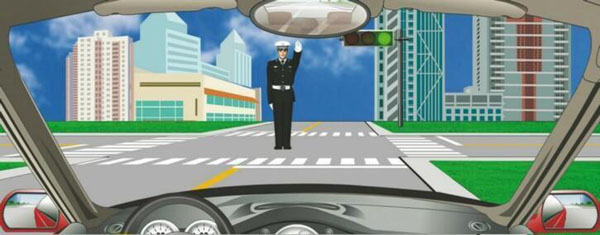
A. stop and wait
B. obey the traffic lights
C. run straight on the right side
D. may turn right
Answer: A
8. What should drivers do when encountering a rainstorm on a common road and the windscreen-wiper fails to make sight clear?
A. Drive at a reduced speed
B. Drive carefully
C. Cut speed in time and pull over
D. Drive at a normal speed
Answer: C
9. The sign in front indicates a one-kilometer distance from the next left exit.
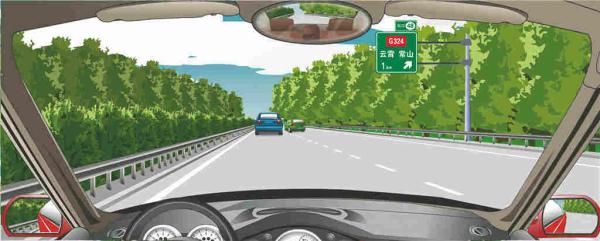
A. Right
B. Wrong
Answer: B
10. How will the adhesive force of road change when speed increases on a damp and slippery road?
A. Increase sharply
B. Increase gradually
C. decrease sharply
D. No change
Answer: C
11. When following other vehicles on a foggy day, what should the driver do?
A. Maintain a large safety distance
B. Turn on the high-beam
C. Turn on the low-beam
D. Sound the horn in due time
Answer: A
12. The driver may not change lanes when the motor vehicle turns right at this intersection.
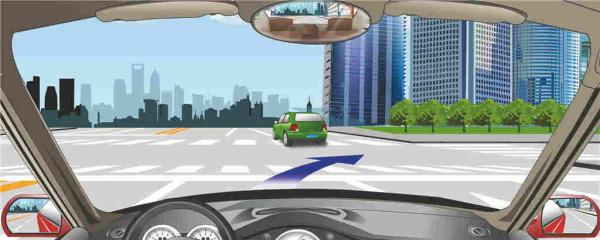
A. Right
B. Wrong
Answer: B
13. The guide arrow on the road surface of this lane indicates that only left and right turns are permitted on the lanes ahead.
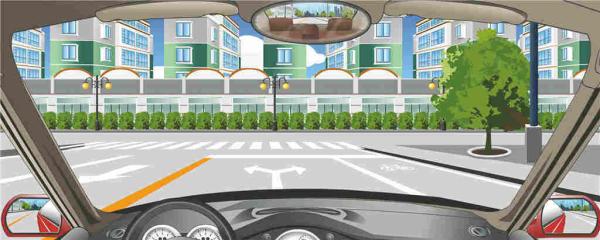
A. Right
B. Wrong
Answer: A
14. Which lamp should be used when motor vehicles pass through an intersection at night where there is no traffic light signal?
A. High-beam
B. Low-beam
C. Hazard lamps
D. High-beam and low-beam should be used alternatively
Answer: D
15. When there is a sudden braking failure on the road, what should be done by the driver?
A. Firmly holding the steering wheel and controlling the direction
B. Immediately changing to a low gear to reduce speed
C. Using the stopping brake to reduce speed
D. Turning on the hazard lamps
Answer: ABCD
16. Which one of following ways is the safest when driving a motor vehicle on this road?
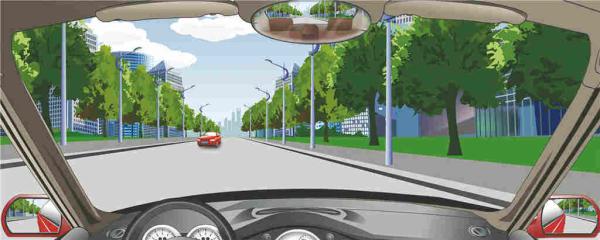
A. Driving along the central line of the road
B. Driving along the right side of the road
C. Driving at the middle of the road
D. Driving along the left side of the road
Answer: B
17. What should a motor vehicle driver do to ensure safety when experiencing a breakdown at night?
A. Park in a safe place
B. Turn on hazard lamp
C. Turn on clearance lamp and tail lamp
D. Set up a warning sign in accordance with regulation
Answer: ABCD
18. What should the driver do when a motor vehicle encounters this situation on a mountain road?
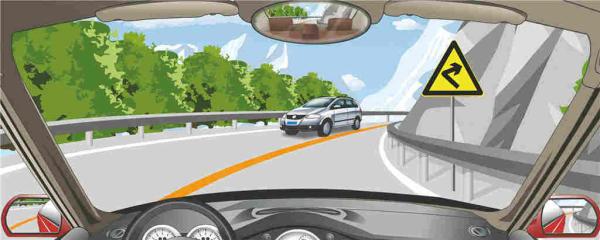
A. Stick to respective lanes and speed up to approach each other
B. Drive close to the central line of the road
C. Retain the normal speed
D. Slow down
Answer: D
19. Under such circumstances, what should be done by the motor vehicle driver?

A. Overtaking the vehicle in front on its left
B. Overtaking by occupying the opposite lane
C. Overtaking the vehicle in front on its right
D. Following the vehicle in front
Answer: D
20. What should be done by the driver who intends to overtake but the motor vehicle in front neither reduces its speed nor allows the right of way?
A. Continuously sounding the horn and accelerating to overtake
B. Accelerating and continuing to overtake
C. Refraining from overtaking
D. Following the vehicle in front closely and finding a chance to overtake
Answer: C