

1. The sign on the right warns of a one-way tunnel ahead.
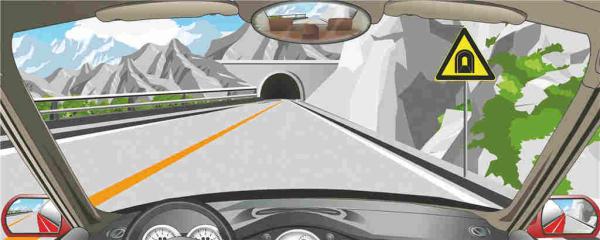
A. Right
B. Wrong
Answer: B
2. Turning on the high-beam is an effective way to improve visibility in fog weather.
A. Right
B. Wrong
Answer: B
3. The driver should speed up to 40 kilometers per hour when he sees this traffic sign.
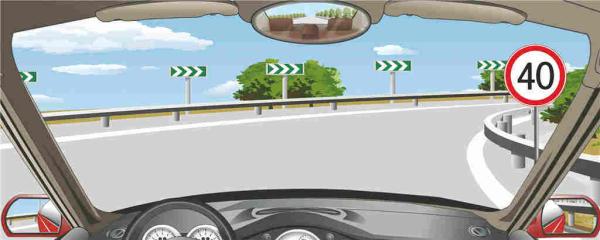
A. Right
B. Wrong
Answer: B
4. What should the driver do when the motor vehicle passes a flyover?
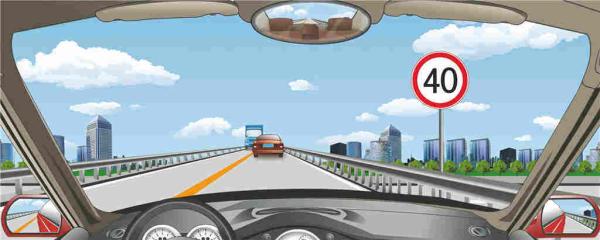
A. Speed up and pass rapidly
B. Keep the speed under 15 km/hour
C. Drive at the speed indicated by the traffic sign
D. Drive close to the central line of the flyover
Answer: C
5. When driving on a muddy road, the driver should hold the steering wheel firmly and speed up to pass through.
A. Right
B. Wrong
Answer: B
6. Which one of the following is a safe way for motor vehicles to converge into an intersection marked with this sign?

A. Speeding up and driving into the traffic flow directly
B. Driving into the traffic flow behind the gray car on the main road
C. Driving into the traffic flow from the front of the red car on the main road
D. Turning on the indicator and driving into the flow directly
Answer: B
7. What should be done to keep safe when a motor vehicle driver is overtaking in this condition?
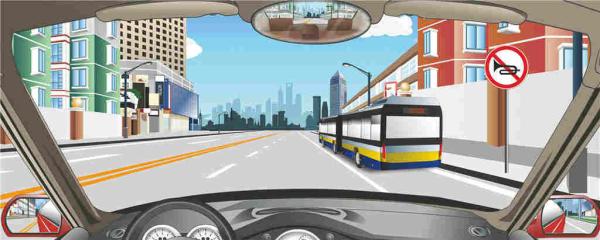
A. Reducing speed and keeping a safe distance
B. Continuously sounding the horn to indicate the vehicle in front
C. Accelerating to pass while keeping a certain distance
D. Overtaking by occupying the opposite lane
Answer: A
8. The guide arrow on the road surface of this lane indicates that drivers are only permitted to continue straight at the intersection ahead.
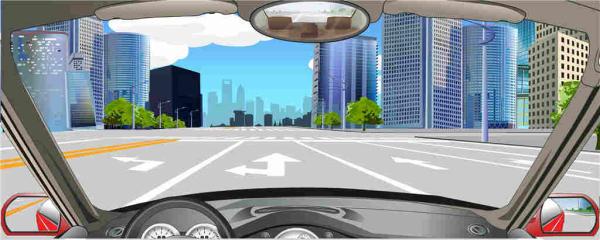
A. Right
B. Wrong
Answer: B
9. When a motor vehicle accidentally hits the guardrail of a highway, an effective protective measure is to turn dramatically in the opposite direction.
A. Right
B. Wrong
Answer: B
10. The guide arrow on the road surface of this lane indicates that U-turns and left turns are permitted at the intersection ahead.

A. Right
B. Wrong
Answer: A
11. The sign on the right indicates that no long-sounding horn.
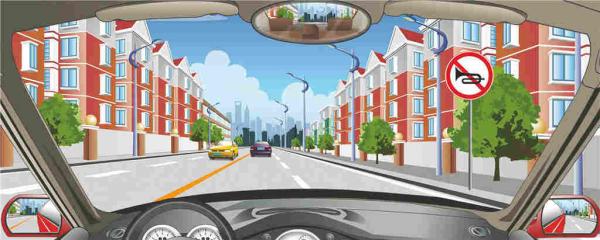
A. Right
B. Wrong
Answer: B
12. The sign on the right side indicates that turning left is not permitted at the intersection ahead.
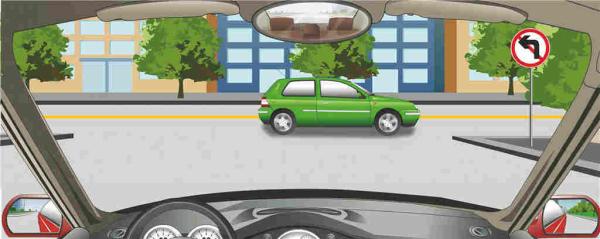
A. Right
B. Wrong
Answer: A
13. The sign in front indicates a one-kilometer distance from the next left exit.
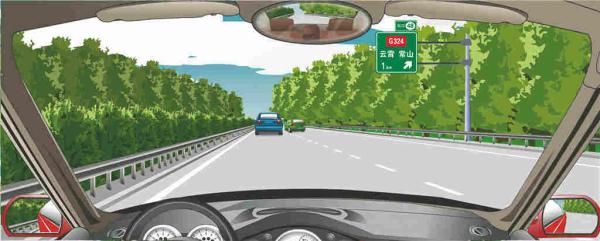
A. Right
B. Wrong
Answer: B
14. The sign on the right side indicates no entry for all vehicles.
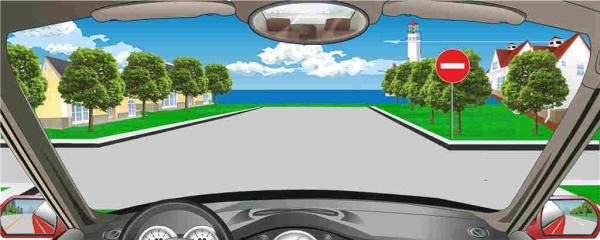
A. Right
B. Wrong
Answer: A
15. The sign on the right indicates an inspection station 100 meters ahead.
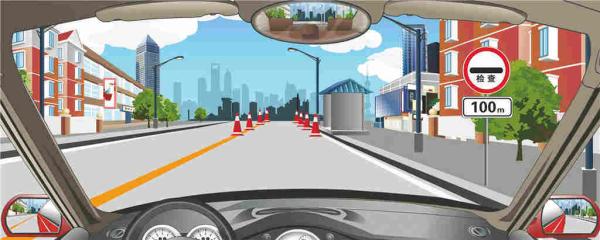
A. Right
B. Wrong
Answer: A
16. Motor vehicles can turn right when driving into an intersection with this traffic signal.
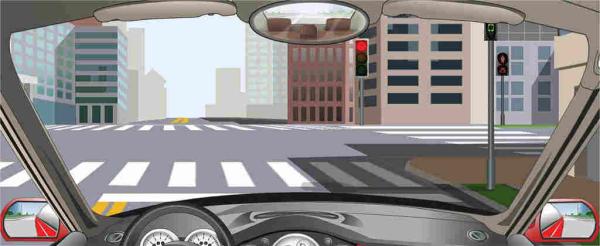
A. Right
B. Wrong
Answer: A
17. Under such circumstances, the motor vehicle is allowed to overtake.
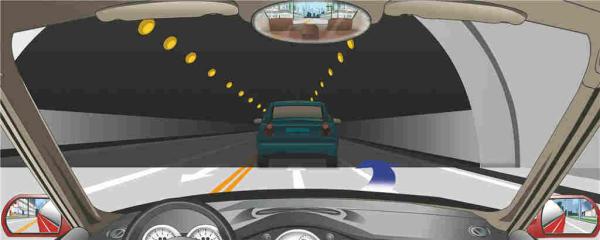
A. Right
B. Wrong
Answer: B
18. What should the driver do when the motor vehicle encounters this situation in front of a school?
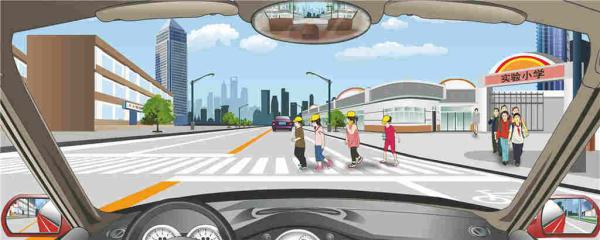
A. Bypass before the queue
B. Slow down and pass slowly
C. Stop promptly and yield
D. Go through in the spaces between the queues
Answer: C
19. Dangerous chemicals possess the characteristics of explosion, inflammation, poison, erosion and radiation.
A. Right
B. Wrong
Answer: A
20. If the road condition behind is good, motor vehicle drivers should reverse rapidly.
A. Right
B. Wrong
Answer: B