

1. When reaching an intersection, the driver should _____ if a turning vehicle cuts in.
A. Stop to evade
B. Maintain the normal speed
C. Speed up and pass ahead of it
D. Honk and pass ahead of it
Answer: A
2. A motorized vehicle driver who uses other motorized vehicles license plate and vehicle license is subject to a 3-point penalty.
A. Right
B. Wrong
Answer: B
3. How the front vehicle to run in this situation?
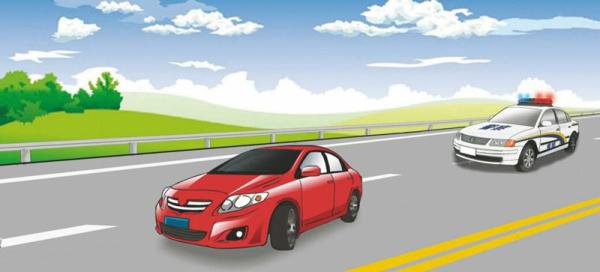
A. run as normal
B. yield
C. turn on the hazard lights
D. should not change lane
Answer: B
4. Pull down the switch of the turn signal, right-turn signal is on.
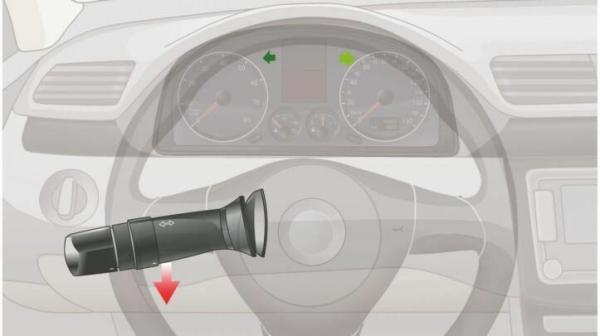
A. Right
B. Wrong
Answer: B
5. The passenger in the front seat does not need to buckle up when a motorized vehicle runs.
A. Right
B. Wrong
Answer: B
6. What is the max speed when in or out of the lane for non-motorized vehicles?
A. 40km/hr
B. 50km/hr
C. 60km/hr
D. 30km/hr
Answer: D
7. Which is correct to use lights on rainy day when following a vehicle?
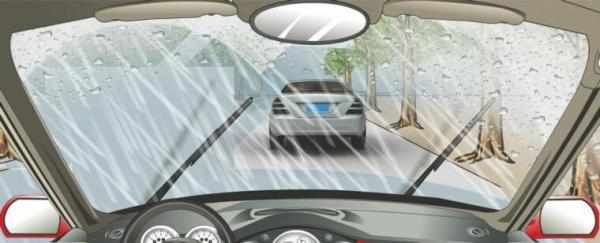
A. use high beam lights
B. cannot use the low beam lights
C. cannot use the high beam light
D. use fog lights
Answer: C
8. Whats the meaning of this sign?
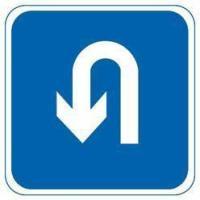
A. U turn
B. reversing
C. left turn
D. bypassing
Answer: A
9. When the green arrow for a lane is on and there are still pedestrians in the crosswalk before the vehicle, the driver should ___________.
A. Directly start up and pass
B. Start up and bypass the pedestrians from behind
C. Start up and bypass before the pedestrians
D. Start up after the pedestrians have passed
Answer: D
10. How to choose parking spot when needing to stop by the roadside?
A. stop in the opposite direction by the left roadside
B. stop in the parking area
C. stop anywhere as will by the roadside
D. stop in the sidewalk
Answer: B
11. A motorized vehicle runs on the road without a label of insurance, the traffic police can detain the vehicle license according to law.
A. Right
B. Wrong
Answer: B
12. When passing a dangerous section of a mountain road, especially by the locations of frequent occurrence of landslides, mudslides, the driver should drive with care and avoid stopping.
A. Right
B. Wrong
Answer: A
13. When driving on a road covered by ice and snow, the driver must reduce speed and increase the safe distance.
A. Right
B. Wrong
Answer: A
14. An unregistered motorized vehicle should have _________ if it has to run on the road temporarily.
A. certificate of legal origin
B. license plate for temporary moving
C. borrowed license plate
D. certificate of legal unit
Answer: B
15. On which kind of city road a vehicle is not allowed to overtake?
A. main streets
B. one-way section
C. section with heavy traffic flow
D. two one-way lanes
Answer: C
16. This sign indicates obstacle ahead and bypassing from left side.
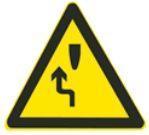
A. Right
B. Wrong
Answer: A
17. When encountering school children crossing the road in a queue, the driver should ______.
A. Speed up in advance and pass forcefully
B. Stop to yield
C. Reduce speed and go slowly
D. Continuously honk to urge them
Answer: B
18. Whats the meaning of this sign?
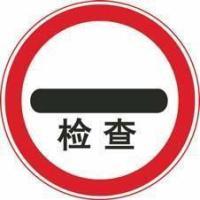
A. customs inspection
B. stop-for-inspection
C. frontier inspection
D. no passing
Answer: B
19. When driving at night, the driver should reduce speed and go forward if the vehicle coming in the opposite direction fails to turn off the high beam light. This is designed to prevent an accident from happening when there are pedestrians crossing the place where the lights of the two vehicles meet.
A. Right
B. Wrong
Answer: A
20. After a vehicle enters the ramp, the driver should swiftly increase the speed to more than 60 kilometers per hour.
A. Right
B. Wrong
Answer: B