

1. Mr. Qian drove a large sleeper coach with 45 passengers (capacity 40 people) at a speed of more than 40 kilometers per hour. On a long slope with sharp curves in Basu County, the coach fell into a 100-meter-deep valley, killing 17 people and injuring 20. What is the main illegal act committed by Mr. Qian?
A. Making a cellphone call while driving
B. Speeding
C. Carrying more people than permitted
D. Fatigued driving
Answer: BC
2. The sign on the left warns of no passing on the right-hand road ahead.
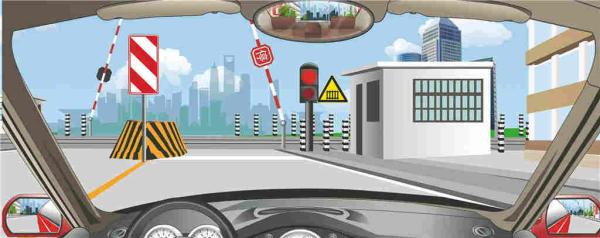
A. Right
B. Wrong
Answer: B
3. When the electric equipment and gasoline of a motor vehicle catches fire, the driver may extinguish the fire with water.
A. Right
B. Wrong
Answer: B
4. When making a turn on a mountainous road, drivers should cut speed, sound the horn and drive along the right side.
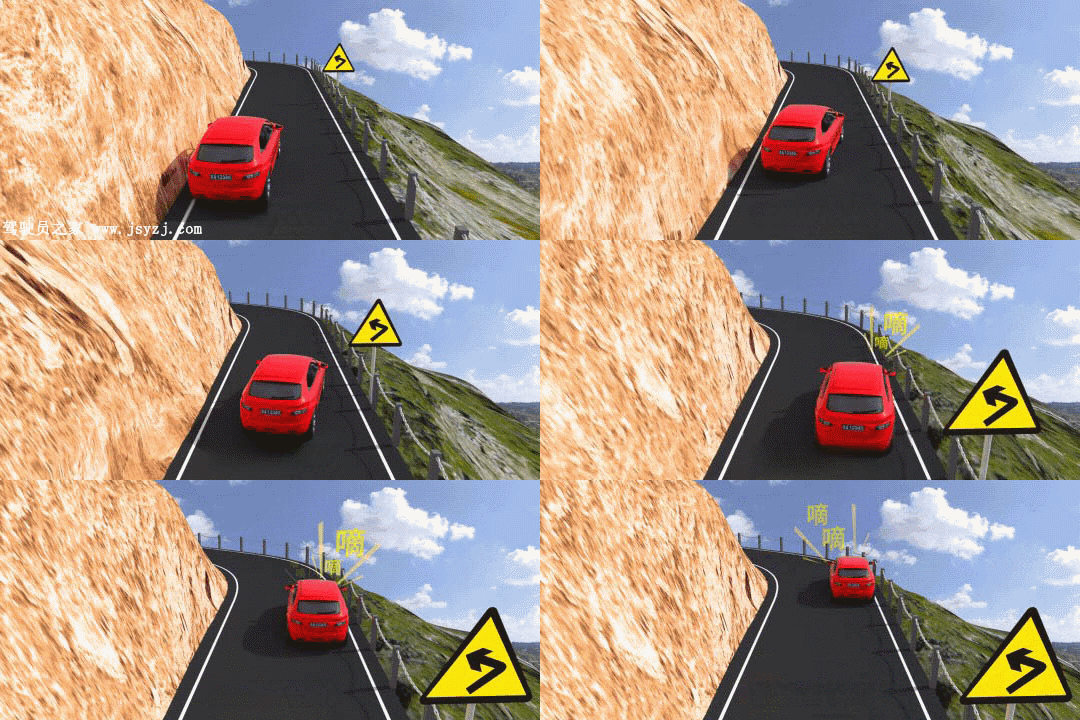
A. Right
B. Wrong
Answer: A
5. When passing this mountainous road, motor vehicle drivers should drive along the center of the road.
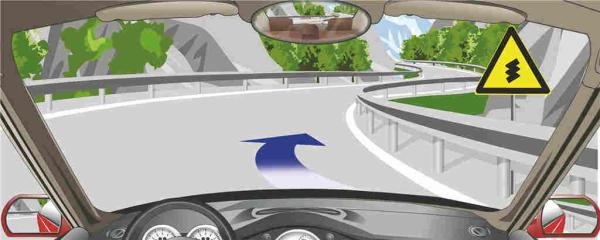
A. Right
B. Wrong
Answer: B
6. The slanted filled-in yellow marking in the middle of the road warns that there is a stationary obstacle ahead.
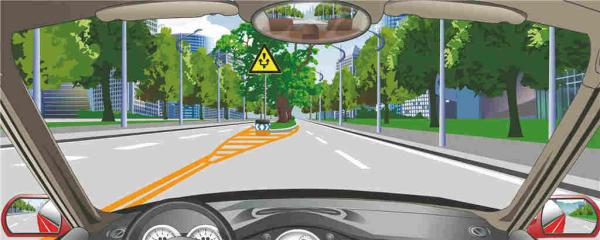
A. Right
B. Wrong
Answer: A
7. What should the driver do upon finding that one of the right tires is leaking while driving?
A. Brake swiftly to slow down
B. Brake slowly to slow down
C. Turn to the left side swiftly
D. Apply emergency braking
Answer: B
8. The sign on the right warns of no passing on either side of the road ahead.
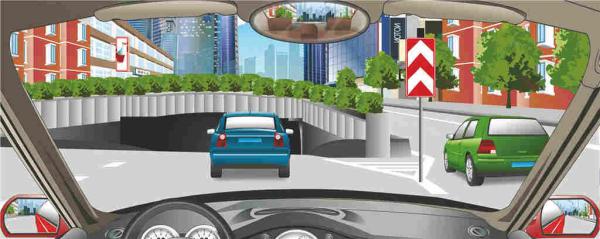
A. Right
B. Wrong
Answer: B
9. What is the function of ABS during emergency braking?
A. Shortening the braking distance
B. Keeping steering capacity of the motor vehicle
C. Relief the braking inertia
D. Controlling directions automatically
Answer: B
10. Under such circumstances, what should motor vehicle drivers do?
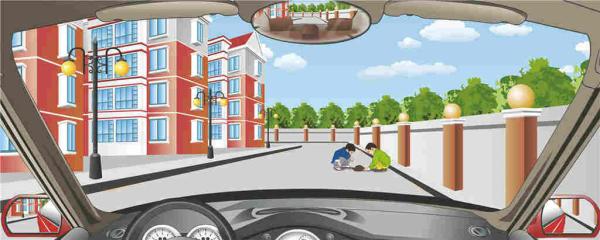
A. Continuously sound the horn
B. Pass quickly
C. Pass at a lower speed
D. Bypass from either side
Answer: C
11. When there is a braking failure on a downhill road, if there is no favorable terrain or opportunity to stop the vehicle, the driver should drop gear by one position or two positions, and control the speed by taking advantage of the braking role of the engine.
A. Right
B. Wrong
Answer: A
12. A motor vehicle should not obstruct other vehicles when it enters the driving lane from an acceleration lane.
A. Right
B. Wrong
Answer: A
13. When driving in a heavy rain, drivers should contro their speed to prevent their vehicles from sliding.
A. Right
B. Wrong
Answer: A
14. Motor vehicles are not allowed to reverse in a tunnel.
A. Right
B. Wrong
Answer: A
15. When there is a braking failure, the driver should first control the direction and then try to control the speed.
A. Right
B. Wrong
Answer: A
16. The sign on the right warns that the road will narrow over the next 5 kilometers.
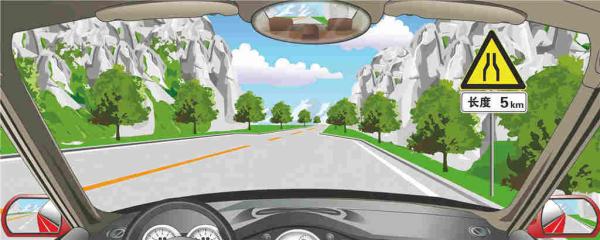
A. Right
B. Wrong
Answer: A
17. Which one of the following measures is correct when a motor vehicle intends to overtake but the vehicle in front refuses to yield?
A. Use a long-sounding horn
B. Follow the vehicle in front while turning high-beam
C. Wait for it to yield while keeping a safe distance
D. Use high-beam and low-beam alternatively
Answer: C
18. The sign on the right indicates a bypass flow intersection ahead.
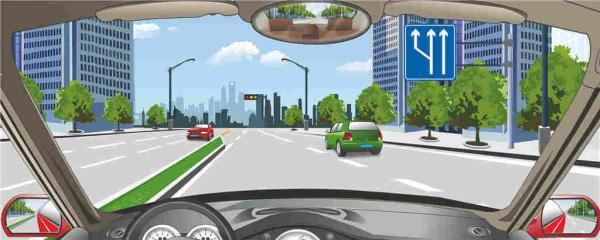
A. Right
B. Wrong
Answer: B
19. Motor vehicles are not allowed to stop in this area for a long time.
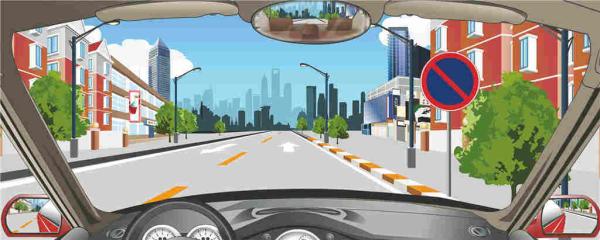
A. Right
B. Wrong
Answer: A
20. When a motor vehicle equipped with ABS makes an emergency brake, the driver can tread the brake pedal heavily.
A. Right
B. Wrong
Answer: A