

1. Traffic Police can detain the vehicle which is suspected of using other vehicle’s license plate and vehicle license.
A. Right
B. Wrong
Answer: A
2. A motorized vehicle driver who drives the vehicle which permission is different is subject to a ________.
A. 2-point penalty
B. 3-point penalty
C. 6-point penalty
D. 12-point penalty
Answer: D
3. What is the meaning of this sign?
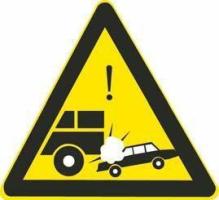
A. accident-prone section
B. construction section
C. reducing speed and going slowly section
D. jammed section
Answer: A
4. It is an illegal act for the driver to make calls while driving.
A. Right
B. Wrong
Answer: A
5. After a tire blows out and before the driver can control the speed of the vehicle, he should refrain from using the foot brake to stop the vehicle. Otherwise, a horizontal swing of the vehicle can cause greater danger.
A. Right
B. Wrong
Answer: A
6. What is the meaning of this sign?
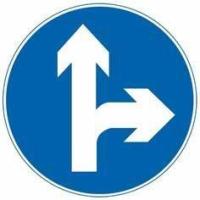
A. going straight and left turn
B. going straight and right turn
C. no going straight and no right turn
D. left turn and right turn only
Answer: B
7. Traffic Police can detain the vehicle according to law if it is without the mandatory traffic accident insurance in accordance with state regulations.
A. Right
B. Wrong
Answer: A
8. Traffic Police only imposes a fine if a vehicle is suspected of using the falsified or altered label of inspection.
A. Right
B. Wrong
Answer: B
9. If a person escapes after causing a traffic accident and constitutes a crime, his driving license should be revoked and he is banned _____ from re-obtaining a driving license.
A. within 5 years
B. within 10 years
C. within 20 years
D. for lifetime
Answer: D
10. Driving license will be detained if you allow to drive your car.
A. driver during the period of probation
B. driver who has obtained a driving license
C. one whose driving license been revoked
D. one whose penalty points reach 6 points
Answer: C
11. When passing an intersection without traffic lights, the driver should go through as fast as possible.
A. Right
B. Wrong
Answer: B
12. When using emergency brake, be aware of keeping the body of the motorcycle being perpendicular to the ground to avoid sideslip.
A. Right
B. Wrong
Answer: A
13. What is the meaning of this sign?
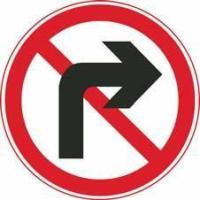
A. no entering the intersection
B. no right turn
C. no changing lane
D. no U turn
Answer: B
14. While driving a motorcycle, it is permitted to keep one hand on the handlebar but not allowed two hands leave handle bars at the same time.
A. Right
B. Wrong
Answer: B
15. What is the meaning of this sign?
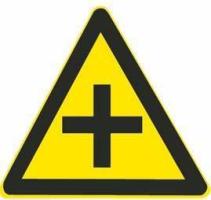
A. intersection
B. ring intersection
C. T-shaped intersection
D. Y-shaped intersection
Answer: A
16. At a road that has more than two vehicle lanes in the same direction, the motorcycles should use the very left one.
A. Right
B. Wrong
Answer: B
17. A person can not apply the motorized vehicle driving license, if he has been held for criminal liabilities according to law because of driving after drinking and causing a major traffic accident.
A. Right
B. Wrong
Answer: A
18. When a driver drives a motorized vehicle during the period of probation, the driver should paste or hang a uniform probation mark on the rear part of the vehicle.
A. Right
B. Wrong
Answer: A
19. When a tire blowout on the road, the driver should control the direction of the vehicle and use emergency braking to bring the motorcycle swiftly to a stop.
A. Right
B. Wrong
Answer: B
20. What is the meaning of this sign?
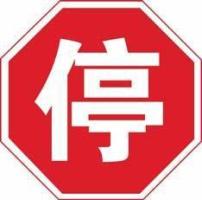
A. stop to yield
B. no stopping temporarily
C. no entry
D. no long stopping
Answer: A