

1. Under this circumstance, motor vehicle drivers should give the right of way to oncoming vehicle.

A. Right
B. Wrong
Answer: A
2. The sign above the tunnel indicates a height limit of 3.5 meters on the road ahead.
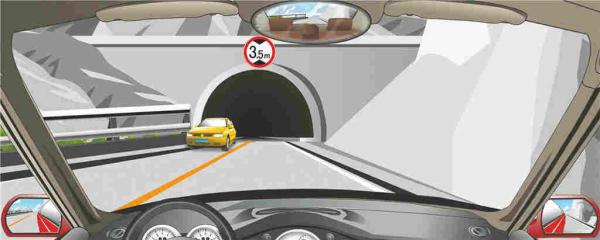
A. Right
B. Wrong
Answer: A
3. On which of the following roads may the wheels be most easily locked when braking?
A. Concrete road
B. Dirt road
C. Road covered by ice and snow
D. Sand road
Answer: C
4. The sign on the right warns drivers to yield for oncoming motor vehicles.
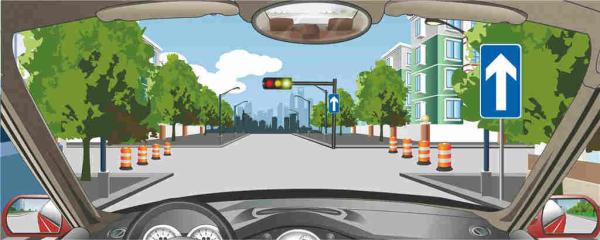
A. Right
B. Wrong
Answer: B
5. When finding a tire burst on the road, the driver should gently depress the brake pedal, reduce speed and stop the vehicle slowly.
A. Right
B. Wrong
Answer: A
6. When evading an emergency, except for being calm, what principle should be held by drivers?
A. Evading people first and then objects
B. Evading objects first and then vehicles
C. Evading vehicles first and then people
D. Evading objects first and then people
Answer: A
7. The sign on the left indicates that drivers should stop to take a pass card at the toll station ahead.
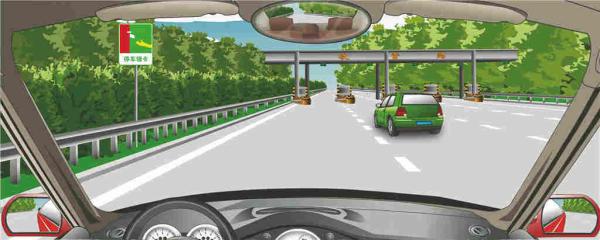
A. Right
B. Wrong
Answer: A
8. The guide arrow on the road surface of this lane indicates that U-turns and left turns are permitted at the intersection ahead.

A. Right
B. Wrong
Answer: A
9. The solid yellow line on the curb indicates that temporary stopping or parking is allowed at the roadside.
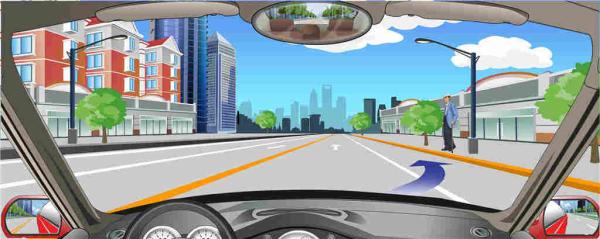
A. Right
B. Wrong
Answer: B
10. Sideslip happens most easily on which one of the following road surfaces?
A. Dry concrete road
B. Road surface at the beginning of rain
C. Damp concrete road surface
D. Road in heavy rain
Answer: B
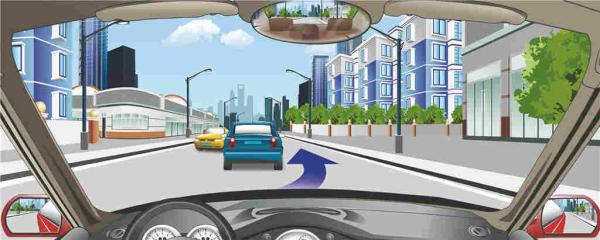
11. It is safest for a motor vehicle driver to overtake the vehicle in front from its righthand on this kind of road.
A. Right
B. Wrong
Answer: B
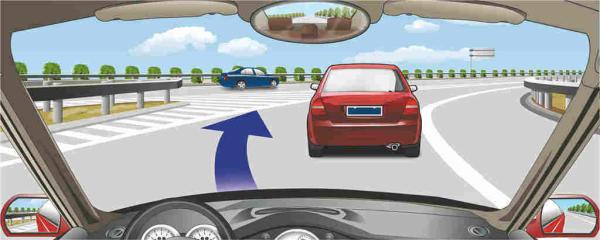
12. The motor vehicle may promptly overtake the vehicle in front from the left side in this situation.
A. Right
B. Wrong
Answer: B
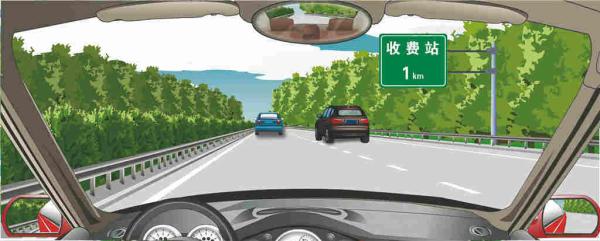
13. The sign on the right indicates a one-kilometer distance from ETC toll station ahead.
A. Right
B. Wrong
Answer: B
14. When there is a braking failure, the driver should first control the direction and then try to control the speed.
A. Right
B. Wrong
Answer: A
15. When the driver discovers a tire is leaking and steers the vehicle off the main driving lane, he/she should refrain from applying emergency braking so as to avoid a vehicle turnover or a rear-end collision arising from the late braking of the vehicle behind.
A. Right
B. Wrong
Answer: A
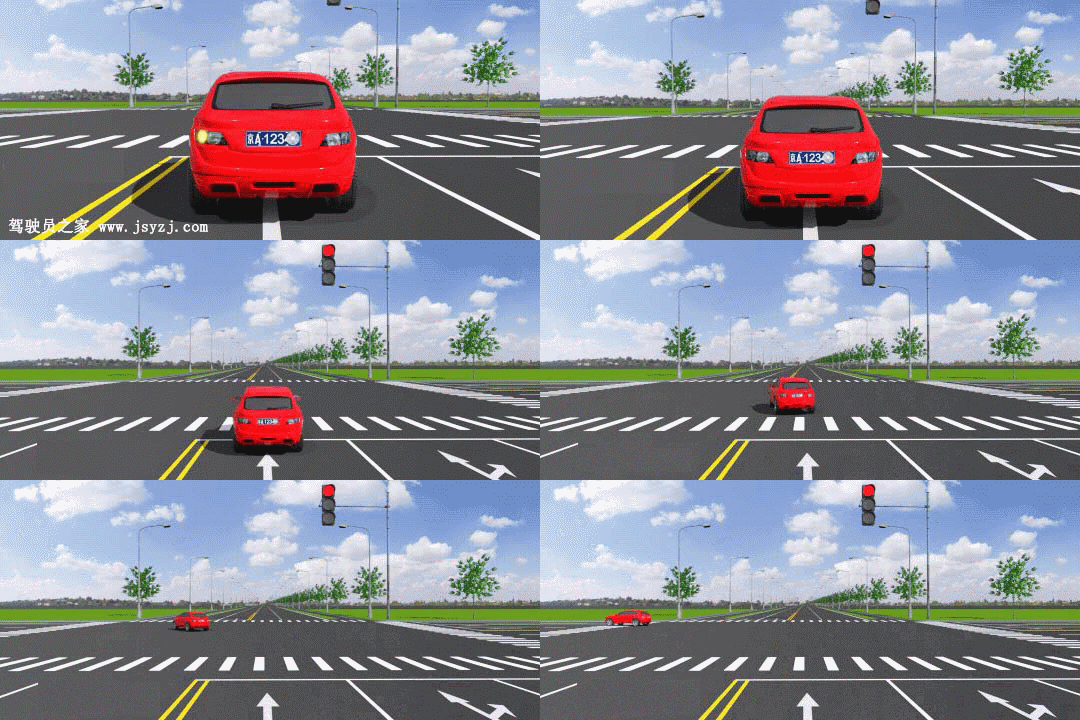
16. How many kinds of law-breaking acts are displayed in flash 4?
A. One
B. Two
C. Three
D. Four
Answer: C
17. The sign in the red circle indicates that vehicles except non-motor vehicles are not allowed to drive in this lane.
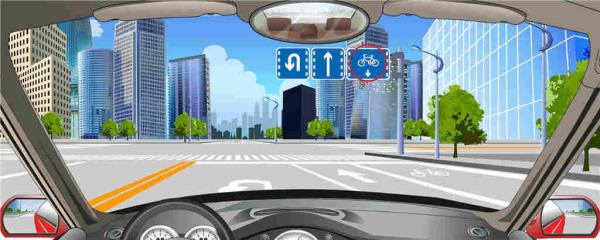
A. Right
B. Wrong
Answer: A
18. The sign on the right warns of an embankment road 200 meters ahead.
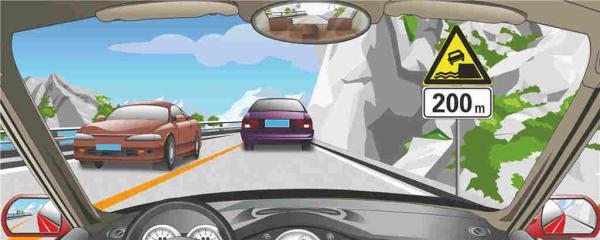
A. Right
B. Wrong
Answer: A
19. The motor vehicle should speed up and pass rapidly under this situation.
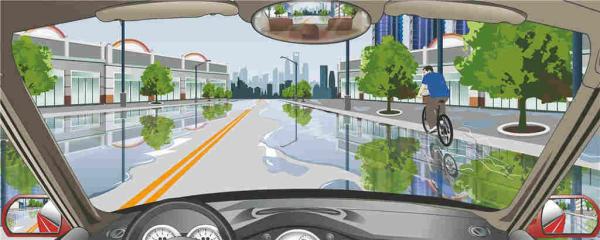
A. Right
B. Wrong
Answer: B
20. When parking temporarily in this situation, motor vehicle drivers are allowed to turn the steering wheel right to avoid sliding.
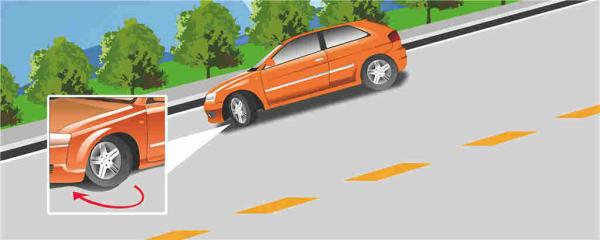
A. Right
B. Wrong
Answer: A