

1. When driving in rain or snow, the driver should turn left to stabilize the vehicle if the motor vehicle slides to the right side.
A. Right
B. Wrong
Answer: B
2. The marking on the road surface indicates that the speed limit of this road section is 80 km/hour.
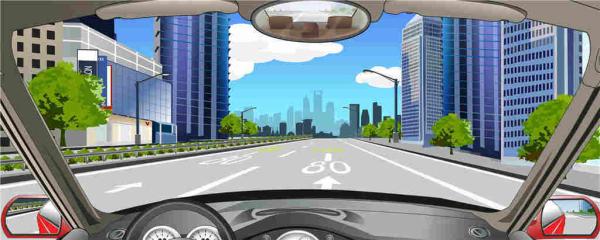
A. Right
B. Wrong
Answer: B
3. What is the most frequent problem for driving on a muddy road?
A. High resistance force
B. Sideways slide
C. The motor vehicle bumps
D. Steering failure
Answer: B
4. When driving onto the left lane, motor vehicle drivers are allowed to make a U-turn.
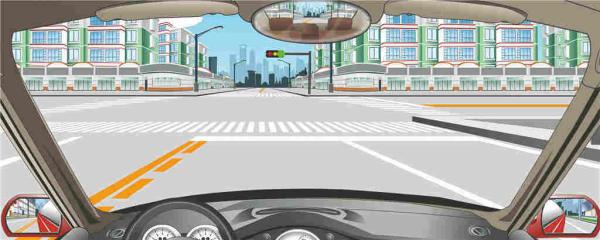
A. Right
B. Wrong
Answer: A
5. How should lamps be used by the motor vehicle driver who follows a vehicle on a road section where the street light condition is good?
A. Turn off the headlamp
B. Use high-beam
C. Turn off all lamps
D. Use low-beam
Answer: D
6. Before driving, it is necessary to check whether the cooling liquid, engine oil and fuel oil, are leaking.
A. Right
B. Wrong
Answer: A
7. When a gas tanker is leaking heavily, which of the following measures is wrong?
A. Cut off the power
B. Wear gas mask and protect gloves
C. Turn off the valve to stop leaking
D. Evacuate people to the leeward side
Answer: D
8. The sign on the right indicates a section for ascertaining the distance between the vehicles 200 meters ahead.
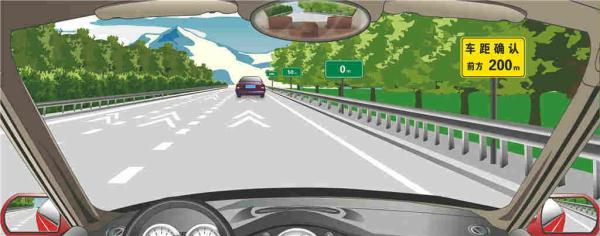
A. Right
B. Wrong
Answer: A
9. What should the driver do when seeing these hand signals?
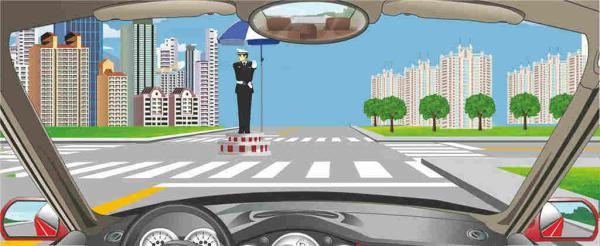
A. Turn left at the intersection
B. Stop and wait
C. Go straight at the intersection
D. Drive to the waiting area for turning left
Answer: B
10. Under such circumstances, the motor vehicle is allowed to overtake.
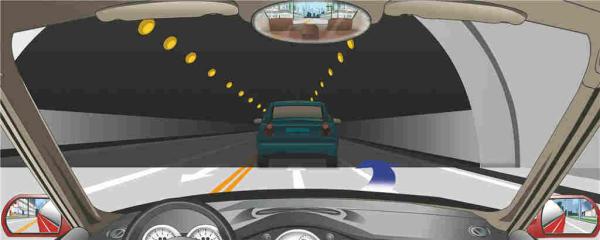
A. Right
B. Wrong
Answer: B
11. When a motor vehicle slides sideways, how should the driver adjust the direction?
A. If the front wheels skid sideways, turn the steering wheel in the direction of the skid
B. If the front wheels skid sideways, turn the steering wheel in the opposite direction of the skid
C. If the rear wheels skid sideways, turn the steering wheel in the direction of the skid
D. If the rear wheels skid sideways, turn the steering wheel in the opposite direction of the skid
Answer: BC
12. When passing a sharp curve, motor vehicle drivers may overtake if there are few other vehicles on the road.
A. Right
B. Wrong
Answer: B
13. When the speed indicated by the speed limit sign on the highway contradicts the speed indicated for the specific lanes the speed indicated for the specific lanes should prevail.
A. Right
B. Wrong
Answer: B
14. Before setting off, it is necessary to check the driving cabin, engine cabin, external and tires of the motor vehicle.
A. Right
B. Wrong
Answer: A
15. What should be done by the driver who intends to overtake but finds that the vehicle in front is also overtaking?
A. Following the vehicle in front closely and finding a chance to overtake it
B. Accelerating to overtake forcefully
C. Continuously sounding the horn to urge the vehicle in front to yield
D. Refraining from overtaking and letting the vehicle in front overtake first
Answer: D
16. The sign on the left warns that there are vehicles converging into the intersection on the left.
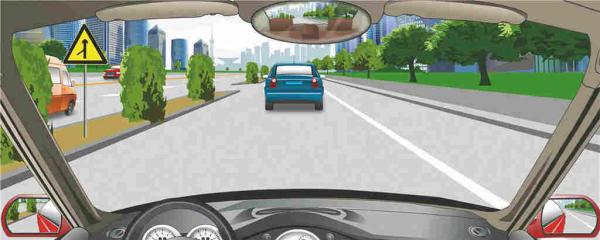
A. Right
B. Wrong
Answer: A
17. During normal driving, the driver should do his best to run close to or on the central line so as not to allow oncoming vehicles any opportunity to occupy his own route.
A. Right
B. Wrong
Answer: B
18. The sign on the left indicates vehicles are allowed to drive on the section ahead.
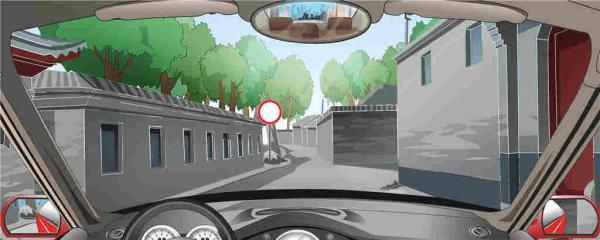
A. Right
B. Wrong
Answer: B
19. The sign in front is an advance announcement of the directions led by this intersection.
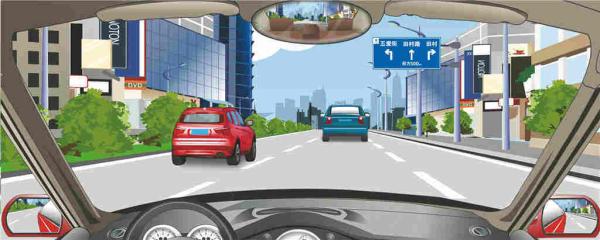
A. Right
B. Wrong
Answer: A
20. When driving in a heavy rain, drivers should contro their speed to prevent their vehicles from sliding.
A. Right
B. Wrong
Answer: A