

1. Whats the meaning of this sign?
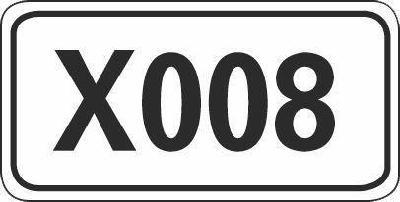
A. provincial highway No.
B. national highway No.
C. county road No.
D. township road No.
Answer: C
2. What marking is the combination of the white broken lines and the triangle area?
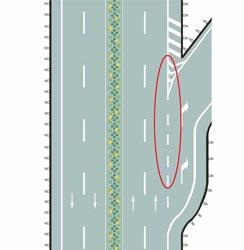
A. road entry marking
B. lane-dividing line that can be crossed
C. deceleration line at road exit
D. road exit marking
Answer: D
3. A rear tire blowout can sway the tail of the vehicle. The driver should firmly hold the steering wheel with both hands to ensure the vehicle go straight, reduce speed and then stop.
A. Right
B. Wrong
Answer: A
4. What is the max speed limit on this road?
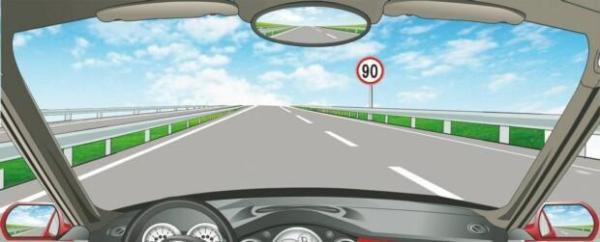
A. 100 km/hr
B. 90 km/hr
C. 120 km/hr
D. 110 km/hr
Answer: B
5. What is the max speed on this highway?

A. 70km/hr
B. 50km/hr
C. 40km/hr
D. 30km/hr
Answer: C
6. Which kind of sign is it?
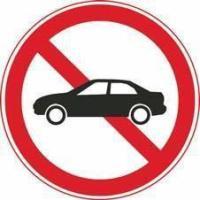
A. warning sign
B. prohibitive sign
C. indicative sign
D. directional sign
Answer: B
7. Whats the meaning of this sign?
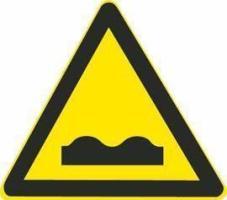
A. low-lying road
B. hump bridge
C. bump road
D. high outburst road
Answer: C
8. The motorized vehicle driver is not allowed to drive a motorized vehicle when his driving license is detained.
A. Right
B. Wrong
Answer: A
9. What marking are the white broken lines in the circles?
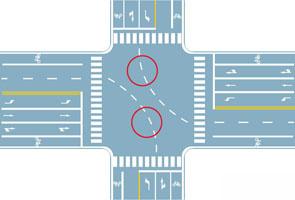
A. small vehicles turning lines
B. lane connection lines
C. non-motorized vehicles guide lines
D. intersection guide line
Answer: D
10. Continuously using the foot brake on a long downhill road ________.
A. Can shorten the engines service life
B. Increases the drivers labor intensity
C. Can drastically reduce the braking efficiency due to the rising temperature of the brake
D. Can easily cause vehicle overturn
Answer: C
11. How to run in this situation?
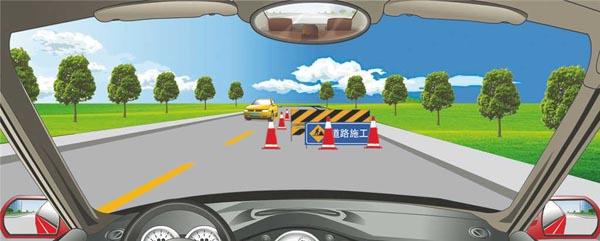
A. stop and yield to the opposite car
B. turn on the left-turn signal and run on the left side
C. turn on the head lights to let the other side yield
D. speed up to bypass the obstacle and then cross the other vehicle
Answer: A
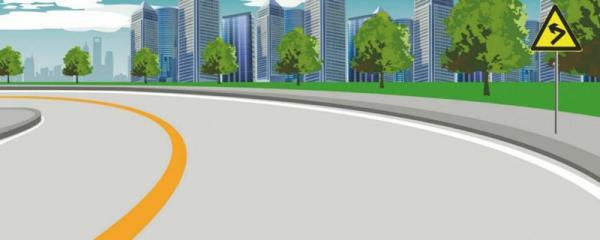
12. What is this traffic sign?
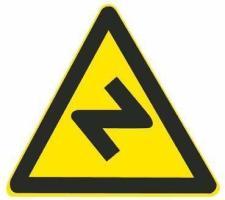
A. slippery section
B. sharp curve
C. inverse curve
D. continuous curves
Answer: C
13. A motorized vehicle is not allowed to stop in the section within
A. 5m
B. 10m
C. 50m
D. 30m
Answer: C
14. A motorized vehicle that will turn right at an intersection but has a vehicle in front in the same lane waiting for the green light should ______________.
A. Stop and wait for his turn
B. Honk to indicate the vehicle in front to yield
C. Bypass the vehicle in front from the right side and go through the intersection
D. Bypass the vehicle in front from the left side and go through the intersection
Answer: A
15. After starting the engine, it lights to indicate that ______

A. engine main oil way blockage
B. engine oil pressure is too low
C. engine crankshaft box leaks
D. engine oil pressure is too high
Answer: B
16. Which part does it control when rotating this part of the switch?
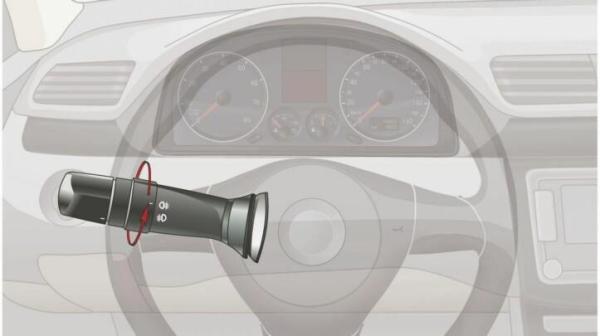
A. the low beam lights
B. the head and tail fog lights
C. high beam lights
D. turn signals
Answer: B
17. What marking is the white polylines in the circle?
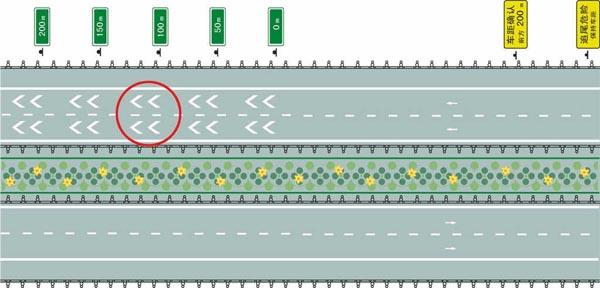
A. ascertaining the distance between the vehicles
B. driving at reduced speed
C. ascertaining the speed of the vehicles
D. reducing the speed at the intersection
Answer: A
18. Before a vehicle enters an intersection, the driver should reduce speed, observe and make sure it is safe to do so.
A. Right
B. Wrong
Answer: A
19. You should speed up to go through the railway crossing in this case.
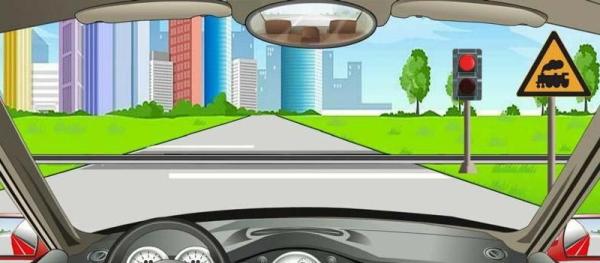
A. Right
B. Wrong
Answer: B
20. It lights to indicate that ______

A. the front fan works
B. air external circulation
C. windscreen defroster
D. air internal circulation
Answer: D