

1. The sign on the right indicates that turning right is not permitted at the intersection ahead.

A. Right
B. Wrong
Answer: A
2. When the motor vehicle stops on an uphill section, how should the driver use the foot brake?
A. Earlier than on a level road
B. Later than on a level road
C. As timely as on a level road
D. Strongly depress the foot brake pedal
Answer: B
3. When encountering a vehicle in front ascending on a mountainous road covered with ice and snow, what should the motor vehicle driver do?
A. Ascend after the vehicle in front passes the slope
B. Overtake the vehicle in front swiftly and drive on
C. Overtake the vehicle in front with a slow speed and drive on
D. Follow the vehicle in front closely
Answer: A
4. Motor vehicle drivers are allowed to overtake on this road section.
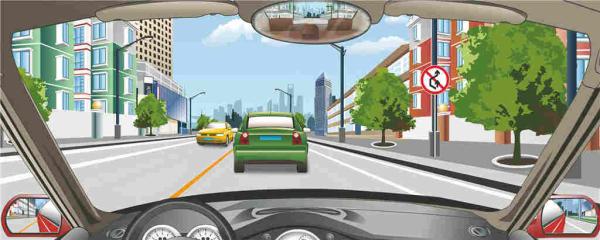
A. Right
B. Wrong
Answer: B
5. What is the function of ABS during emergency braking?
A. Shortening the braking distance
B. Keeping steering capacity of the motor vehicle
C. Relief the braking inertia
D. Controlling directions automatically
Answer: B
6. When driving on a snowy day, drivers should follow the tracks on the road before them.
A. Right
B. Wrong
Answer: A
7. When a motor vehicle catches fire on the expressway the driver should drive the motor vehicle to the service area or the parking lot to extinguish the fire.
A. Right
B. Wrong
Answer: B
8. A correct measure to avoid tire burst of motor vehicles is to lower the tire pressure.
A. Right
B. Wrong
Answer: B
9. As shown in this picture, the intersection guide line is designed to help drivers make turns.

A. Right
B. Wrong
Answer: A
10. When passing this mountainous road, motor vehicle drivers should drive along the center of the road.
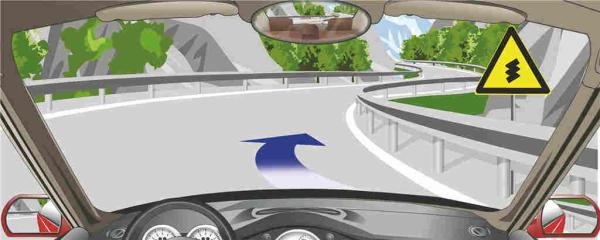
A. Right
B. Wrong
Answer: B
11. Under this circumstance, motor vehicle drivers should not reduce speed.
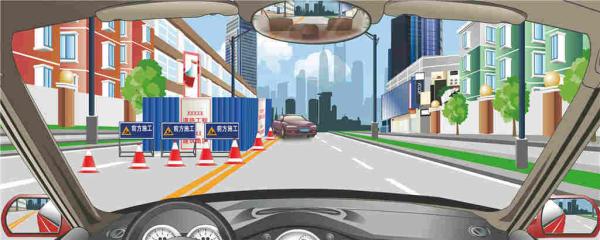
A. Right
B. Wrong
Answer: B
12. Which one of the following is the safest way to pass the oncoming vehicle on this road?
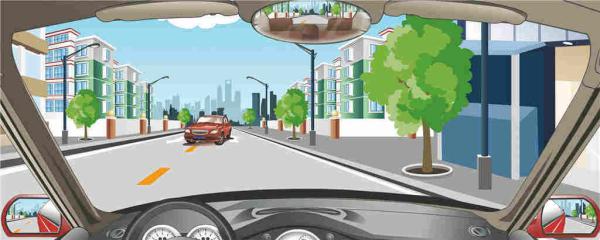
A. Driving along the central line
B. Driving with headlamp on
C. Yielding by the right side of the road
D. Yielding by the left side of the oncoming vehicle
Answer: C
13. The sign on the right warns of an abrupt slope section ahead.
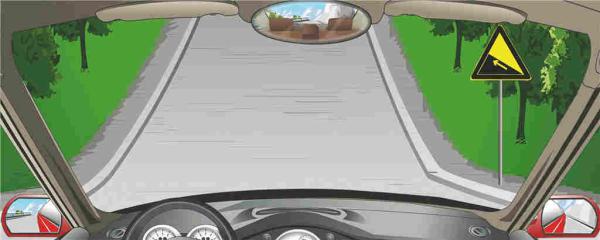
A. Right
B. Wrong
Answer: A
14. When a motor vehicle passes over an inundated road, what should the driver do for safe driving?
A. Slow down and drive with special care
B. Speed up and pass rapidly
C. Maintain a normal speed and pass through
D. Change to a low gear and speed up to pass
Answer: A
15. The diamond-shaped broken line warns that drivers should drive at a lower speed on the road sections ahead.
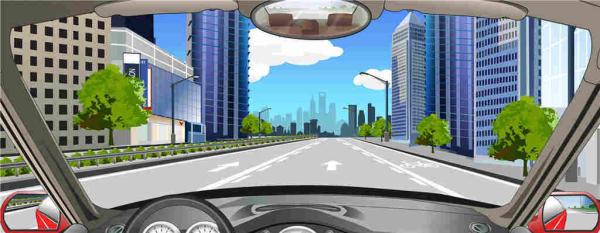
A. Right
B. Wrong
Answer: A
16. The sign on the right indicates a 200-meter distance from the gas station ahead.
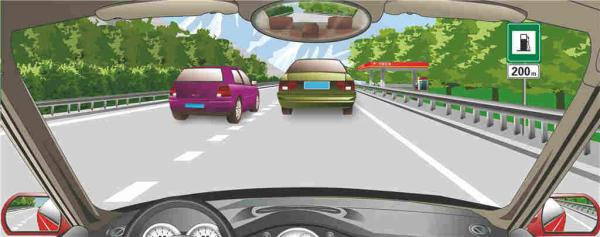
A. Right
B. Wrong
Answer: A
17. When there is a sudden braking failure on a downhill road, in which ones of the following ways can drivers reduce speed?
A. Driving onto the emergency lane and reduce speed and stop there
B. Rubbing the vehicle body against the rocks or trees on roadside
C. Pulling up the handbrake first
D. Immediately changing to a low gear
Answer: ABD
18. For evading an emergency on an expressway, which of the following principles should drivers stick to?
A. Evading vehicles first and objects later
B. Evading people first and objects later
C. Evading vehicles first and people later
D. Evading objects first and people later
Answer: B
19. The sign in front indicates an open-air parking lot with rest area is 200 meters ahead.
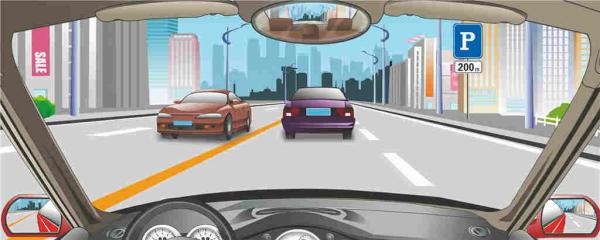
A. Right
B. Wrong
Answer: A
20. The sign on the right warns of right-hand S-shaped bend ahead.
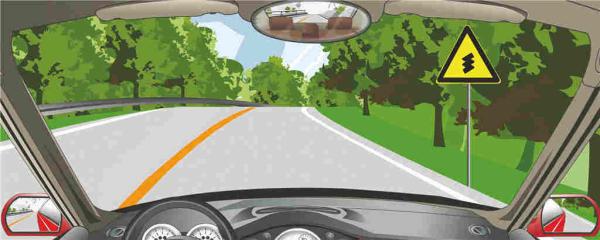
A. Right
B. Wrong
Answer: B