

1. Whats the meaning of this yellow sign on the road?
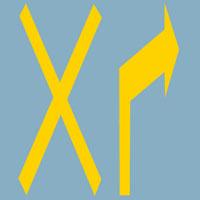
A. no U turn
B. no left turn
C. no right turn
D. no going straight
Answer: C
2. Driving a motorized vehicle shall not overtake in tunnels, steep slopes and other special sections.
A. Right
B. Wrong
Answer: A
3. When there is a diversion traffic control on the expressway, a driver can stop by the side to wait instead of leaving out of the expressway, for continually running after the traffic control.
A. Right
B. Wrong
Answer: B
4. When encountering stopping and waiting in turn or slow-moving vehicles in front, the motorized vehicle may _________.
A. borrow road to overtake
B. occupy the opposite lane
C. follow the vehicles in front
D. cut in the waiting vehicles
Answer: C
5. Whats the meaning of this guide arrow?
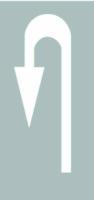
A. change to left lane
B. going straight ahead
C. U turn ahead
D. right turn ahead
Answer: C
6. The reason that a road destroyed by flood affects safe driving and smooth passage is __.
A. The road grip becomes stronger
B. It is impossible to see the hidden holes and bumps in road surface
C. The visibility become lower and blurs the field of vision
D. The sunshine reflection blurs the view
Answer: B
7. When overtaking, the driver should try his best to increase the horizontal distance and,when necessary, may cross the solid line to overtake.
A. Right
B. Wrong
Answer: B
8. When a vehicle approaches an intersection without crosswalk, the driver should _______ if he finds people are crossing the street.
A. Reduce speed or stop to yield
B. Honk to indicate them to yield
C. Immediately change lane and bypass the pedestrians
D. Pass before the pedestrians
Answer: A
9. Which kind of vehicle can be applied for when initially applying for the driving license?
A. midsize bus
B. large bus
C. ordinary motor tricycle
D. trailer
Answer: C
10. Whats the meaning of this sign?
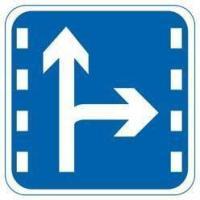
A. straight-going and left-turn lane
B. straight-going and side road exit lane
C. lane for both going straight and right turn
D. lanes for going in different directions
Answer: C
11. The age should be 18 ~ 70 years old when applying for the driving license of small vehicle or three-wheeled automobile.
A. Right
B. Wrong
Answer: A
12. The oil pressure of engine may be too high if it lights.

A. Right
B. Wrong
Answer: B
13. Driving a motorized vehicle on the expressway is not allowed to exceed the marked maximum speed.
A. Right
B. Wrong
Answer: A
14. Traffic Police can detain the vehicle which is suspected of using the falsified or altered license plate and vehicle license.
A. Right
B. Wrong
Answer: A
15. When driving during the period of probation, the driver should paste or hang _____ on the rear part of the vehicle
A. a mark of avoiding with care
B. a mark of paying attention of beginner
C. a uniform probation mark
D. a mark of paying attention of vehicle distance
Answer: C
16. When causing a road accident involving human casualties, the driver should immediately rescue the injured people and report to the traffic police as soon as possible.
A. Right
B. Wrong
Answer: A
17. The main feature of pedestrians participating in road traffic is that _________.
A. They move slowly
B. They like to get together and look on
C. They walk around at will and can easily change directions
D. All the above
Answer: C
18. What does the traffic light mean?
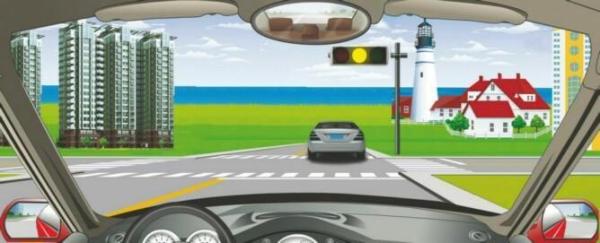
A. no right turn
B. intersection warning
C. going straight is allowed
D. speed up and pass
Answer: B
19. Before entering a level crossing, the vehicle should reduce speed and change to a lower gear, and _____ after entering the level crossing.
A. Cannot change gear
B. Can change gear
C. Can change to a higher gear
D. Stop and look
Answer: A
20. A motorized vehicle driver who uses other motorized vehicles license plate and vehicle license is subject to a 3-point penalty.
A. Right
B. Wrong
Answer: B