

1. The broken and solid white line on the road indicates that crossing is allowed on the solid line side.
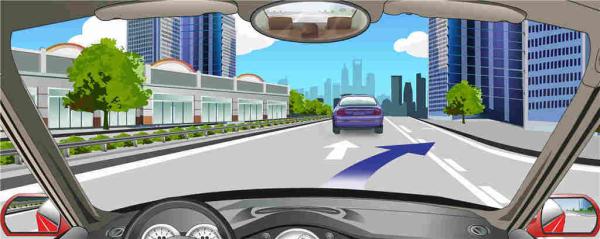
A. Right
B. Wrong
Answer: B
2. What does this sign on the fly-over junction indicate?
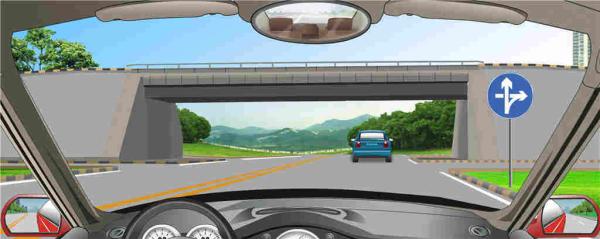
A. Turn right
B. Drive straight or turn left
C. Drive straight or turn right
D. Take a U-turn under bridge
Answer: C
3. When a front tire bursts, after controlling the driving direction, what should be done by the driver in order to slow down and stop?
A. Immediately change to a high gear
B. Immediately change to a low gear
C. Immediately change to the neutral gear
D. Apply emergency braking
Answer: B
4. When passing this mountainous road, motor vehicle drivers should drive along the center of the road.
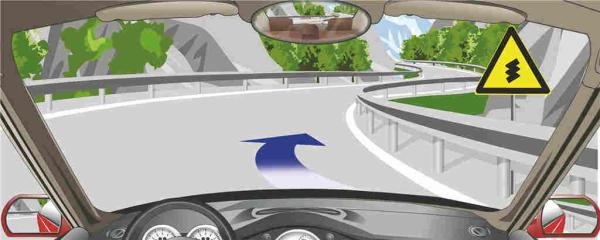
A. Right
B. Wrong
Answer: B
5. If a motor vehicle deviates from the straight direction due to steering failure, what should be done by the driver in order to reduce speed and stop the vehicle as soon as possible?
A. Gently depressing the brake pedal
B. Pulling up the handbrake
C. Immediately changing to a low gear to reduce speed
D. Decisively and continuously depressing and releasing the brake pedal
Answer: D
6. The sign on the right side indicates that turning left is not permitted at the intersection ahead.
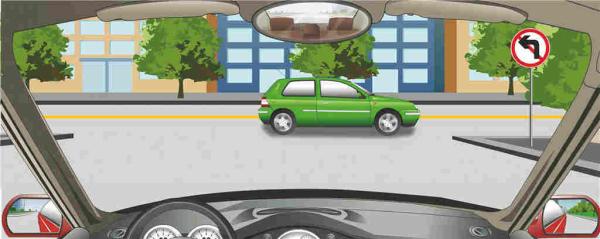
A. Right
B. Wrong
Answer: A
7. The guide arrow on the road surface of this lane indicates that only left turns are permitted at the intersection ahead.
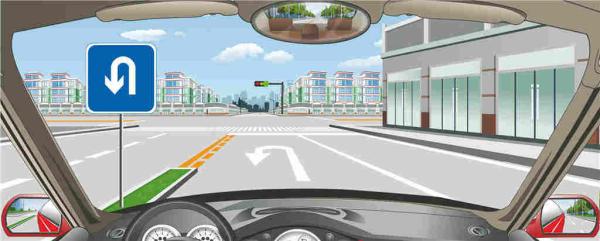
A. Right
B. Wrong
Answer: B
8. When there is bleeding at the bone fracture of a wounded person, the first thing to do is to fix the wounded part in position, then stop the bleeding and dress the wound.
A. Right
B. Wrong
Answer: B
9. The sign on the right indicates a bypass flow intersection ahead.
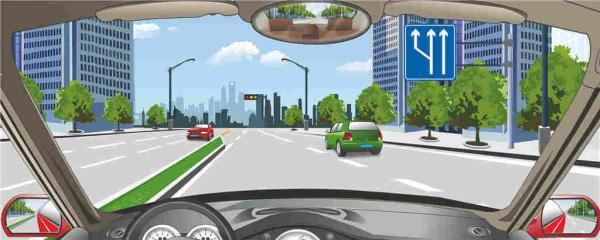
A. Right
B. Wrong
Answer: B
10. Under such circumstances, motor vehicle drivers may sound the horn at the proper time and speed up to pass through.
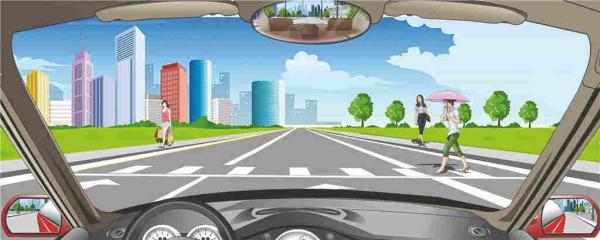
A. Right
B. Wrong
Answer: B
11. Under such circumstances, what should be done by motor vehicle drivers in order to maintain safe driving?
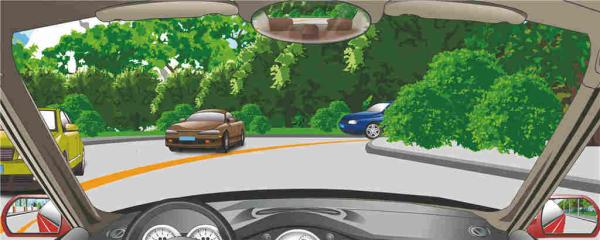
A. Sound the horn or turn on the headlamps
B. Reduce speed or drive on the right side
C. Keep to the central line as best as possible
D. Drive on the left side of the road
Answer: B
12. The sign on the right warns of no passing due to collapse on the road ahead.
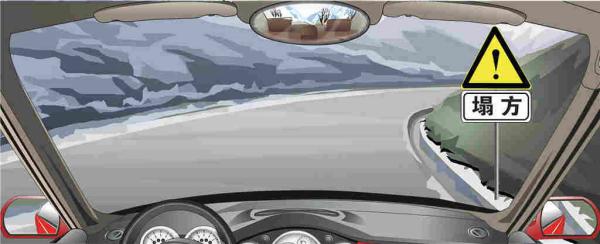
A. Right
B. Wrong
Answer: B
13. What should the driver do upon finding a burst rear tire?
A. Adjust by swiftly turning the steering wheel
B. Control the direction while reducing speed slowly
C. Swiftly turn the steering wheel to the opposite direction
D. Swiftly take braking measures
Answer: B
14. Which of the following acts are prohibited when passing through a tunnel?
A. Overtaking
B. Stopping
C. Making a U-turn
D. Reversing
Answer: ABCD
15. After a motor vehicle falls into water, the driver won?ˉt be able to open the side doors or windows to escape until water nearly fills up the compartment.
A. Right
B. Wrong
Answer: A
16. When encountering a road like this, motor vehicle drivers should downshift in advance to maintain the dynamic of the motor vehicle.
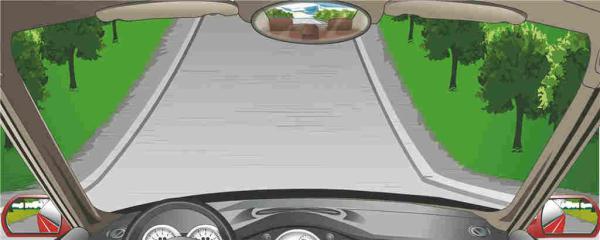
A. Right
B. Wrong
Answer: A
17. When driving on the highway in foggy, rainy, or snowy weather with a range of visibility between 100 meters and 200 meters, what should motor vehicle drivers do?
A. Turn on the fog lamp, low-beam, clearance lamp and front and rear position lamp
B. Drive at a speed of no more than 60 km/hour
C. Keep a breaking distance of more than 100 meters from the vehicle in front in the same lane
D. Leave the highway from the nearest exit as soon as possible
Answer: ABC
18. This sign warns to bypass from the right side to avoid the roadblock.
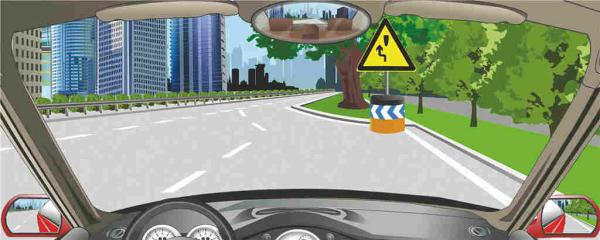
A. Right
B. Wrong
Answer: B
19. Drivers needn?ˉt yield to pedestrians who display such behavior.
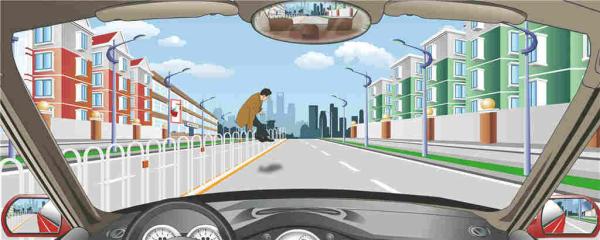
A. Right
B. Wrong
Answer: B
20. What is the most frequent problem for driving on a muddy road?
A. High resistance force
B. Sideways slide
C. The motor vehicle bumps
D. Steering failure
Answer: B