

1. When encountering stopping and waiting in turn or slow-moving vehicles in front, the motorized vehicle may _________.
A. borrow road to overtake
B. occupy the opposite lane
C. follow the vehicles in front
D. cut in the waiting vehicles
Answer: C
2. childrens passage
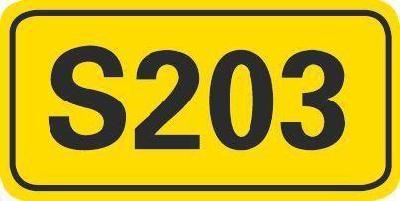
A. provincial highway No.
B. national highway No.
C. county road No.
D. township road No.
Answer: A
3. Which kind of vehicle can be applied for when initially applying for the driving license?
A. midsize bus
B. large bus
C. ordinary motor tricycle
D. trailer
Answer: C
4. When a following vehicle gives the overtaking signal, the driver should ________ if conditions permit.
A. Move to the right side and speed up
B. Voluntarily reduce speed and drive along the right side
C. Yield a proper space and speed up
D. Reduce speed rapidly or apply an emergency braking
Answer: B
5. It flashes when turning on the hazard lights.

A. Right
B. Wrong
Answer: A
6. What marking is the white solid lines in the circle?

A. guide lanes lines
B. variable guide lanes lines
C. direction guide lines
D. one-way driving lines
Answer: A
7. Stopping the vehicle temporarily in the crosswalk is the act of violation of the law.
A. Right
B. Wrong
Answer: A
8. Traffic Police can detain the vehicle according to law if it is without the mandatory traffic accident insurance in accordance with state regulations.
A. Right
B. Wrong
Answer: A
9. A vehicle should try to speed up after starting from the roadside and rapidly turn left into the traffic flow on the road.
A. Right
B. Wrong
Answer: B
10. When encountering stopping in turn or slow-moving vehicles in front at an intersection where lanes are reduced, the motorized vehicle should _________.
A. enter the intersection from road shoulder by the right side of the vehicle in front
B. enter the intersection from the side of interspace
C. pass alternately with one vehicle each lane to enter the intersection
D. change to left lane and cut in to enter the intersection
Answer: C
11. A motorized vehicle driver who escapes or commits other extremely serious acts after causing a major accident in violation of the traffic regulations is subject to a prison term of more than 7 years.
A. Right
B. Wrong
Answer: B
12. When a vehicle changes lane, the driver should turn on the turn signal in advance,observe traffic conditions, maintain a safe distance and move into the new lane.
A. Right
B. Wrong
Answer: A
13. As the braking distance increases on a wet road in a rainy day, the driver should use the emergency brake as much as possible to reduce speed.
A. Right
B. Wrong
Answer: B
14. When causing a road accident involving human casualties, the driver should immediately rescue the injured people and report to the traffic police as soon as possible.
A. Right
B. Wrong
Answer: A
15. It lights to indicate that ______

A. the hazard lights flash
B. right-turn signal flashes
C. left-turn signal flashes
D. front and rear width lights flash
Answer: A
16. After a vehicle enters the ramp, the driver should swiftly increase the speed to more than 60 kilometers per hour.
A. Right
B. Wrong
Answer: B
17. Before a vehicle enters an intersection, the driver should reduce speed, observe and make sure it is safe to do so.
A. Right
B. Wrong
Answer: A
18. What is the main role of the seat belt when there is a collision?
A. to protect the driver and passengers necks
B. to protect the driver and passengers chests
C. to reduce the injuries of the driver and passengers
D. to protect the driver and passengers waists
Answer: C
19. When a vehicle encounters a bike rider coming in the opposite direction on the road, the driver should _________.
A. Continuously change the high and low bean lights
B. Continuously honk
C. Use the low beam light, reduce speed or stop to evade
D. Use the high beam light
Answer: C
20. The motorized vehicle driver who lives outside the jurisdiction of the issuing vehicle management station may apply to the vehicle management station at the place where he is living, for license change.
A. Right
B. Wrong
Answer: A