

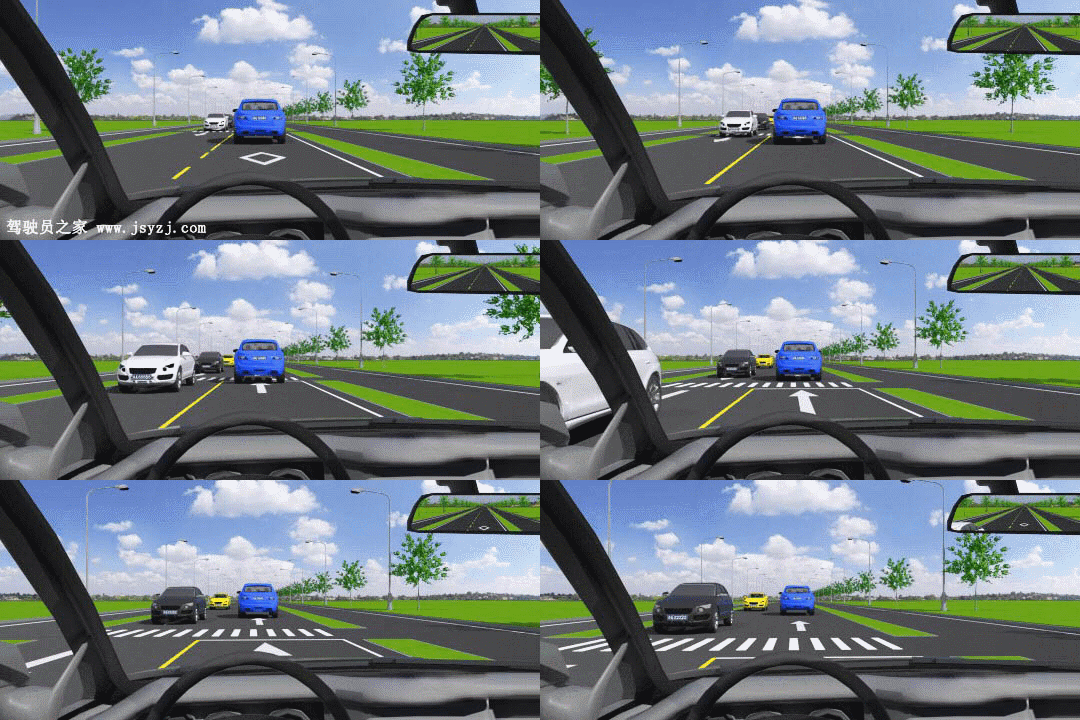
1. As shown in the flash, what should the driver do when the motor vehicle encounters this situation?
A. Speed up and pass rapidly
B. Stop immediately
C. Sound the horn to indicate the pedestrians to yield
D. Observe the movement of pedestrians and non-motor vehicles before passing
Answer: D
2. A driver should accelerate in advance to overtake then it is likely to meet with oncoming vehicles.
A. Right
B. Wrong
Answer: B
3. Having driven a medium passenger vehicle (carrying 27 passengers) to the southern end of Qianling Village of Sidu Town, Mr. Xu drove upslope but the vehicle slid backward and dropped from an 80-meter cliff, killing 11 people and injuring 7. Which of the following law-breaking acts did Mr. Xu commit?
A. Fatigued driving
B. Drunk driving
C. Exceeding the carrying capacity of the passenger vehicle
D. Speeding
Answer: C
4. The white solid line on the right side of the road indicates the boundary of a driving lane and crosswalk.
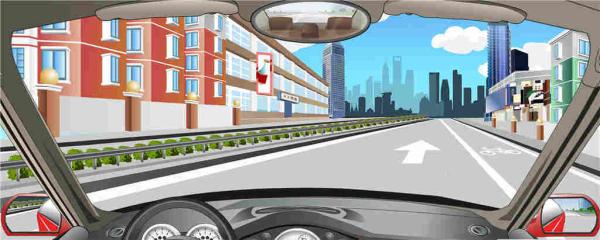
A. Right
B. Wrong
Answer: B
5. When there is a sudden braking failure on a downhill road, what should be done by the driver?
A. Driving to an emergency lane and reducing speed to stop
B. Dropping the gear by two positions
C. Changing to the reverse gear to force the vehicle to stop
D. Reducing speed by pulling up the handbrake
Answer: A
6. When encountering a school bus which stops at the right roadside and students are embarking or disembarking, what should motor vehicle drivers do?
A. If there is only one motor vehicle lane in each direction, motor vehicle drivers behind the bus should stop and wait.
B. If there are two motor vehicle lanes in each direction, motor vehicle drivers in the left lane behind the bus may overtake the bus at a lower speed
C. If there are three motor vehicle lanes in each direction, motor vehicle drivers in the middle lane behind the bus should stop and wait
D. If there are three motor vehicle lanes in each direction, motor vehicle drivers in the left lane behind the bus may pass at a lower speed
Answer: ACD
7. What does this sign on the fly-over junction indicate?
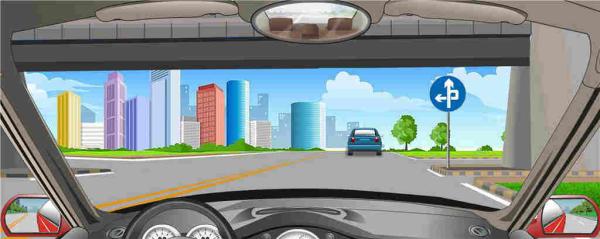
A. Turn right
B. Drive straight or turn left
C. Drive straight or turn right
D. Take a U-turn under bridge
Answer: B
8. After speeding up to more than 60 km/hour, a motor vehicle driver may drive onto the driving lane directly.
A. Right
B. Wrong
Answer: B
9. When a motor vehicle encounters a group of youngsters bypassing the motor vehicles parking beside the road, the driver should slow down voluntarily and yield.
A. Right
B. Wrong
Answer: A
10. For a temporary stop on a foggy day, the driver should only turn on the fog lamp and the low-beam
A. Right
B. Wrong
Answer: B
11. The right-front sign indicates a time-regulated pedestrian area.
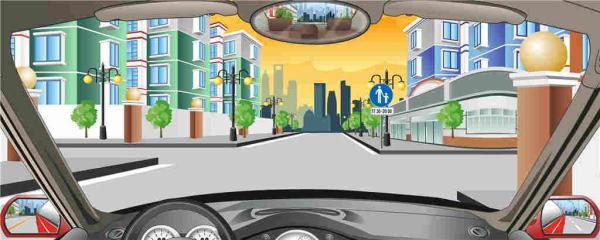
A. Right
B. Wrong
Answer: A
12. When encountering such pedestrians, what should motor vehicle drivers do?
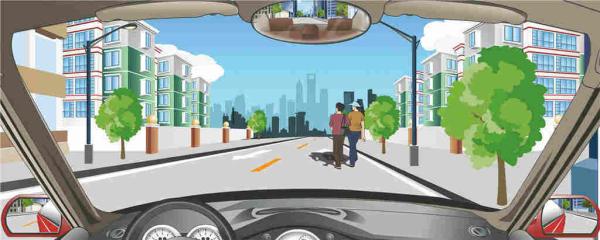
A. Go ahead along the middle line of the road
B. Continuously sound the horn
C. Speed up and overtake
D. Pay attention to the actions of such pedestrians
Answer: D
13. If a motor vehicle encounters a strong side wind when it leaves the opening of an expressway tunnel, what will happen?
A. A feeling of deceleration
B. A feeling of acceleration
C. A feeling of pressure
D. Deviation in direction
Answer: D
14. The sign on the right indicates that drivers should choose their lanes in accordance withthe directions indicated by arrows.
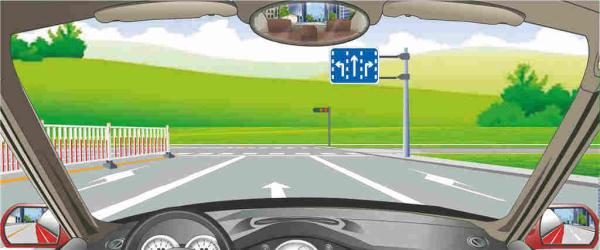
A. Right
B. Wrong
Answer: A
15. If a motor vehicle misses an exit on the expressway, the driver may reverse along the road shoulder.
A. Right
B. Wrong
Answer: B
16. When encountering such pedestrians, what should motor vehicle drivers do?
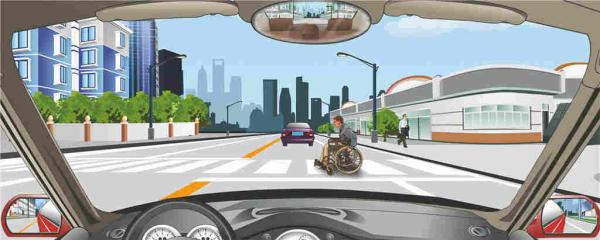
A. Bypass in front of the pedestrians
B. Bypass from behind the pedestrians
C. Sound the horn to alert the pedestrians
D. Voluntarily stop and yield
Answer: D
17. When there is a braking failure on a downhill road, the driver should immediately try to find and drive to an emergency lane; after stopping the vehicle on the emergency lane, the driver should pull up the stopping brake so as to prevent a second danger arising from the vehicle sliding.
A. Right
B. Wrong
Answer: A
18. Under such circumstances, what should be done by the motor vehicle driver?

A. Overtaking the vehicle in front on its left
B. Overtaking by occupying the opposite lane
C. Overtaking the vehicle in front on its right
D. Following the vehicle in front
Answer: D
19. When driving a motor vehicle into a traffic flow, drivers should not hold up other vehicles.
A. Right
B. Wrong
Answer: A
20. When encountering a school bus which stops at the right roadside and students are embarking or disembarking, and there are three motor vehicle lanes in each direction, motor vehicle drivers on the left lane behind the bus should stop and wait.
A. Right
B. Wrong
Answer: B