

1. A driver should speed up when passing through road sections with this traffic marking.

A. Right
B. Wrong
Answer: B
2. What should the driver do when seeing these hand signals.
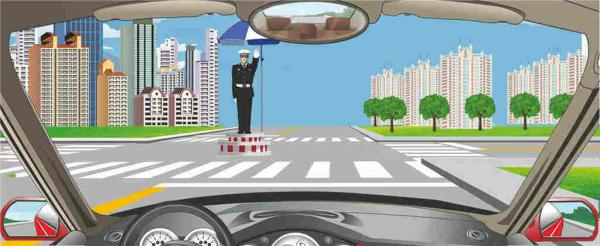
A. Stop and wait
B. Go straight and pass through the intersection
C. Turn right at the intersection
D. Turn left at the intersection
Answer: A
3. As shown in the flash, the motor vehicle chooses a correct way to pass through the level crossing.

A. Right
B. Wrong
Answer: A
4. Which lamp should be turned on when motor vehicles pass through a road section at night where the street light condition is good?
A. Front and rear fog lamps
B. Low-beam
C. High-beam
D. Hazard lamp
Answer: B
5. When a motor vehicle enters an expressway from the ramp, which of the following lamps should be turned on?
A. The left-turn indicator
B. The right-turn indicator
C. The hazard warning lamp
D. The headlamp
Answer: A
6. What should the driver do to follow other motor vehicles on a mountain road?
A. Closely follow the vehicle in front
B. Increase the safety distance
C. Reduce the vertical distance between vehicles
D. Try to overtake the vehicle in front as soon as possible
Answer: B
7. The sign on the right warns that the road will narrow over the next 5 kilometers.
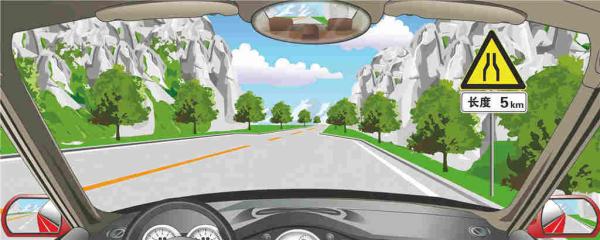
A. Right
B. Wrong
Answer: A
8. The sign on the right is an advance announcement of the highway destination.
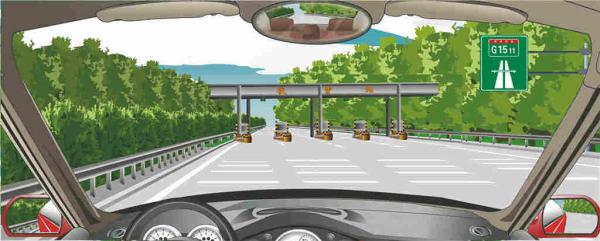
A. Right
B. Wrong
Answer: B
9. The sign on the left indicates no U-turn at the intersection ahead.

A. Right
B. Wrong
Answer: A
10. What should the driver do if the back wheel slides to the right on a muddy road?
A. Continuously speed up
B. Turn right
C. Turn left
D. Apply emergency brake
Answer: B
11. What should the driver do if he encounters this situation at the intersection when driving straight?
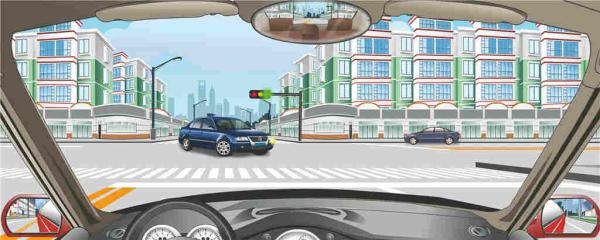
A. Sound the horn to warn the other vehicle to yield
B. Speed up and pass in the front of the vehicle
C. Turn on the headlamp to warn the other vehicle to yield
D. Slow down or stop to yield
Answer: D
12. When driving on a foggy day, what kind of lamps should the driver turn on?
A. Fog lamp and hazard lamp
B. Fog lamp and indicator
C. Fog lamp and high-beam
D. Fog lamp and low-beam
Answer: A
13. When a bicycle borrows the motor vehicle lane, the motor vehicle may sound the horn hurriedly to warn the bicycle to yield.
A. Right
B. Wrong
Answer: B
14. The sign on the right side warns of crosswind on the mountain pass ahead.
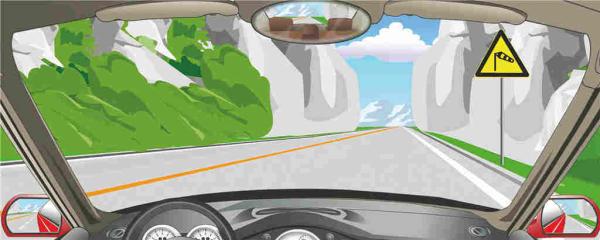
A. Right
B. Wrong
Answer: A
15. Motor vehicles should stop and wait when encountering two red lights flashing alternately at level crossings.
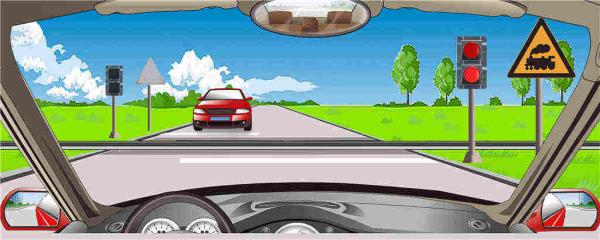
A. Right
B. Wrong
Answer: A
16. The driver may not change lanes when the motor vehicle turns right at this intersection.
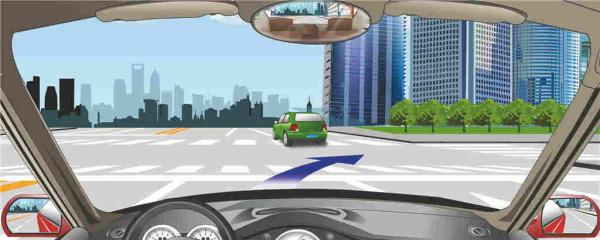
A. Right
B. Wrong
Answer: B
17. The sign on the right indicates that the vehicle should yield to the oncoming traffic as approaching each other.
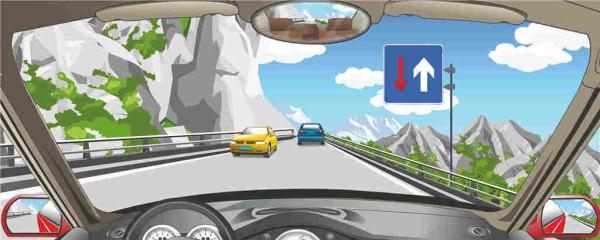
A. Right
B. Wrong
Answer: B
18. What should drivers keep in mind when driving on a mountainous road?
A. Keep a safe distance
B. Avoid occupancy of another lane when making a turn
C. Downshift in advance when ascending an abrupt slope
D. Taking full advantage of engine braking when descending a long slope
Answer: ABCD
19. What should the motor vehicle driver do when the motor vehicle encounters the crosswalk in this situation?

A. Slow down and pass
B. Speed up and pass
C. Sound the horn and pass
D. Stop immediately
Answer: A
20. What should the driver do in this condition?

A. Go through normally on the right side
B. Sound the horn and speed up to go through the tunnel
C. Stop and yield to the oncoming vehicle
D. Turn on the headlamp to warn the oncoming vehicle to yield
Answer: C