

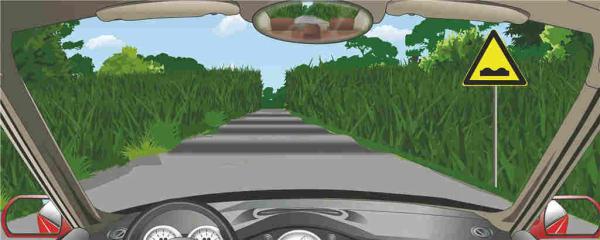
1. The sign on the right warns of an uneven road ahead.
A. Right
B. Wrong
Answer: A
2. How should motor vehicle drivers make a U-turn at the intersection ahead?

A. Make a U-turn in the waiting area for turning left
B. Make a U-turn at the broken line area of the Intersection
C. Wait until the left-turn indicator is on
D. Wait until the straight-going signal is on
Answer: B
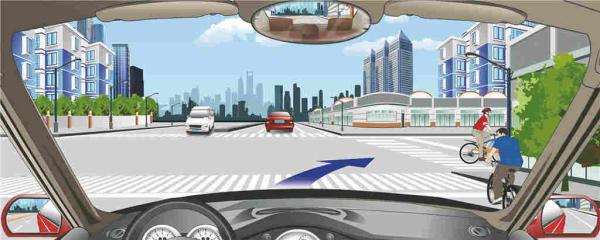
3. The driver should yield to other non-motor vehicles when the motor vehicle turns right at this Intersection.
A. Right
B. Wrong
Answer: A
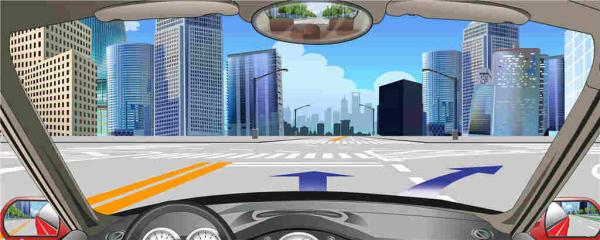
4. When going straight or turning right, drivers are not allowed to drive on or across the guide lines on both sides of the intersection.
A. Right
B. Wrong
Answer: A
5. When the fuel of a motor vehicle catches fire, which of the following things cannot be used to put out the fire?
A. Sandy soil on the roadside
B. Cotton-padded clothes
C. Overalls
D. Water
Answer: D
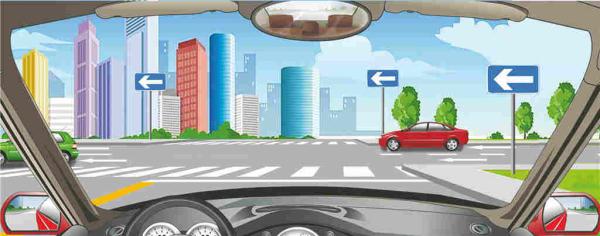
6. The sign in front indicates a one-way lane after turning left.
A. Right
B. Wrong
Answer: A
7. For a temporary stop on a foggy day, the driver should only turn on the fog lamp and the low-beam
A. Right
B. Wrong
Answer: B
8. When driving on a foggy day, what kind of lamps should the driver turn on?
A. Fog lamp and hazard lamp
B. Fog lamp and indicator
C. Fog lamp and high-beam
D. Fog lamp and low-beam
Answer: A
9. Which one of the following measures is correct when a motor vehicle encounters this situation at night?
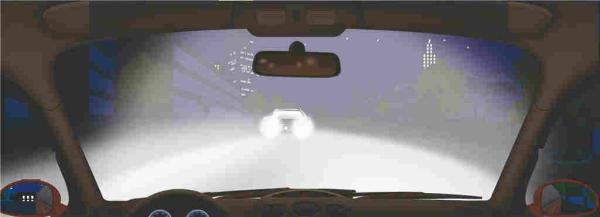
A. Keep driving at a normal speed
B. Drive at an increased speed to avoid light
C. Cut speed or stop to yield
D. Turn on high-beam to reject
Answer: C
10. Which of the following is a basic requirement for rescuing the injured at the scene of a traffic accident?
A. Treat wounds first and safe life later
B. Save life first and treat wounds later
C. Help lightly wounded persons first
D. Help seriously wounded persons later
Answer: B
11. The sign on the right side warns of an abrupt downhill section ahead.
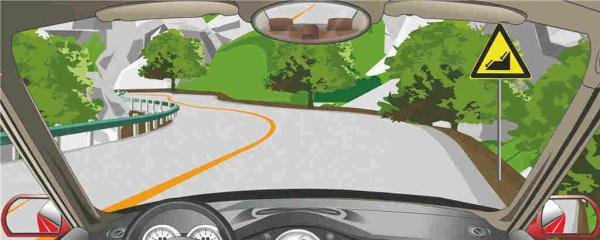
A. Right
B. Wrong
Answer: B
12. When a motor vehicle encounters an accident on an expressway, the driver and all passengers should not get off the vehicle and walk around at will.
A. Right
B. Wrong
Answer: B
13. Those traffic police signals mean turning right.
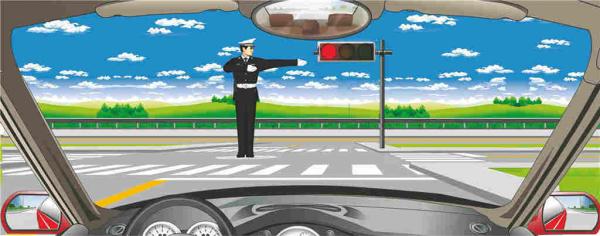
A. Right
B. Wrong
Answer: B
14. The sign on the right warns for disabled people ahead.

A. Right
B. Wrong
Answer: A
15. The area in the yellow rectangle markings on the right side of the road indicates that temporary stopping is permitted here.
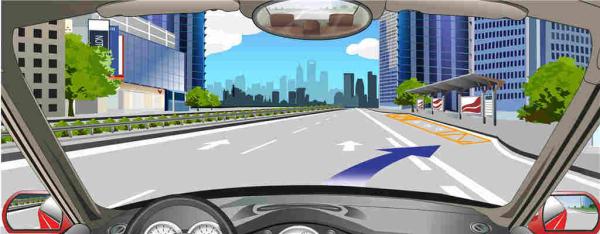
A. Right
B. Wrong
Answer: B
16. The sign on the right indicates a left-turn bypass route at the intersection ahead.
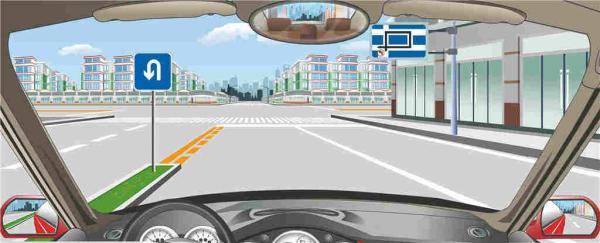
A. Right
B. Wrong
Answer: A
17. The broken yellow line in the center of the road indicates that overtaking by crossing the line is permitted in safe situations.
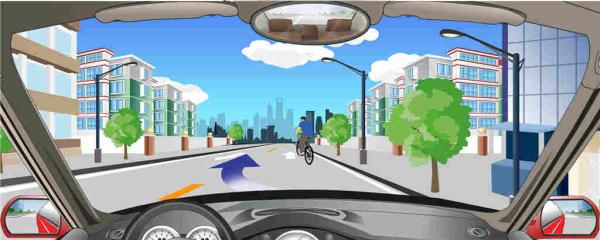
A. Right
B. Wrong
Answer: A
18. What should motor vehicle drivers do when parking temporarily on a rainy day?
A. Turn on hazard lamp
B. Turn on front and back fog lamp
C. Turn on low-beam
D. Set up warning sign at the back of the vehicle
Answer: A
19. Motor vehicles should stop and wait when encountering two red lights flashing alternately at level crossings.
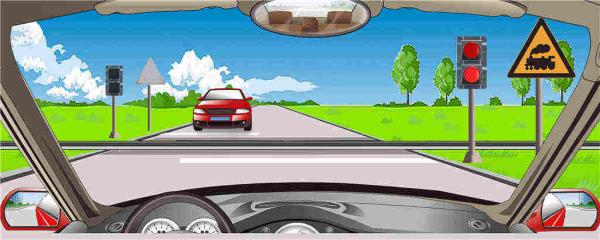
A. Right
B. Wrong
Answer: A
20. Under such circumstances, the motor vehicle is allowed to overtake.
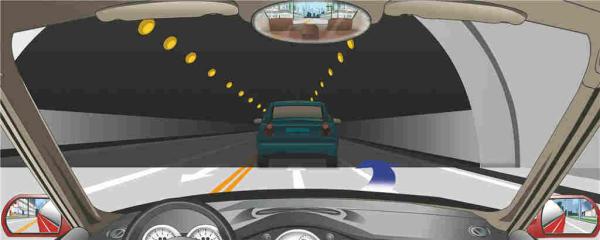
A. Right
B. Wrong
Answer: B