

1. Whats the meaning of this guide arrow?
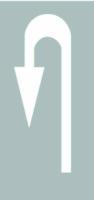
A. change to left lane
B. going straight ahead
C. U turn ahead
D. right turn ahead
Answer: C
2. How far away should the warning sign be placed in the coming direction when this vehicle breaks down and stops temporarily on the expressway?
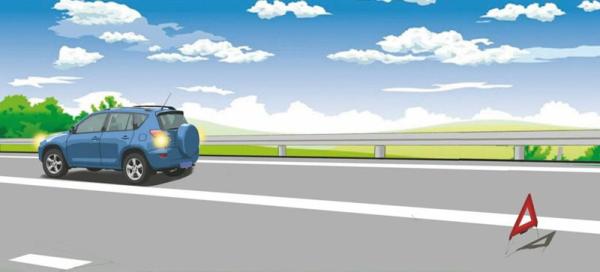
A. beyond 150m
B. 50~150m
C. within 50m
D. 50~100m
Answer: A
3. Whats the meaning of this sign?
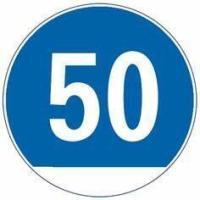
A. minimum speed limit is 50km/hr
B. maximum speed limit is 50km/hr
C. the height is 50m
D. the altitude is 50m
Answer: A
4. The child in the motorized vehicle does not need to buckle up when the vehicle runs.
A. Right
B. Wrong
Answer: B
5. Driving a motorized vehicle on the highway which has no central line, the maximum speed can not exceed 70 kilometers per hour.
A. Right
B. Wrong
Answer: B
6. A motorized vehicle driver who uses falsified and altered vehicle license is subject to a ________.
A. 6-point penalty
B. 3-point penalty
C. 2-point penalty
D. 12-point penalty
Answer: D
7. If one drives an illegally assembled motorized vehicle, he should not only pay the fine, but also ________ .
A. be temporarily detained the driving license
B. be revoked the driving license
C. be held for criminal liabilities
D. be detained for less than 10 days
Answer: B
8. When a vehicle merges with the traffic flow, the driver should turn on the turn signal in advance, go straight, observe the traffic conditions on both sides through the rear-view mirror, and merge with the traffic flow if it is safe to do so.
A. Right
B. Wrong
Answer: A
9. Fine will be 200~2000 yuan and driving license will be revoked if _____
A. violating traffic regulations
B. running 50% faster than the specified speed limit
C. escaped after causing traffic accident
D. driving without driver license
Answer: B
10. The penalty points will be _____ if violating the traffic lights.
A. 2-point penalty
B. 3-point penalty
C. 6-point penalty
D. 12-point penalty
Answer: C
11. Which is subject to a 12-point penalty?
A. driving a motorized vehicle when driving license is temporarily detained
B. applying for reissuing the driving license by concealment or deception
C. not yielding to the school bus according to regulations
D. running with the license plate deliberately stained
Answer: D
12. As thick fog reduces visibility, turning on the high beam light can increase the visibility.
A. Right
B. Wrong
Answer: B
13. When a driver needs to borrow a lane to bypass an obstacle in front and a vehicle in the opposite direction is approaching the obstacle, the driver should ___________.
A. Reduce speed or stop and yield to the vehicle coming in the opposite direction
B. Speed up and bypass the obstacle in advance
C. Honk to indicate the vehicle in the opposite direction to yield
D. Rapidly occupy the lane and force the vehicle coming in the opposite direction to stop and yield
Answer: A
14. The age should be 18 ~ 70 years old when applying for the driving license of small vehicle or three-wheeled automobile.
A. Right
B. Wrong
Answer: A
15. Traffic Police can detain the driver according to law, if the driver drives a motorized vehicle which is suspected of reaching the write-off standard.
A. Right
B. Wrong
Answer: B
16. Whats the meaning of this sign?
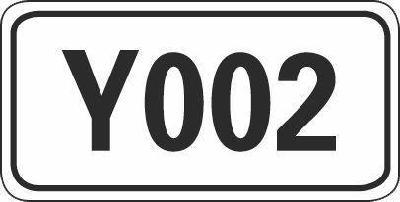
A. provincial highway No.
B. county road No.
C. township road No.
D. national highway No.
Answer: C
17. Whats the meaning of this sign?
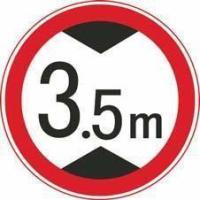
A. 3.5m width limit
B. 3.5m width limit ban is lifted
C. 3.5m distance from vehicles limit
D. 3.5m height limit
Answer: D
18. What should the driver do when encountering a vehicle from the opposite direction on a road without a central line?
A. driving closely by the roadside
B. driving by the central of the road
C. reducing speed and driving by right side
D. run by using the lane for non-motorized vehicles
Answer: C
19. Whats the meaning of this sign?
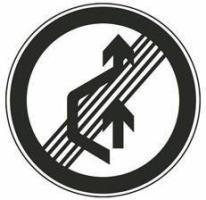
A. overtaking ban is lifted
B. changing lane is allowed
C. changing lane ban is lifted
D. borrowing lane ban is lifted
Answer: A
20. You have the priviledged passing right of way in this situation.

A. Right
B. Wrong
Answer: A