

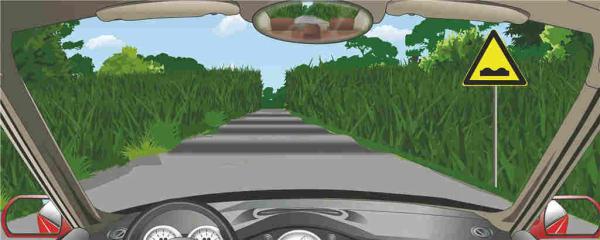
1. The sign on the right warns of an uneven road ahead.
A. Right
B. Wrong
Answer: A
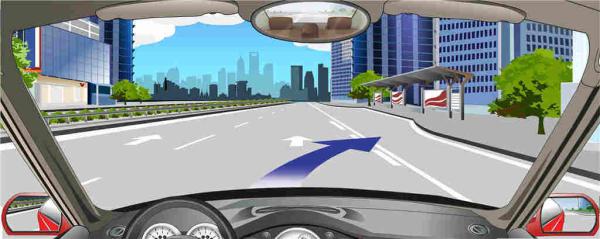
2. Drivers are allowed to cross the broken and solid white line on the road when changing lanes or pulling over.
A. Right
B. Wrong
Answer: A
3. When a motor vehicle deviates from the normal direction due to steering failure, what should the driver do?
A. Immediately steer and adjust
B. Reduce speed and stop the vehicle as early as possible
C. Steer to the side where there is no obstacle to evade
D. Steer to the side where there is an obstacle to evade
Answer: B
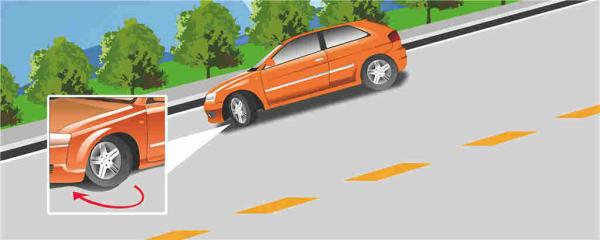
4. When parking temporarily in this situation, motor vehicle drivers are allowed to turn the steering wheel right to avoid sliding.
A. Right
B. Wrong
Answer: A
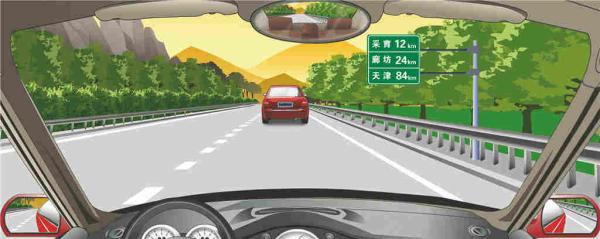
5. The sign in front indicates the distance to highway destination.
A. Right
B. Wrong
Answer: B
6. When encountering a school bus which stops at the right roadside and students are embarking or disembarking, what should motor vehicle drivers do?
A. If there is only one motor vehicle lane in each direction, motor vehicle drivers behind the bus should stop and wait.
B. If there are two motor vehicle lanes in each direction, motor vehicle drivers in the left lane behind the bus may overtake the bus at a lower speed
C. If there are three motor vehicle lanes in each direction, motor vehicle drivers in the middle lane behind the bus should stop and wait
D. If there are three motor vehicle lanes in each direction, motor vehicle drivers in the left lane behind the bus may pass at a lower speed
Answer: ACD
7. When finding a tire burst on the road, the driver should use emergency braking while controlling the direction of the vehicle at the same time to stop the vehicle quickly.
A. Right
B. Wrong
Answer: B
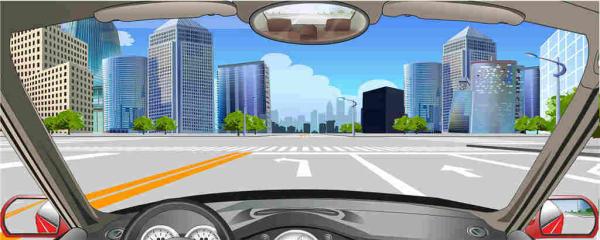
8. The guide arrow on the road surface of this lane indicates that only left turns are permitted at the intersection ahead.
A. Right
B. Wrong
Answer: A
9. When a motor vehicle moves through water, drivers should intermittently and gently depress the brake pedal in order to restore braking efficiency.
A. Right
B. Wrong
Answer: A
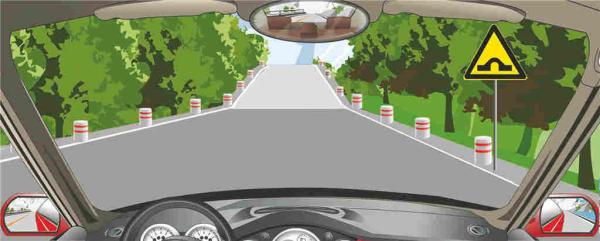
10. The sign on the right warns of a bumpy road ahead.
A. Right
B. Wrong
Answer: B
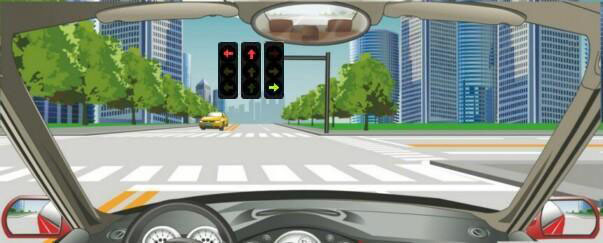
11. Motor vehicles are prohibited from driving straight or turning left in this situation.
A. Right
B. Wrong
Answer: A
12. Which is the correct way to use a fire extinguisher?
A. Stand on the leeward side
B. Direct the fire extinguisher at the source of fire
C. Try to approach the source of fire as close as possible
D. Direct the fire extinguisher at the flames
Answer: B
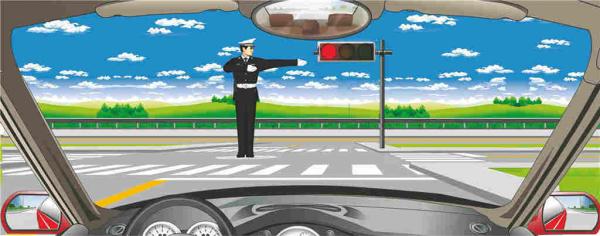
13. Those traffic police signals mean turning right.
A. Right
B. Wrong
Answer: B
14. When there is a sudden braking failure on a downhill road, what should be done by the driver?
A. Driving to an emergency lane and reducing speed to stop
B. Dropping the gear by two positions
C. Changing to the reverse gear to force the vehicle to stop
D. Reducing speed by pulling up the handbrake
Answer: A
15. The sign on the right indicates that overtaking is allowed on the section ahead.
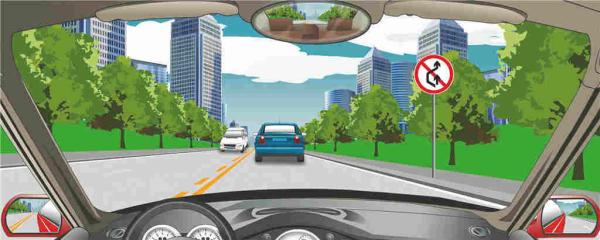
A. Right
B. Wrong
Answer: B
16. What is the meaning of the sign on the right?
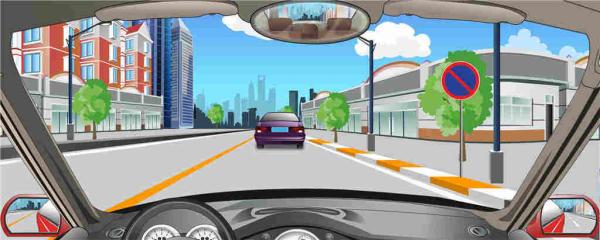
A. Long-time parking permitted
B. Temporary parking permitted
C. Long waiting for passengers permitted
D. No parking
Answer: B
17. When driving on a road covered with ice and snow drivers should not use the emergency brake but can apply a sharp turn.
A. Right
B. Wrong
Answer: B
18. On which of the following roads may the wheels be most easily locked when braking?
A. Concrete road
B. Dirt road
C. Road covered by ice and snow
D. Sand road
Answer: C
19. Mr. Tang drove a large bus with 74 passengers (capacity 30 people). When descending a long curving slope at a speed of 38 kilometers per hour, the bus overturned to a brook beside the road. As a result of the accident, 17 people were killed and 57 people injured. What is the main illegal act committed by Mr. Tang?
A. Driving after drinking
B. Carrying more passengers than permitted
C. Fatigued driving
D. Speeding
Answer: BD
20. What should the driver do when the motor vehicle encounters this situation in front of a school?
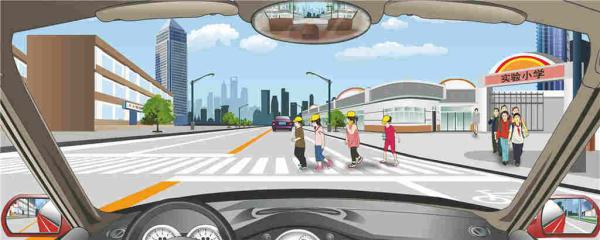
A. Bypass before the queue
B. Slow down and pass slowly
C. Stop promptly and yield
D. Go through in the spaces between the queues
Answer: C