

1. The sign on the left indicates U-turn is allowed here.
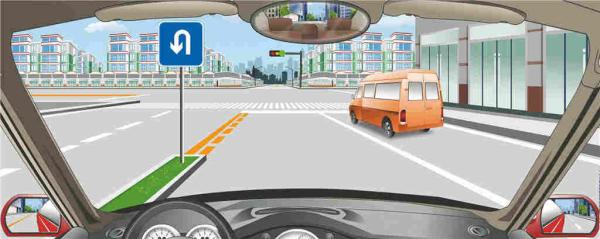
A. Right
B. Wrong
Answer: A
2. When there is a braking failure on a downhill road, if there is no other alternative, the driver may rub the vehicle body against the rocks and trees on roadside to force the vehicle to slow down and stop.
A. Right
B. Wrong
Answer: A
3. How to run when encountering this situation at the intersection?
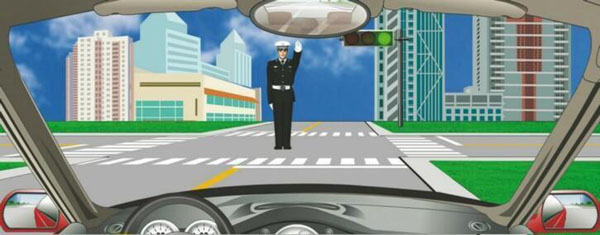
A. stop and wait
B. obey the traffic lights
C. run straight on the right side
D. may turn right
Answer: A
4. What should the driver do when a motor vehicle encounters this situation on a mountain road?
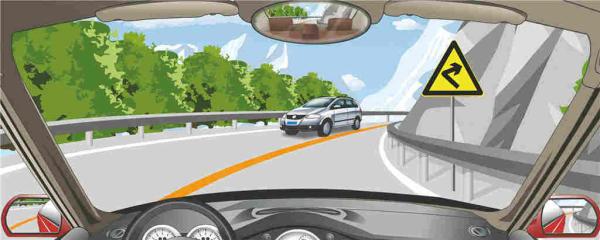
A. Stick to respective lanes and speed up to approach each other
B. Drive close to the central line of the road
C. Retain the normal speed
D. Slow down
Answer: D
5. When carrying a wounded person in a coma, rescue personnel should try to let the unconscious person remain in the supine position.
A. Right
B. Wrong
Answer: B
6. When there is a braking failure on a downhill road, the driver should immediately try to find and drive to an emergency lane; after stopping the vehicle on the emergency lane, the driver should pull up the stopping brake so as to prevent a second danger arising from the vehicle sliding.
A. Right
B. Wrong
Answer: A
7. When a motor vehicle approaches the exit of a tunnel the driver should firmly hold the steering wheel to prevent any harmful effects of a strong side wind.
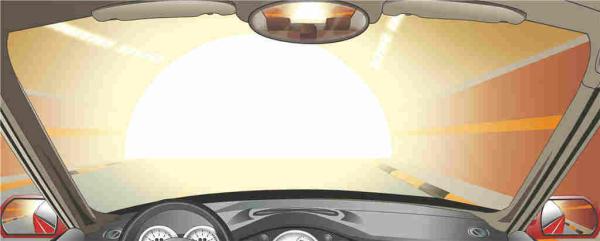
A. Right
B. Wrong
Answer: A
8. Mr. Shi drove a low-speed cargo vehicle (capacity 1.2 tons)with 4.05 tons of cargo. At the spot of 51 kilometers mark by 260 meters on the No. 314 County Road in Ningjin County, the cargo vehicle had a head-on collision with a normally running midsize bus( capacity 11 people and carrying12) from the opposite direction after passing the central line of the road and overtaking the front vehicle in the same direction. As a result of this accident, 10 people were killed and 2 injured. What are the illegal acts in this case?
A. The cargo vehicle carried more cargo than capacity
B. The cargo vehicle illegally overtook other vehicles
C. The bus carried more passengers than capacity
D. The driver of the bus kept driving when tired
Answer: ABC
9. The sign on the right warns of a narrowed road on both sides ahead.
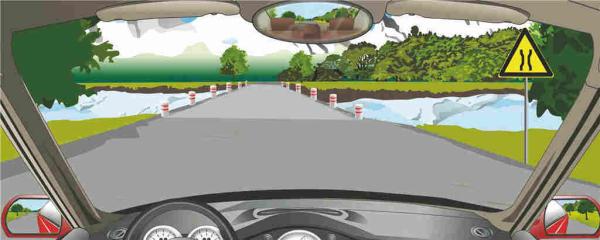
A. Right
B. Wrong
Answer: B
10. When approaching each other at night in this situation, drivers should watch for the danger where the two motor vehicles headlamps meet (the sight dead zone).
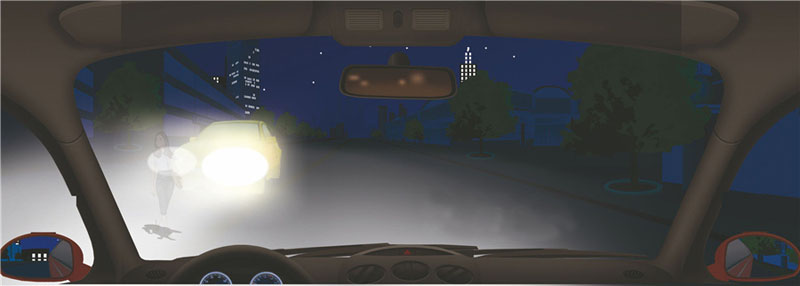
A. Right
B. Wrong
Answer: A
11. The sign on the right warns that there are vehicles converging into the intersection on the right.
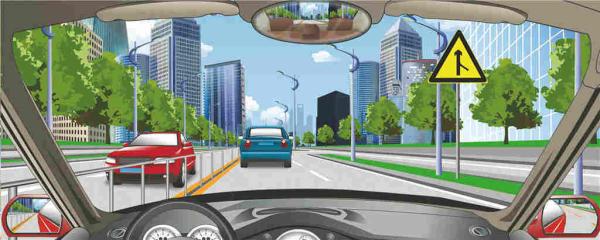
A. Right
B. Wrong
Answer: A
12. Under such circumstances, motor vehicle drivers may sound the horn at the proper time and speed up to pass through.
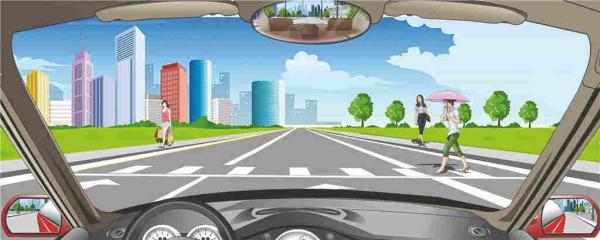
A. Right
B. Wrong
Answer: B
13. On which of the following roads may the wheels be most easily locked when braking?
A. Concrete road
B. Dirt road
C. Road covered by ice and snow
D. Sand road
Answer: C
14. Drivers may temporarily cross these central broken and solid yellow lines when overtaking.
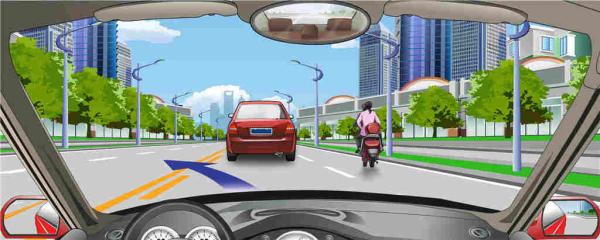
A. Right
B. Wrong
Answer: A
15. What should the driver do when the motor vehicle counters this situation?
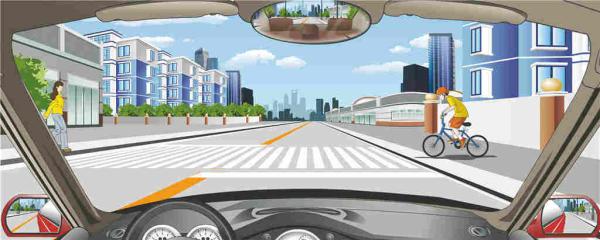
A. Sound the horn continuously to warn
B. Speed up and bypass from the front
C. Slow down when encountering any risks
D. Slow down voluntarily and yield
Answer: D
16. The guide arrow on the road surface of this lane indicates that U-turns and left turns are permitted at the intersection ahead.

A. Right
B. Wrong
Answer: A
17. The sign in front indicates a one-kilometer distance from the highway entry.

A. Right
B. Wrong
Answer: A
18. What should motor vehicle drivers do under such circumstances at night?
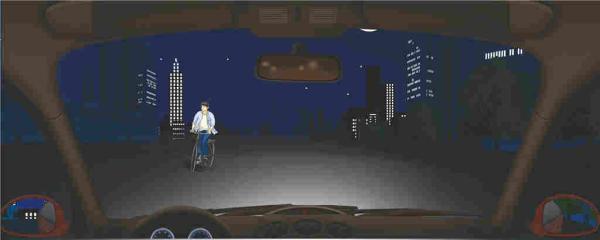
A. Turn off the headlamp when approaching
B. Use low-beam
C. Use high-beam
D. Turn off all lamps in advance
Answer: B
19. How should lamps be used when setting off in this situation?

A. Turn on the high-beam
B. Turn on the left indicator only
C. Turn on the left indicator and low-beam
D. Turn on hazard lamp
Answer: C
20. During normal driving, the driver should do his best to run close to or on the central line so as not to allow oncoming vehicles any opportunity to occupy his own route.
A. Right
B. Wrong
Answer: B