

1. Unless stopping due to obstacles or vehicle breakdown on an expressway, motor vehicles are not allowed to stop to pick up or drop off people or load and unload cargo.
A. Right
B. Wrong
Answer: A
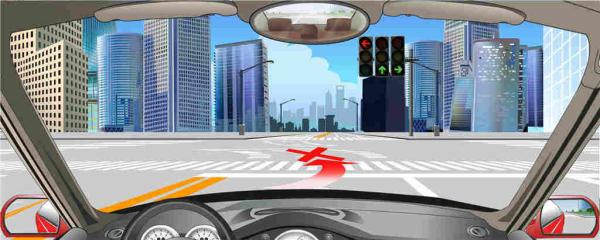
2. As shown in this picture, the vehicles intending to turn left are not allowed to drive into left-turn waiting area directly to wait for green light.
A. Right
B. Wrong
Answer: B
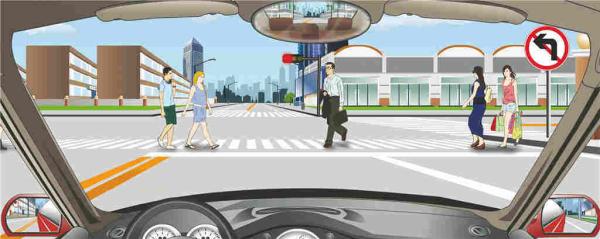
3. Motor vehicle drivers may make a U-turn in this area as long as it will not affect the passing of pedestrians.
A. Right
B. Wrong
Answer: B
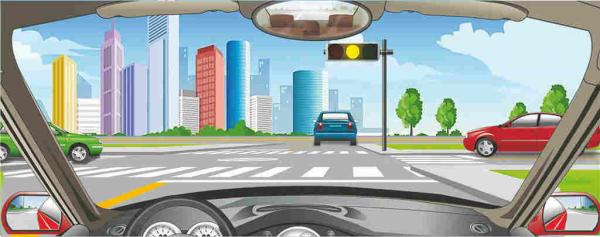
4. Motor vehicles should accelerate when driving into an intersection with this traffic signal.
A. Right
B. Wrong
Answer: B
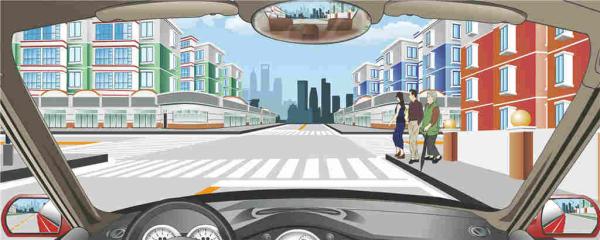
5. When the motor vehicle encounters a crosswalk in this situation, the driver may speed up and pass rapidly.
A. Right
B. Wrong
Answer: B
6. When there is a sudden braking failure on a downhill road, in which ones of the following ways can drivers reduce speed?
A. Driving onto the emergency lane and reduce speed and stop there
B. Rubbing the vehicle body against the rocks or trees on roadside
C. Pulling up the handbrake first
D. Immediately changing to a low gear
Answer: ABD
7. Under such circumstances, what should the motor vehicle driver do?
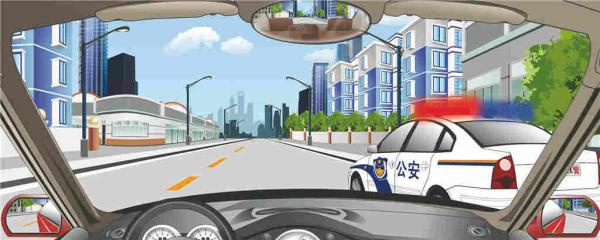
A. Reduce speed and yield by the left side
B. Reduce speed and yield by the right side
C. Speed up and yield by the left side
D. Go ahead along the original route
Answer: A
8. When rescuing a wounded person who has been poisoned by toxic gas, which of the following measures should be taken first?
A. Prevent heat loss
B. Bring him to a place with fresh air
C. Give him artificial respiration
D. Depress the heart over the chest
Answer: B
9. The sign on the right indicates the location of the highway emergency phone.
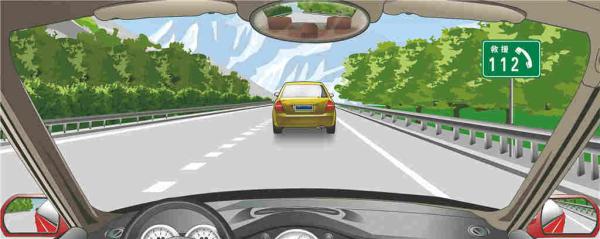
A. Right
B. Wrong
Answer: B
10. What should the driver do when the motor vehicle encounters this situation?
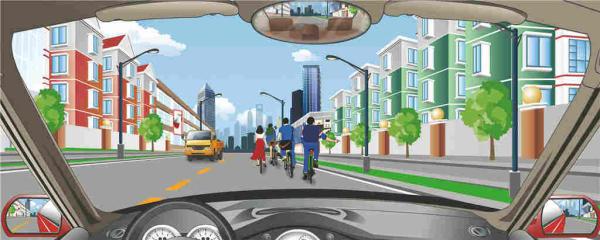
A. Overtake immediately
B. Sound the horn continuously to warn
C. Maintain safety distance and overtake
D. Sound horn and speed up to overtake
Answer: C
11. When such circumstances happen suddenly, drivers should reduce speed in a timely fashion or stop to yield.
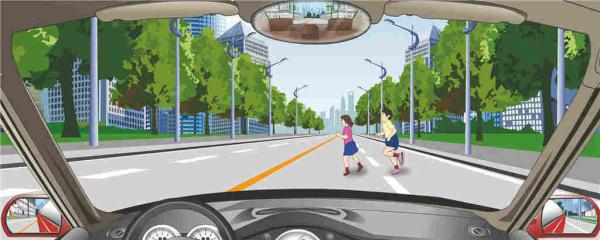
A. Right
B. Wrong
Answer: A
12. Which one of following ways is the safest when driving a motor vehicle on this road?
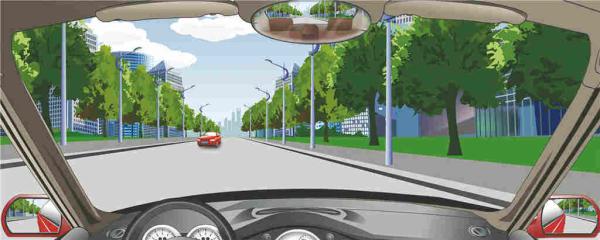
A. Driving along the central line of the road
B. Driving along the right side of the road
C. Driving at the middle of the road
D. Driving along the left side of the road
Answer: B
13. Motor vehicle drivers may reverse at an intersection.
A. Right
B. Wrong
Answer: B
14. The motor vehicle should stop on the right and wait in this situation.
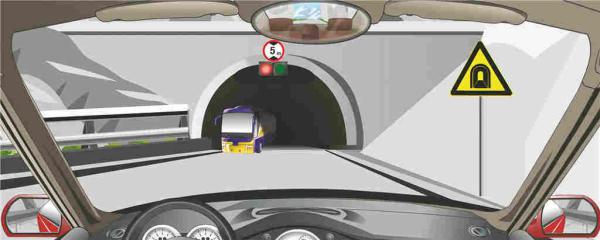
A. Right
B. Wrong
Answer: A
15. The sign on the right indicates to stop and yield at the intersection ahead.
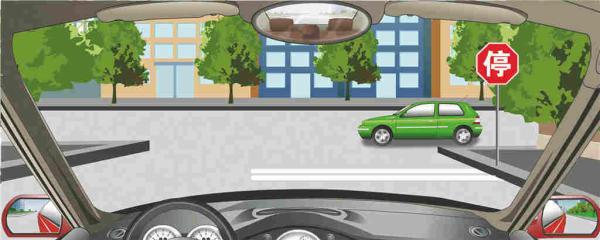
A. Right
B. Wrong
Answer: A
16. Motor vehicle drivers may make a U-turn in the broken line area as long as it will not affect the normal traffic flow.
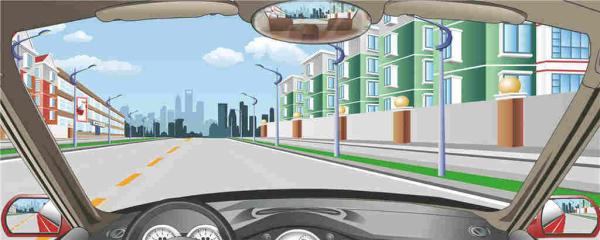
A. Right
B. Wrong
Answer: A
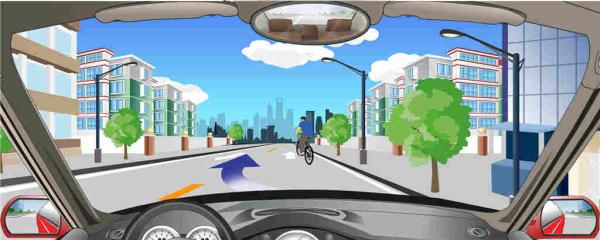
17. The broken yellow line in the center of the road indicates that overtaking by crossing the line is permitted in safe situations.
A. Right
B. Wrong
Answer: A
18. It is an illegal act for the driver to make calls while driving.
A. Right
B. Wrong
Answer: A
19. What should be done when drivers evade an emergency on the highway?
A. Take braking measures to reduce speed
B. Yield by turning to the left side
C. Evade by swiftly turning the steering wheel
D. Yield by turning to the right side
Answer: A
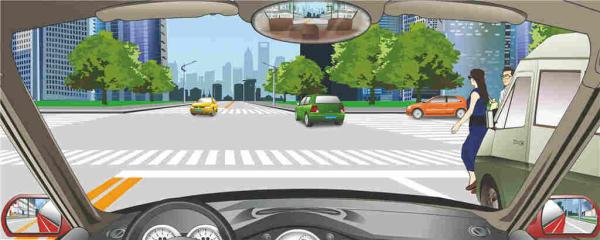
20. When a motor vehicle encounters this situation at a crosswalk, the driver must slow down and pass slowly.
A. Right
B. Wrong
Answer: B