

1. When a motor vehicle reaches a muddy or burst-and-muddy section of the road, the driver should stop, observe and select a level and solid section or a section with vehicle tracks.
A. Right
B. Wrong
Answer: A
2. Motor vehicle drivers may borrow a special lane for other vehicle types, if one exists, to overtake.
A. Right
B. Wrong
Answer: B
3. What should the driver do when the motor vehicle passes the level crossing?
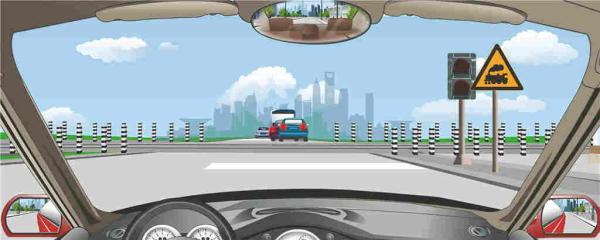
A. Change to neutral gear and slide over
B. Stop, look and pass
C. Speed up, look and pass rapidly
D. Slow down, look and pass slowly
Answer: B
4. Which one of the following measures is correct when a motor vehicle encounters this situation at night?
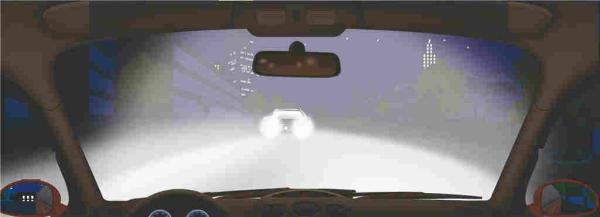
A. Keep driving at a normal speed
B. Drive at an increased speed to avoid light
C. Cut speed or stop to yield
D. Turn on high-beam to reject
Answer: C
5. When driving in rain or snow, the driver should turn left to stabilize the vehicle if the motor vehicle slides to the right side.
A. Right
B. Wrong
Answer: B
6. The sign on the right indicates that the vehicle should yield to the oncoming traffic as approaching each other.
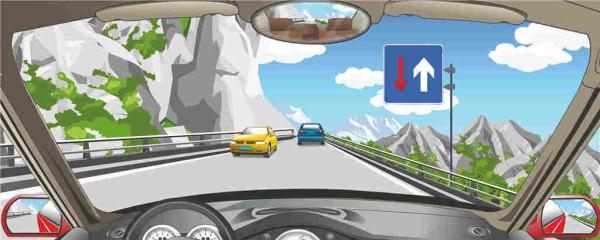
A. Right
B. Wrong
Answer: B
7. Those traffic police signals mean turning right.
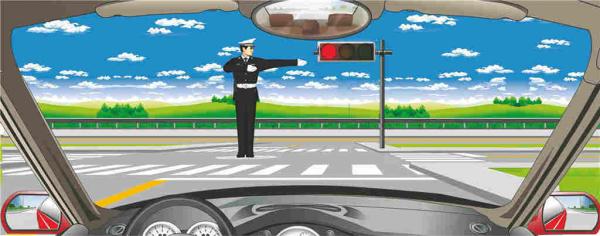
A. Right
B. Wrong
Answer: B
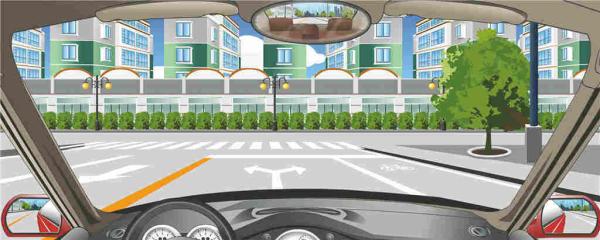
8. The guide arrow on the road surface of this lane indicates that only left and right turns are permitted on the lanes ahead.
A. Right
B. Wrong
Answer: A
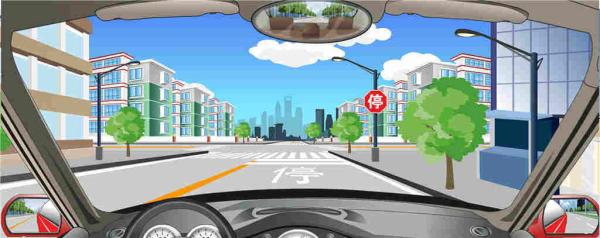
9. The stop-and-yield line at the intersection ahead indicates that vehicle drivers should reduce speed and give the right of way to vehicles on the trunk road.
A. Right
B. Wrong
Answer: B
10. When encountering a school bus which stops at the right roadside and students are embarking or disembarking, and there are two motor vehicle lanes in each direction, motor vehicle drivers on the left lane behind the bus should stop and wait.
A. Right
B. Wrong
Answer: A
11. The sign on the right warns for disabled people ahead.

A. Right
B. Wrong
Answer: A
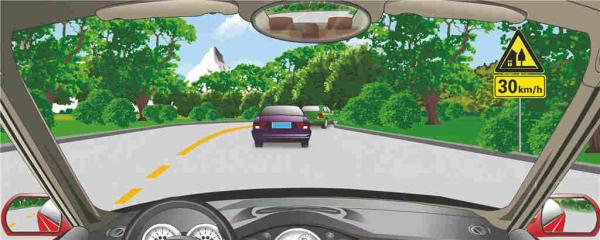
12. The sign on the right warns of a village or town ahead suggesting a 30km/hour speed.
A. Right
B. Wrong
Answer: A
13. How should lamps be used when motor vehicle drivers pass through a two-way tunnel?
A. Turn on the hazard lamps
B. Turn on the high-beam
C. Turn on the fog lamp
D. Turn on the low-beam
Answer: D
14. As shown in this picture, the intersection guide line is designed to help drivers make turns.

A. Right
B. Wrong
Answer: A
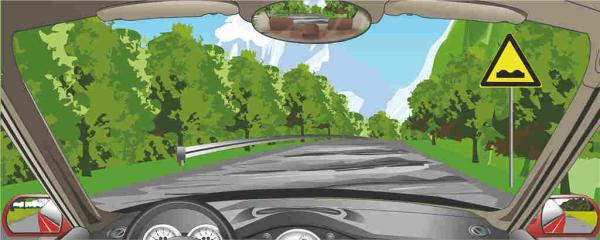
15. Which one of the following is the safest way when driving a motor vehicle on this kind of road surface?
A. Slide over by using neutral gear
B. Pass with a high speed
C. Pass by speeding up
D. Pass with a low speed
Answer: D
16. When a motor vehicle breaks down on an expressway and cannot be moved away from the driving lane, the driver may conduct emergency repairs on the driving lane.
A. Right
B. Wrong
Answer: B
17. What should the driver do if he encounters this situation at the intersection when driving straight?
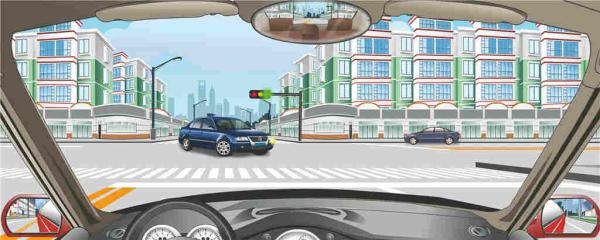
A. Sound the horn to warn the other vehicle to yield
B. Speed up and pass in the front of the vehicle
C. Turn on the headlamp to warn the other vehicle to yield
D. Slow down or stop to yield
Answer: D
18. What should motor vehicle drivers do under the circumstance shown in the flash?
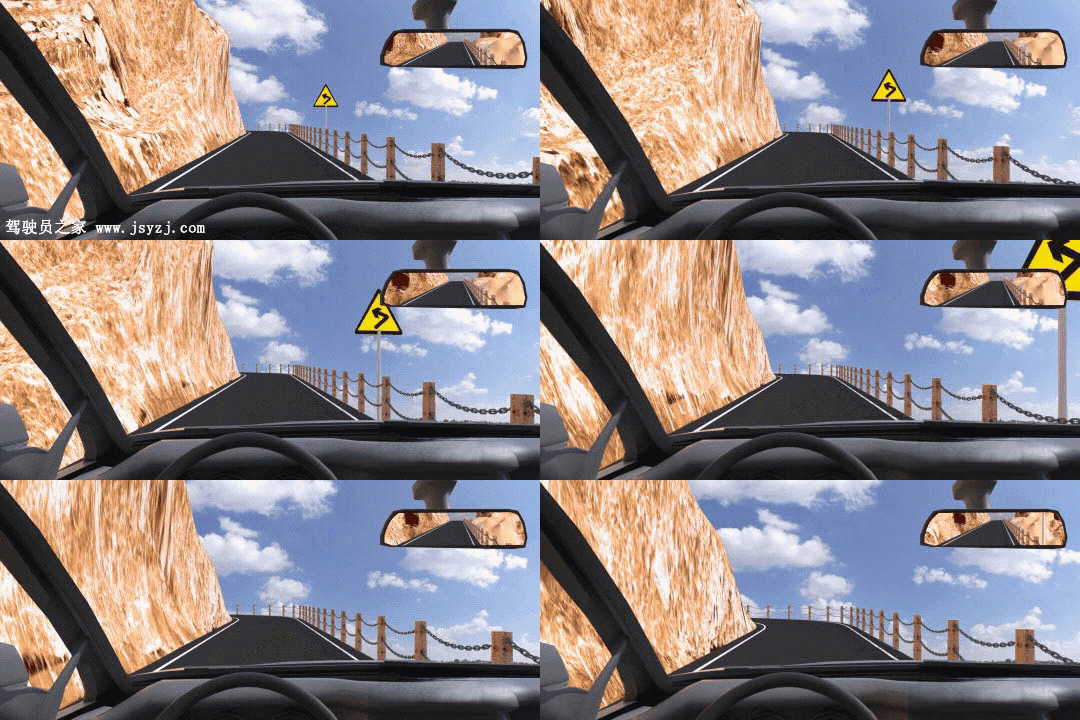
A. Drive by borrowing the opposite lane
B. Brake suddenly and pass through at a lower speed
C. Drive by the outer side of the curve
D. Reduce speed fully and drive by the right side
Answer: D
19. The sign on the right warns of an abrupt slope section ahead.
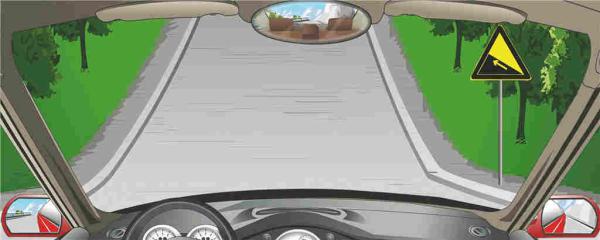
A. Right
B. Wrong
Answer: A
20. The drivers, loaders and supercargoes responsible for dangerous chemicals transportation should all full understand the chemical characteristics, potential risks, features of the packaging containers and emergency measures for any unexpected accidents.
A. Right
B. Wrong
Answer: A