

1. Which one of the following is the safest way to pass the oncoming vehicle on this road?
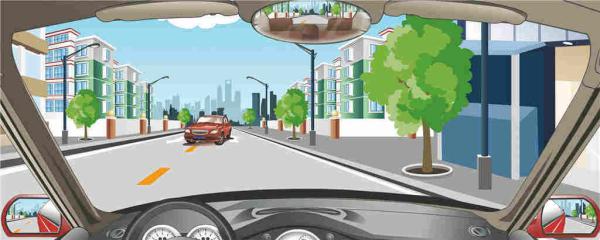
A. Driving along the central line
B. Driving with headlamp on
C. Yielding by the right side of the road
D. Yielding by the left side of the oncoming vehicle
Answer: C
2. The sign on the right indicates that sounding the horn is prohibited here.
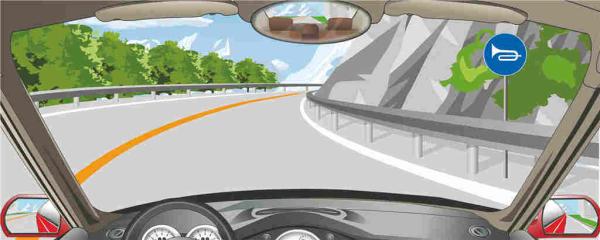
A. Right
B. Wrong
Answer: B
3. Which lamp should be used when motor vehicles pass through an intersection at night where there is no traffic light signal?
A. High-beam
B. Low-beam
C. Hazard lamps
D. High-beam and low-beam should be used alternatively
Answer: D
4. The circle in the center of the intersection indicates that drivers should drive along the inner side when making a small left turn.
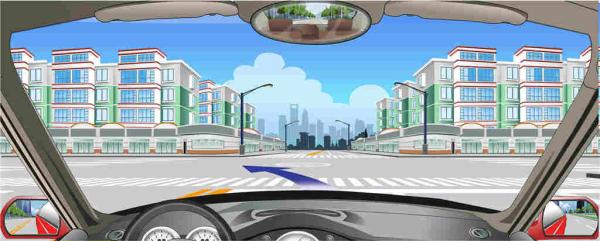
A. Right
B. Wrong
Answer: A
5. Drivers may turn left when traffic police give these hand signals.
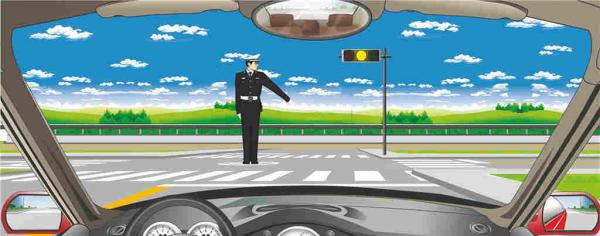
A. Right
B. Wrong
Answer: B
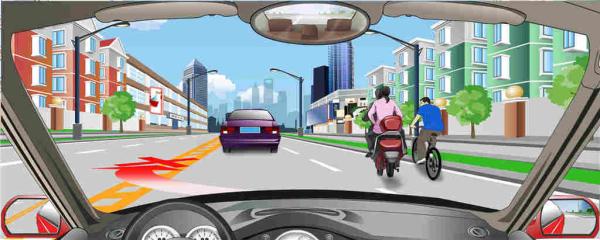
6. Drivers are not allowed to drive on or across these filled-in slanted yellow lines.
A. Right
B. Wrong
Answer: A
7. When driving on road sections where safe sight distance is affected, such as the top of a ramp, what should drivers do to ensure safety?
A. Rush through
B. Use hazard lamp
C. Cut speed and sound the horn
D. Drive at will
Answer: C
8. Which of the following is a basic requirement for rescuing the injured at the scene of a traffic accident?
A. Treat wounds first and safe life later
B. Save life first and treat wounds later
C. Help lightly wounded persons first
D. Help seriously wounded persons later
Answer: B
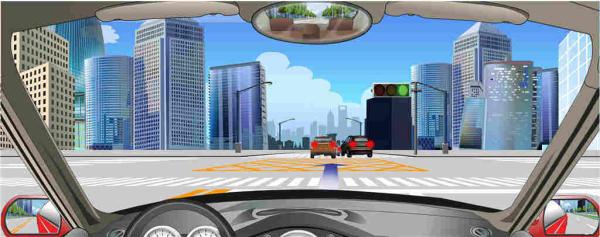
9. The cross-hatched marking indicates an area where vehicle drivers are allowed to stop and wait.
A. Right
B. Wrong
Answer: B
10. Under such circumstances, what should be done by the motor vehicle driver?

A. Overtaking the vehicle in front on its left
B. Overtaking by occupying the opposite lane
C. Overtaking the vehicle in front on its right
D. Following the vehicle in front
Answer: D
11. When encountering an emergency on a highway, the driver should not drastically turn to evade.
A. Right
B. Wrong
Answer: A
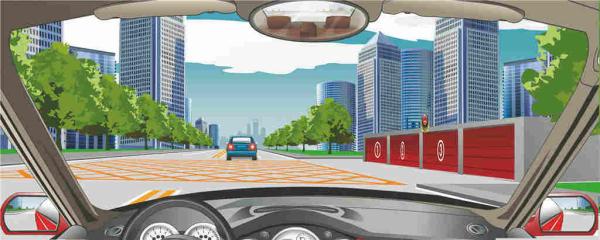
12. The cross-hatched marking indicates an area where vehicle drivers are not allowed to stop.
A. Right
B. Wrong
Answer: A
13. Which of the following measures is correct for rescuing a person sustaining full-body burns?
A. Cover the fire with sandy soil
B. Spray cool water to his body
C. Put out the fire by extinguisher
D. Help to remove the burning clothes
Answer: B
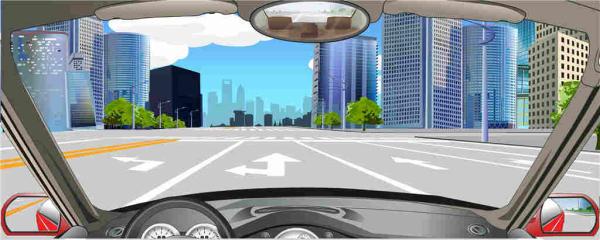
14. The guide arrow on the road surface of this lane indicates that drivers are only permitted to continue straight at the intersection ahead.
A. Right
B. Wrong
Answer: B
15. When a wounded person is beneath the wheel or cargo, we should help him out immediately by pulling the limbs of the wounded.
A. Right
B. Wrong
Answer: B
16. What kind of harmful effect will be brought about by continuously using the foot brake on a long downhill road?
A. Shorten the engine?ˉs service life
B. Make the driver feel tired
C. Easily cause the vehicle to overturn
D. Reduce the braking efficiency
Answer: D
17. When carrying a wounded person in a coma, rescue personnel should try to let the unconscious person remain in the supine position.
A. Right
B. Wrong
Answer: B
18. When encountering this situation at the gate of a school, the driver should prepare to stop.
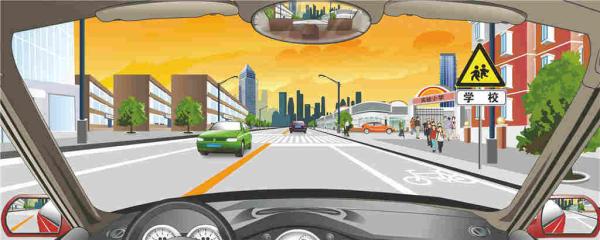
A. Right
B. Wrong
Answer: A
19. Which of the following is a bad habit when changing lanes?
A. Turning on the indicator in advance
B. Observing closely before changing a lane
C. Change lanes at will
D. Not obstructing the passing of other normally moving vehicles
Answer: C
20. Which one of the following is a safe way for motor vehicles to converge into an intersection marked with this sign?

A. Speeding up and driving into the traffic flow directly
B. Driving into the traffic flow behind the gray car on the main road
C. Driving into the traffic flow from the front of the red car on the main road
D. Turning on the indicator and driving into the flow directly
Answer: B