

1. When encountering such pedestrians while driving, a longer safety distance should be kept by drivers.
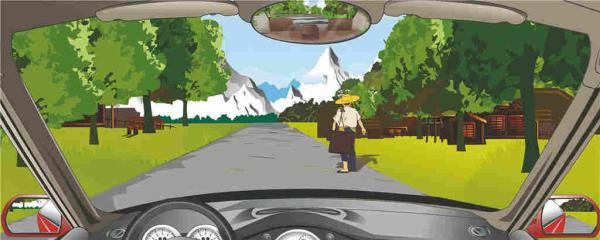
A. Right
B. Wrong
Answer: A
2. It is not safe for a female driver to wear high heels to drive a vehicle.
A. Right
B. Wrong
Answer: A
3. The sign on the right indicates to stop and yield at the intersection ahead.
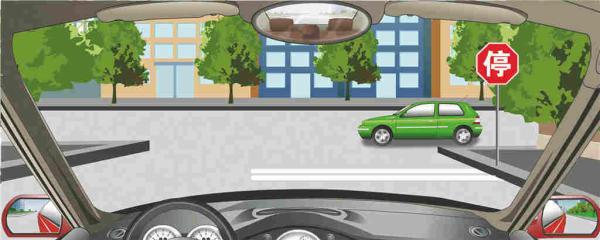
A. Right
B. Wrong
Answer: A
4. When encountering a school bus which stops at the right roadside and students are embarking or disembarking, and there are two motor vehicle lanes in each direction, motor vehicle drivers on the left lane behind the bus should stop and wait.
A. Right
B. Wrong
Answer: A
5. When encountering such pedestrians, what should motor vehicle drivers do?
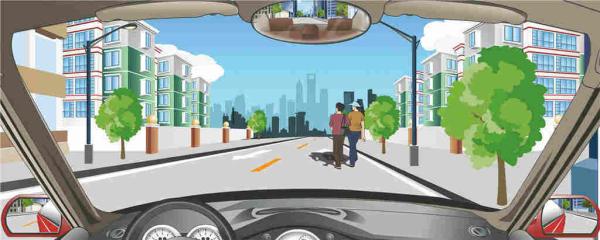
A. Go ahead along the middle line of the road
B. Continuously sound the horn
C. Speed up and overtake
D. Pay attention to the actions of such pedestrians
Answer: D
6. It is not a bad habit for a driver to frequently change lanes.
A. Right
B. Wrong
Answer: B
7. When the vehicle engine catches fire, what should the driver do first?
A. Turn off the engine as soon as possible
B. Extinguish the fire with water
C. Open the hood to extinguish the fire
D. Extinguish the fire from the leeward direction
Answer: A
8. After a motor vehicle falls into water, the driver won?ˉt be able to open the side doors or windows to escape until water nearly fills up the compartment.
A. Right
B. Wrong
Answer: A
9. The road marker indicates that vehicles are only allowed to turn right at the intersection ahead.
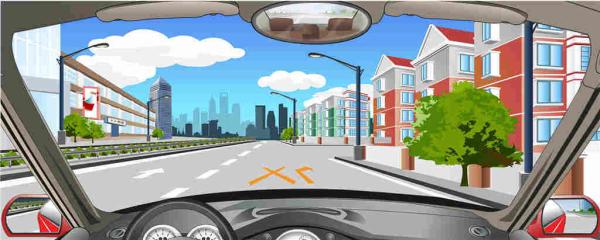
A. Right
B. Wrong
Answer: B
10. When a front tire bursts, after controlling the driving direction, what should be done by the driver in order to slow down and stop?
A. Immediately change to a high gear
B. Immediately change to a low gear
C. Immediately change to the neutral gear
D. Apply emergency braking
Answer: B
11. One day, Mr. Yang drove a large bus with 57 passengers (bus capacity 55 people) from 7 pm to 1 am the following morning. At the spot of 3008 kilometers mark by 110 meters on the No. 050 National Road in Jin Chengjiang District, the bus had a malignant traffic accident caused by front left tire burst, killing 12 people and injuring 22. What is the main illegal act committed by Mr. Yang?
A. Fatigued driving
B. Carrying more passengers than permitted
C. Speeding
D. Misoperation
Answer: AB
12. What is the meaning of the sign on the right?
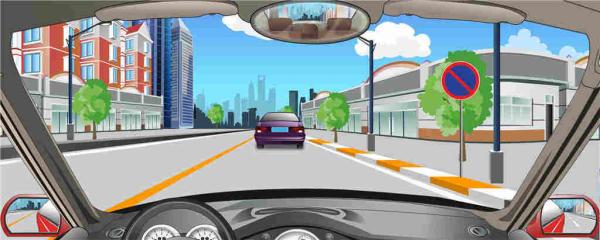
A. Long-time parking permitted
B. Temporary parking permitted
C. Long waiting for passengers permitted
D. No parking
Answer: B
13. When the fuel of a motor vehicle catches fire, which of the following things cannot be used to put out the fire?
A. Sandy soil on the roadside
B. Cotton-padded clothes
C. Overalls
D. Water
Answer: D
14. The white zig-zag line on the highway serves as a reference for the speed of a driver.
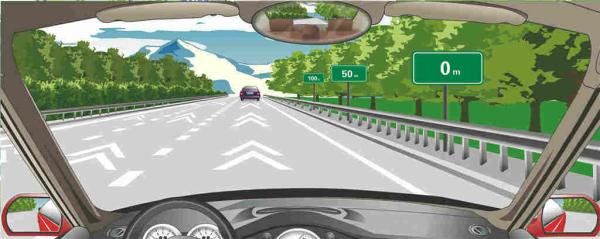
A. Right
B. Wrong
Answer: B
15. Under such circumstances, what should be done by the motor vehicle driver?
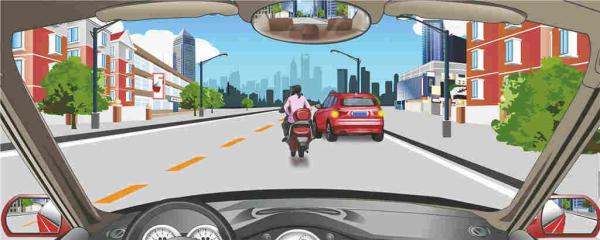
A. Reducing speed to give the right of way to the non-motor vehicle
B. Continuously sounding the horn to warn the vehicle in front to yield
C. Bypassing on the left of the non-motor vehicle
D. Accelerating to overtake by occupying the opposite lane
Answer: A
16. Under the circumstances shown in the flash, what should the driver do?
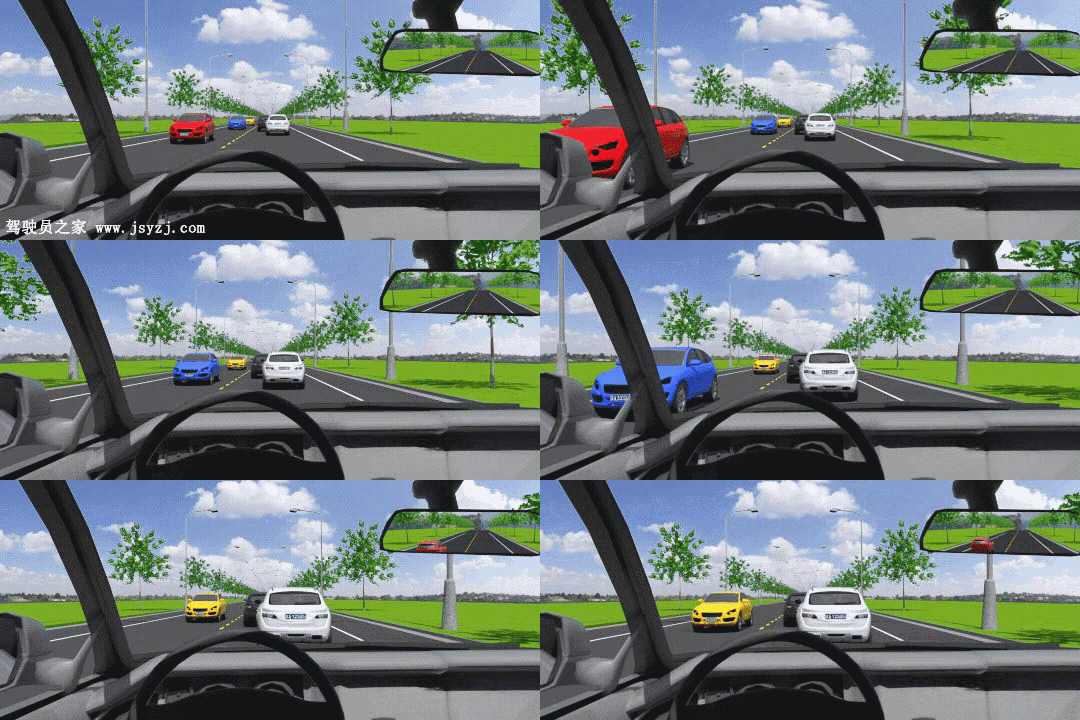
A. Find a chance to overtake the vehicle in front
B. Weave through motor vehicles ahead and pass
C. Reduce speed, stop, and wait in line
D. Sound the horn to urge vehicles in front
Answer: C
17. When a fast-moving vehicle encounters an emergency the driver should turn to evade first and then brake to slow down so as to mitigate the damage.
A. Right
B. Wrong
Answer: B
18. It is a bad habit for a driver to put his left arm on the window of the vehicle or hold the gear lever in his right hand for a long time.
A. Right
B. Wrong
Answer: A
19. The sign on the right warns of low-lying road ahead.

A. Right
B. Wrong
Answer: A
20. In which of the following ways can motor vehicles avoid a tire burst?
A. Lowering tire pressure
B. Checking tires regularly
C. Removing foreign matters from the tire tread grooves timely
D. Replacing the tires that have cracks or deep cuts
Answer: BCD