

1. The driver should take emergency evasion measures when the motor vehicle suddenly self-ignites. Which ones of the following methods are correct?
A. Spray clean water to extinguish the fire
B. Report to the police
C. Use the spare fire extinguisher in the vehicle to put out the fire
D. Set up a warning sign in the oncoming direction
Answer: BCD
2. The main impact of muddy roads on safe driving is that the wheels may easily spin and skid
A. Right
B. Wrong
Answer: A
3. What is the function of ABS during emergency braking?
A. Shortening the braking distance
B. Keeping steering capacity of the motor vehicle
C. Relief the braking inertia
D. Controlling directions automatically
Answer: B
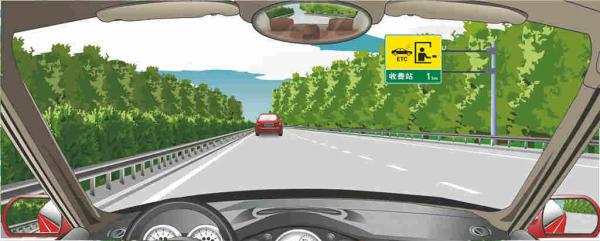
4. The sign on the right indicates a one-kilometer distance from the ETC toll station.
A. Right
B. Wrong
Answer: A
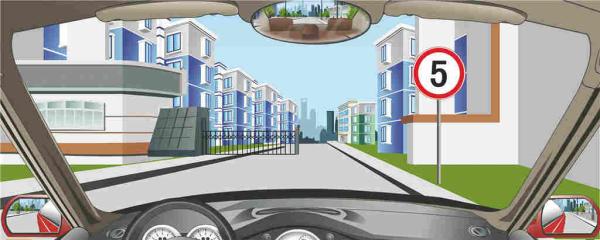
5. When driving in a residential area, the driver should not exceed the speed indicated by the speed limit sign.
A. Right
B. Wrong
Answer: A
6. When a wounded person is unable to get off the vehicle by himself, he should be removed from the vehicle so as to avoid a secondary injury.
A. Right
B. Wrong
Answer: A
7. When a motor vehicle stops temporarily in a rainy day,which lamp should be turned on?
A. Front and rear fog lamps
B. Hazard lamps
C. Headlamps
D. Reverse lamps
Answer: B
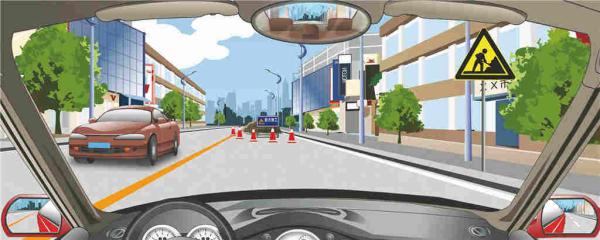
8. The sign on the right warns of a road section ahead under construction.
A. Right
B. Wrong
Answer: A
9. When a motor vehicle accidentally hits the guardrail of the highway, what should be done by the driver in order to keep safe?
A. Firmly holding and properly adjusting the steering wheel
B. Turning swiftly to the opposite direction
C. Immediately applying emergency braking
D. Immediately steering to the collision side
Answer: A
10. When a motor vehicle has deviated from the straight moving direction and an accident is unavoidable, the driver should decisively and continuously depress the brake pedal so as to shorten the stopping distance and reduce the impact of vehicle collision.
A. Right
B. Wrong
Answer: A
11. When the wounded person is suffering main artery bleeding, where should the rescue personnel press by thumb to stop the bleeding?
A. The artery near the heart
B. The artery lower to the wound
C. The artery further from the heart
D. The artery in the center of the wound
Answer: A
12. When two vehicles approach each other on a foggy day, what is the best method of safe driving?
A. Turn on the high-beam
B. Slowdown and maintain a large safety distance
C. Turn on the low-beam
D. Turn on the fog lamp
Answer: B
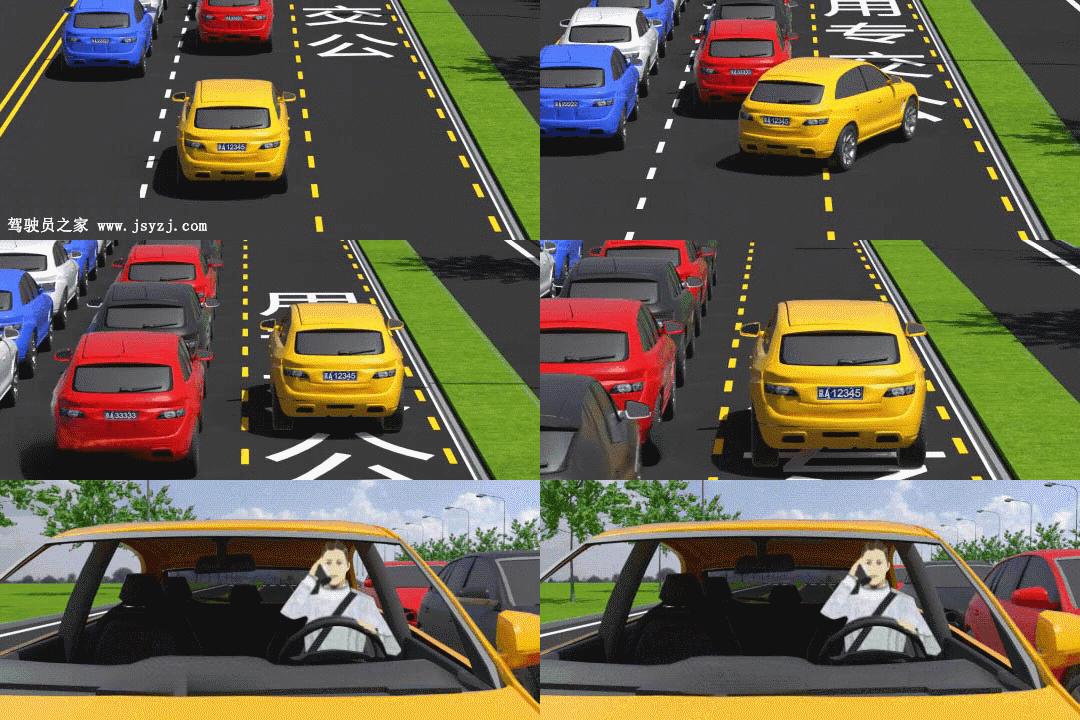
13. How many kinds of law-breaking acts are displayed in flash 2?
A. One
B. Two
C. Three
D. Four
Answer: B
14. Once inflammable gas causes a fire disaster, it should be put out with water in good time.
A. Right
B. Wrong
Answer: B
15. What should the driver do when the motor vehicle encounters this situation?
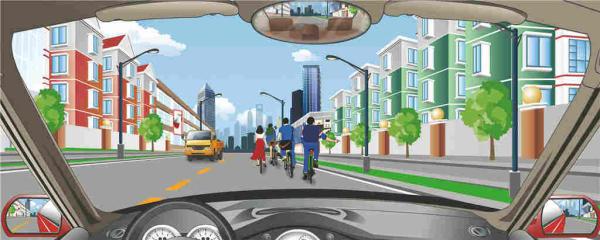
A. Overtake immediately
B. Sound the horn continuously to warn
C. Maintain safety distance and overtake
D. Sound horn and speed up to overtake
Answer: C
16. Having driven his vehicle at 110km/hour on an urban road, Mr. Lin is trying to leave the scene after a rear-end collision but is held back by bystanders. The alcohol concentration in his blood, tested in an alcohol test by the traffic police, is 135.8mg per hundred milliliters. Which of the following law-breaking acts did Mr. Lin commit?
A. Drunk driving
B. Speeding
C. Fatigued driving
D. Hit-and-run driving
Answer: ABD
17. When the engine suddenly stalls on the road and cannot be restarted, the driver should apply emergency braking to force the vehicle to stop as fast as possible.
A. Right
B. Wrong
Answer: B
18. The area in the yellow rectangle markings on the right side of the road indicates that temporary stopping is permitted here.
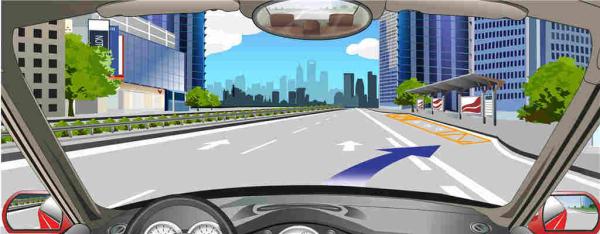
A. Right
B. Wrong
Answer: B
19. The sign on the right warns of a widened right-hand road ahead.
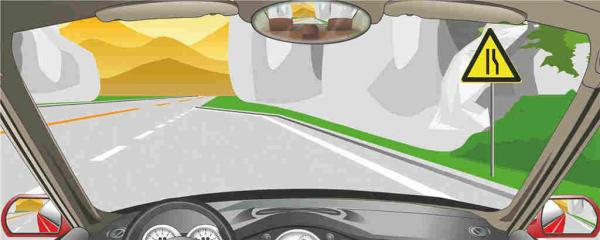
A. Right
B. Wrong
Answer: B
20. In which of the following ways can motor vehicles avoid a tire burst?
A. Lowering tire pressure
B. Checking tires regularly
C. Removing foreign matters from the tire tread grooves timely
D. Replacing the tires that have cracks or deep cuts
Answer: BCD