

1. When a motor vehicle encounters thick fog on an expressway and the visibility is poor, the driver should immediately brake and stop.
A. Right
B. Wrong
Answer: B
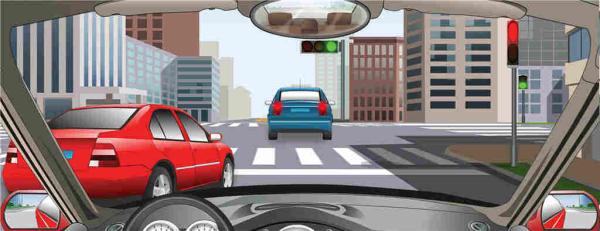
2. The driver should yield to other non-motor vehicles when the motor vehicle turns right at this Intersection.
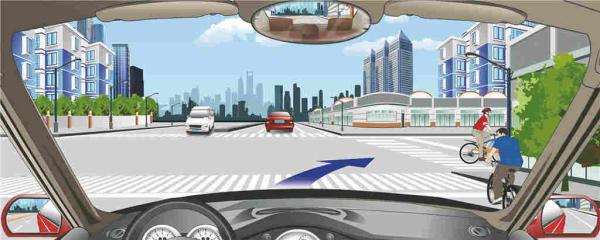
A. Right
B. Wrong
Answer: A
3. When approaching the turning point of a road, in which of the following ways will motor vehicle drivers easily cause a traffic accident?
A. Driving ahead by occupying the opposite lane
B. Turning the steering wheel quickly when passing through the curve
C. Not reducing speed until driving onto the curve
D. Driving by the right side
Answer: ABC
4. When driving on a muddy road, the driver should hold the steering wheel firmly and speed up to pass through.
A. Right
B. Wrong
Answer: B
5. When driving on an expressway, which of the following statements is correct?
A. Drivers may overtake on either the ramp, the acceleration lane or the deceleration lane
B. Drivers are prohibited from reversing, driving in the opposite direction or making a U turn by crossing the central dividing strip
C. Drivers may drive on the emergency lane in a non-emergency case
D. Drivers may test a motor vehicle or learn to drive
Answer: B
6. The sign on the right warns to keep a safe distance on the road ahead.
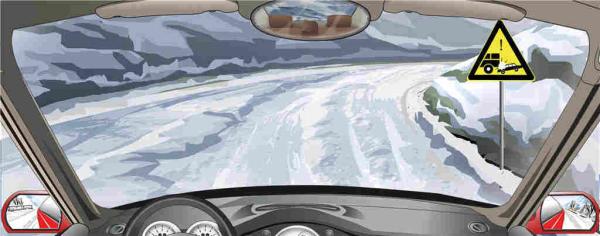
A. Right
B. Wrong
Answer: B
7. Under such circumstances, what should be done by the motor vehicle driver?

A. Overtaking the vehicle in front on its left
B. Overtaking by occupying the opposite lane
C. Overtaking the vehicle in front on its right
D. Following the vehicle in front
Answer: D
8. When the vehicle engine catches fire, what should the driver do first?
A. Turn off the engine as soon as possible
B. Extinguish the fire with water
C. Open the hood to extinguish the fire
D. Extinguish the fire from the leeward direction
Answer: A
9. The solid yellow line on the curb indicates that temporary stopping or parking is allowed at the roadside.
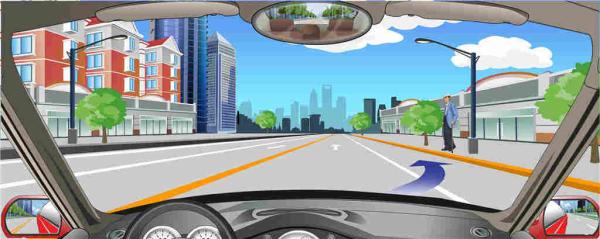
A. Right
B. Wrong
Answer: B
10. The sign on the left indicates vehicles are allowed to drive on the section ahead.
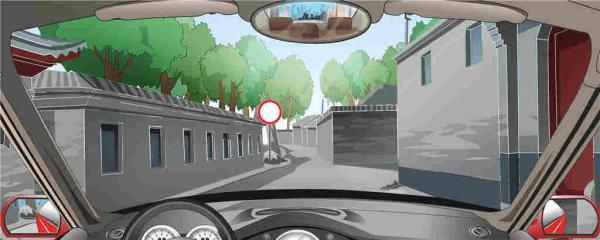
A. Right
B. Wrong
Answer: B
11. How will the adhesive force of road change when speed increases on a damp and slippery road?
A. Increase sharply
B. Increase gradually
C. decrease sharply
D. No change
Answer: C
12. When a bus encounters an unexpected situation or an accident, the driver should do his best to minimize the loss and should never cause a secondary accident or even greater loss for the sake of avoiding danger.
A. Right
B. Wrong
Answer: A
13. The sign on the right indicates that vehicles from the primary road have priority.

A. Right
B. Wrong
Answer: A
14. The sign on the right warns of three or more winding roads ahead.
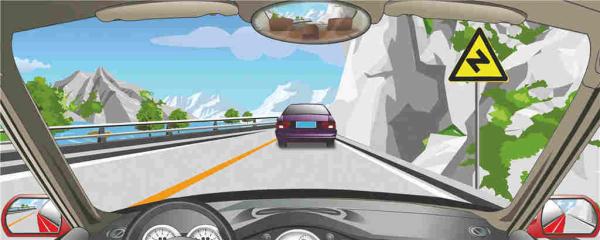
A. Right
B. Wrong
Answer: B
15. The road marking on the right lane indicates that drivers may temporarily borrow the special lane for buses.
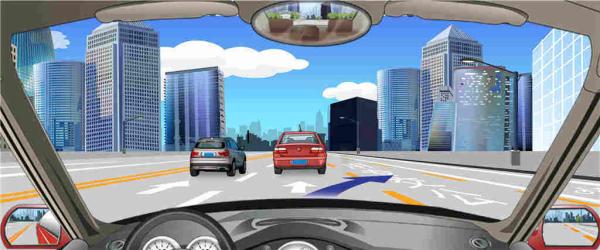
A. Right
B. Wrong
Answer: B
16. When driving in rain or snow, the driver should turn left to stabilize the vehicle if the motor vehicle slides to the right side.
A. Right
B. Wrong
Answer: B
17. What should the driver do to ensure the motor vehicle passes the level crossing safely?
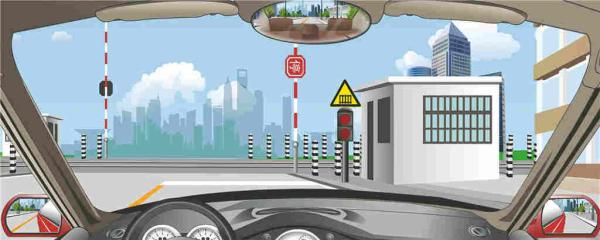
A. Change to neutral gear and slide over
B. Switch to low gear after entering the level crossing
C. Decelerate and lower the gear before entering the level crossing
D. Stop and observe inside the level crossing
Answer: C
18. How should motor vehicle drivers make a U-turn at the intersection ahead?
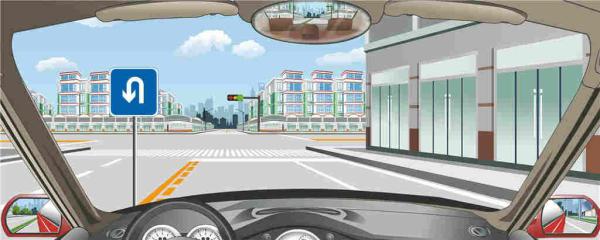
A. Make a U-turn in the waiting area for turning left
B. Make a U-turn at the broken line area of the Intersection
C. Wait until the left-turn indicator is on
D. Wait until the straight-going signal is on
Answer: B
19. Which is the correct way to use a fire extinguisher?
A. Stand on the leeward side
B. Direct the fire extinguisher at the source of fire
C. Try to approach the source of fire as close as possible
D. Direct the fire extinguisher at the flames
Answer: B
20. Under such circumstances at a congested intersection, what should motor vehicle drivers do?
A. Force the vehicle to go back to its original lane
B. Closely follow the vehicle in front and refuse to yield
C. Politely yield and pass through
D. Sound the horn and turn on the head lamps
Answer: C