

1. When encountering an obstacle on one side of the road, what should vehicles do as they approach each other?
A. The vehicle not encountering an obstacle should Yield to the other vehicle
B. The slower vehicle should yield to the faster
C. The vehicle encountering an obstacle should yield to the other vehicle
D. The faster vehicle should yield to the slower
Answer: C
2. When finding a tire burst on the road, the driver should use emergency braking while controlling the direction of the vehicle at the same time to stop the vehicle quickly.
A. Right
B. Wrong
Answer: B
3. The sign on the right indicates a bypass flow intersection ahead.
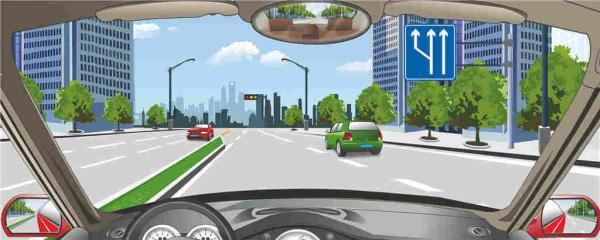
A. Right
B. Wrong
Answer: B
4. When a bus encounters an unexpected situation or an accident, the driver should do his best to minimize the loss and should never cause a secondary accident or even greater loss for the sake of avoiding danger.
A. Right
B. Wrong
Answer: A
5. When a motor vehicle has deviated from the straight moving direction and an accident is unavoidable, the driver should decisively and continuously depress the brake pedal so as to shorten the stopping distance and reduce the impact of vehicle collision.
A. Right
B. Wrong
Answer: A
6. The sign on the right warns of a guarded railway crossing 100 meters ahead.
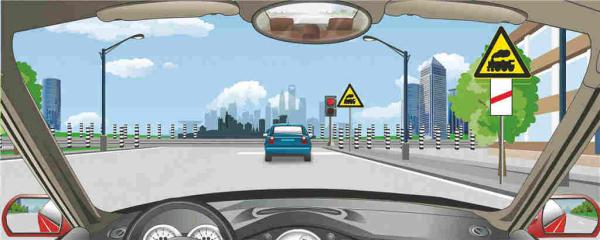
A. Right
B. Wrong
Answer: B
7. Motor vehicles are not allowed to stop in this area for a long time.
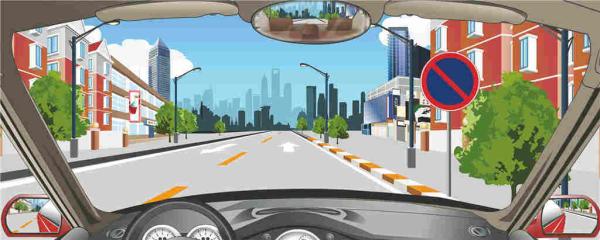
A. Right
B. Wrong
Answer: A
8. Under such circumstance at an intersection. motor vehicle drivers should be prepared to stop and yield at any time.
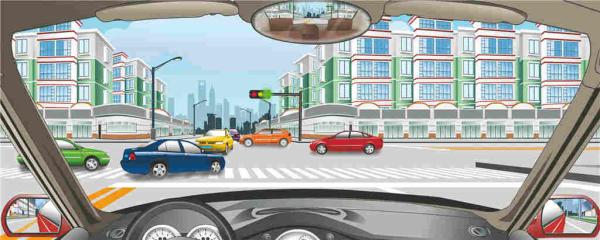
A. Right
B. Wrong
Answer: A
9. How many kinds of law-breaking acts are displayed in flash 1?
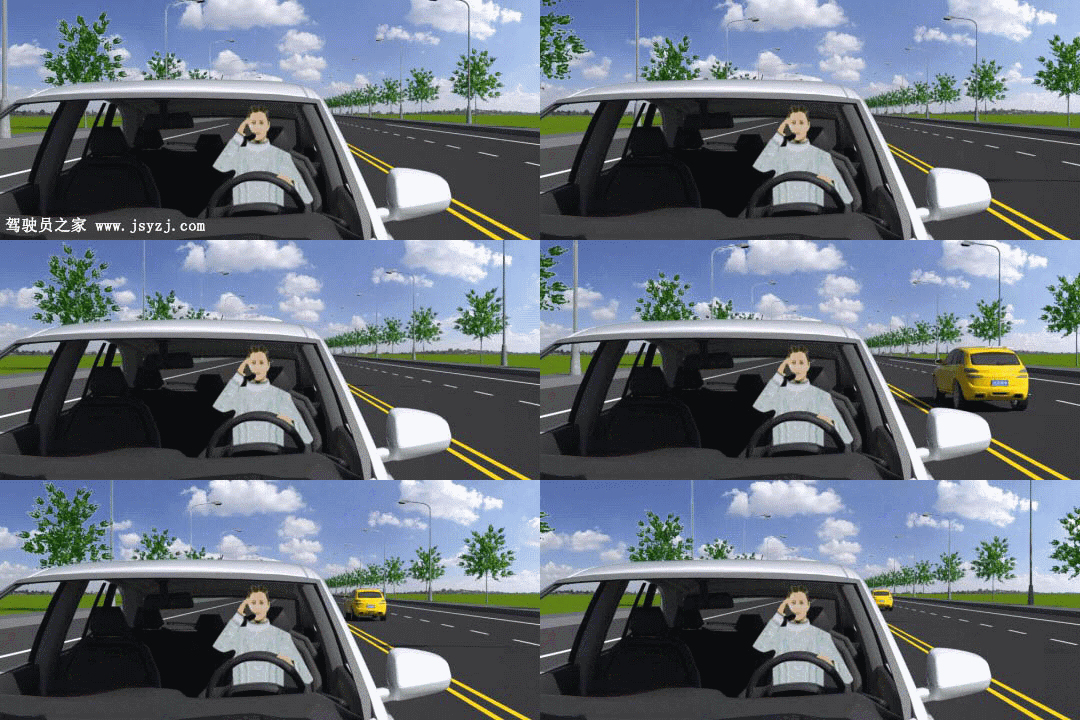
A. One
B. Two
C. Three
D. Four
Answer: B
10. When a motor vehicle catches fire, the driver should manage to park the vehicle in an open place far away from urban areas, buildings, trees, other motor vehicles and flammable materials.
A. Right
B. Wrong
Answer: A
11. The leading cause of this accident is that the driver failed to make sure that it was safe to reverse before doing so.
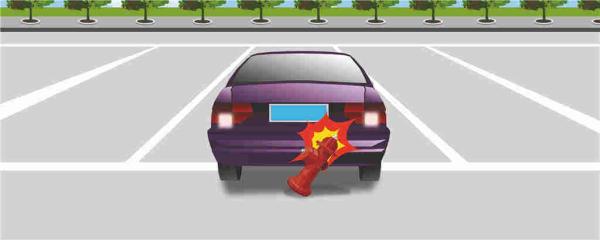
A. Right
B. Wrong
Answer: A
12. One day, Mr. Yang drove a large bus with 57 passengers (bus capacity 55 people) from 7 pm to 1 am the following morning. At the spot of 3008 kilometers mark by 110 meters on the No. 050 National Road in Jin Chengjiang District, the bus had a malignant traffic accident caused by front left tire burst, killing 12 people and injuring 22. What is the main illegal act committed by Mr. Yang?
A. Fatigued driving
B. Carrying more passengers than permitted
C. Speeding
D. Misoperation
Answer: AB
13. Under such circumstances, what should be done by motor vehicle drivers in order to yield to the pedestrians politely?
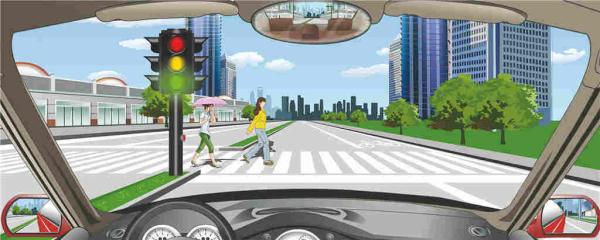
A. Set off after pedestrians pass
B. Set off and bypass in front of the pedestrians
C. Sound the horn to warn the pedestrians to yield
D. Set off and approach the pedestrians slowly
Answer: A
14. The sign in front indicates the name and number of the highway.
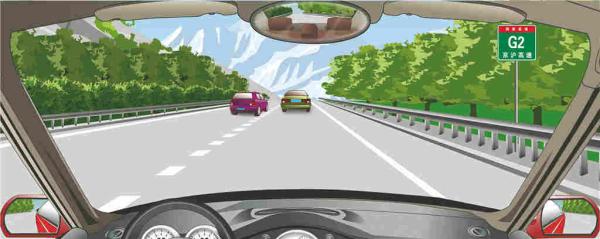
A. Right
B. Wrong
Answer: A
15. It is not a bad habit for a driver to frequently change lanes.
A. Right
B. Wrong
Answer: B
16. Which one of the following ways to pass this intersection is correct?
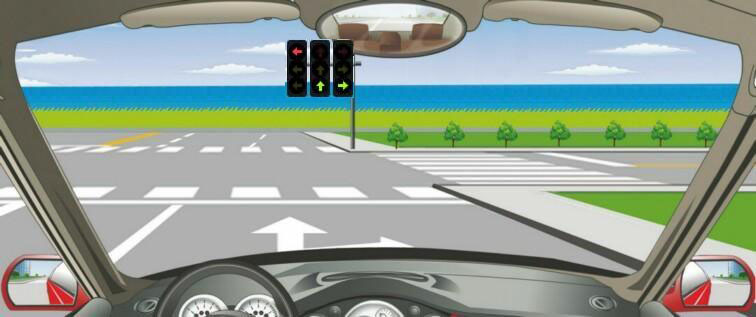
A. Turn left or right
B. Drive straight or turn left
C. Turn left
D. Drive straight or turn right
Answer: D
17. It is illegal to change lanes without turning on indicators.
A. Right
B. Wrong
Answer: A
18. The sign on the right warns for children on the section ahead.
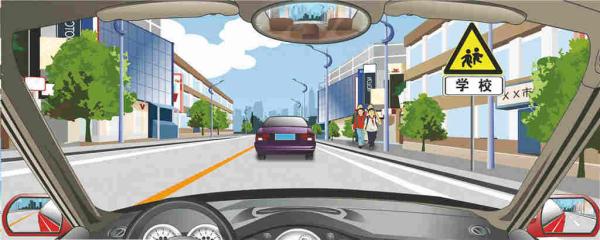
A. Right
B. Wrong
Answer: A
19. The sign on the right warns for livestock on the road ahead.

A. Right
B. Wrong
Answer: B
20. When a motor vehicle leaves an expressway, which of the following lamp should be turned on?
A. The left-turn indicator
B. The right-turn indicator
C. The hazard warning lamp
D. The headlamp
Answer: B