

1. When encountering a road like this, motor vehicle drivers may make good use of neutral gear to coast.
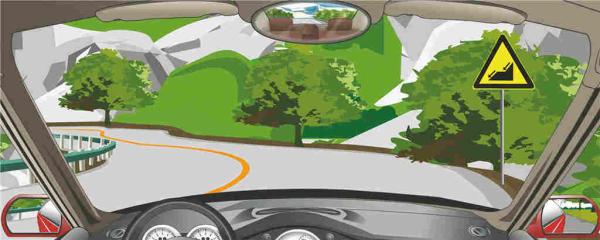
A. Right
B. Wrong
Answer: B
2. When the fuel of a motor vehicle catches fire, which of the following things cannot be used to put out the fire?
A. Sandy soil on the roadside
B. Cotton-padded clothes
C. Overalls
D. Water
Answer: D
3. In order to keep safe when driving on the highway, which ones of the following statements are prohibited acts?
A. Reversing, moving against regulations, making a U-turn by crossing the central divider, or stopping in the lane.
B. Riding or rolling on the lane-dividing line or driving on the shoulder
C. Overtaking on ramps, accelerations lanes, or deceleration lanes.
D. Testing vehicles or learning to drive a vehicle
Answer: ABCD
4. When a tire suddenly bursts on the road, in which of the following ways can motor vehicle drivers keep safe?
A. Applying emergency braking and pulling over
B. Firmly holding the steering wheel and keeping the vehicle going straight
C. Immediately releasing the accelerator pedal
D. Gently depressing the brake pedal
Answer: BCD
5. Drivers may turn left when seeing these hand signals.
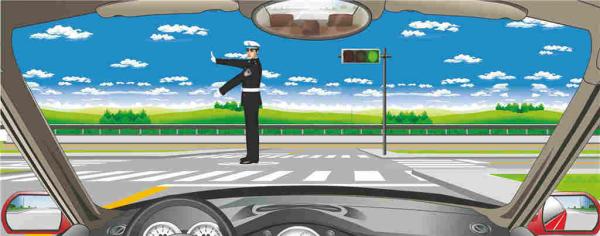
A. Right
B. Wrong
Answer: A
6. Drivers are not allowed to drive on or across these filled-in slanted yellow lines.
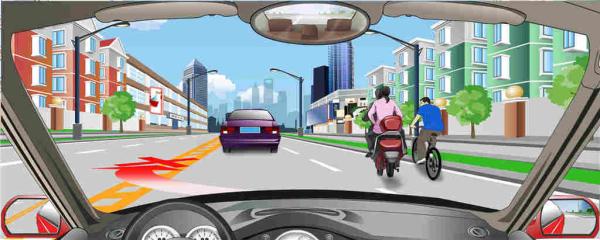
A. Right
B. Wrong
Answer: A
7. Under such circumstances at a congested intersection, what should motor vehicle drivers do?
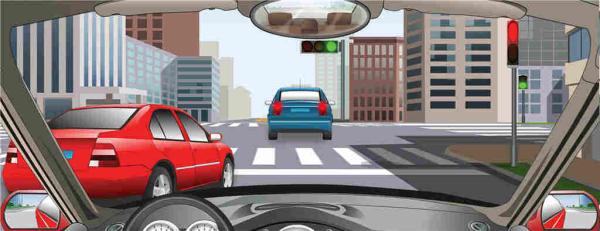
A. Force the vehicle to go back to its original lane
B. Closely follow the vehicle in front and refuse to yield
C. Politely yield and pass through
D. Sound the horn and turn on the head lamps
Answer: C
8. When a wounded person suffering burns is thirsty, he should only drink plain boiled water.
A. Right
B. Wrong
Answer: B
9. When a motor vehicle passes over an inundated road, what should the driver do for safe driving?
A. Slow down and drive with special care
B. Speed up and pass rapidly
C. Maintain a normal speed and pass through
D. Change to a low gear and speed up to pass
Answer: A
10. What should the driver do when seeing these hand signals?
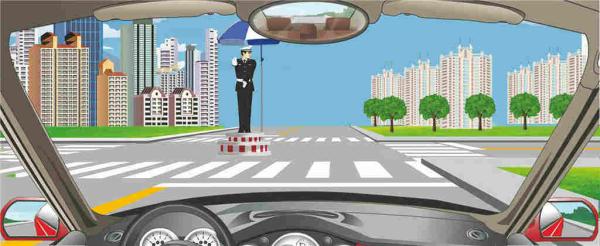
A. Go straight and pass through the intersection
B. Stop and wait
C. Turn right at the intersection
D. Turn left at the intersection
Answer: B
11. The sign on the right indicates that the number of the lanes ahead will increase.
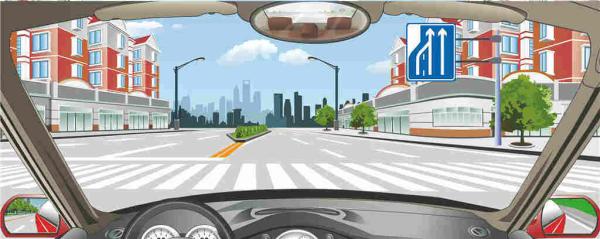
A. Right
B. Wrong
Answer: B
12. Drivers may temporarily cross these central broken and solid yellow lines when overtaking.
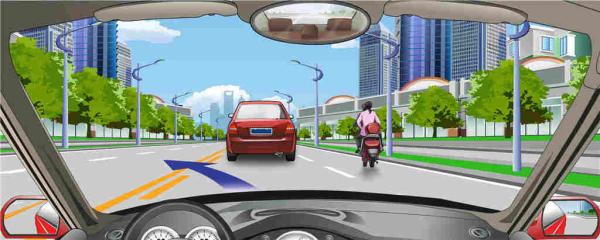
A. Right
B. Wrong
Answer: A
13. The sign on the right warns of an unguarded railway crossing 150 meters ahead.
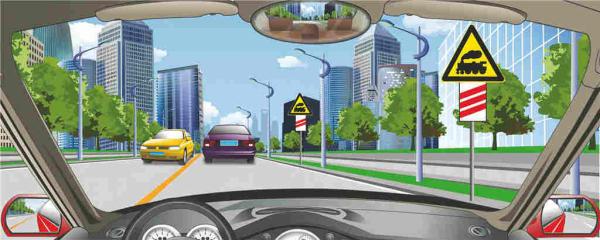
A. Right
B. Wrong
Answer: A
14. When there is a braking failure on a downhill road, if there is no favorable terrain or opportunity to stop the vehicle, the driver should drop gear by one position or two positions, and control the speed by taking advantage of the braking role of the engine.
A. Right
B. Wrong
Answer: A
15. The sign on the right side warns of a sharp right turn ahead.
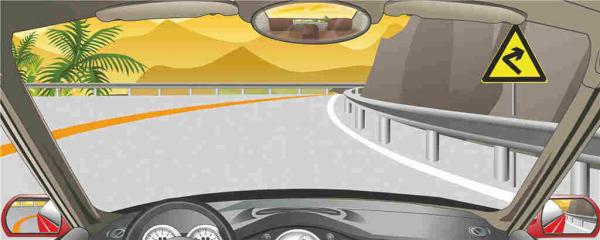
A. Right
B. Wrong
Answer: A
16. It is an illegal act for the driver to make calls while driving.
A. Right
B. Wrong
Answer: A
17. What does this sign on the fly-over junction indicate?
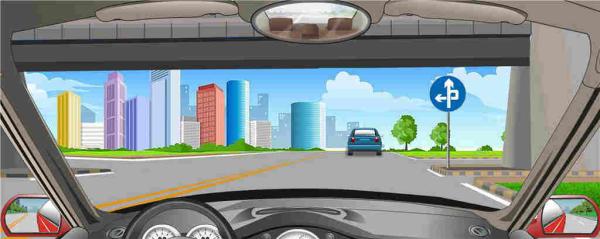
A. Turn right
B. Drive straight or turn left
C. Drive straight or turn right
D. Take a U-turn under bridge
Answer: B
18. Under such circumstances, what should be done by motor vehicle drivers in order to maintain safe driving?
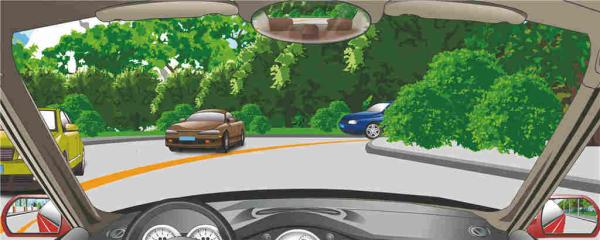
A. Sound the horn or turn on the headlamps
B. Reduce speed or drive on the right side
C. Keep to the central line as best as possible
D. Drive on the left side of the road
Answer: B
19. Having driven his truck at 90km/hour on an urban road without road lamps, Mr. Zhou is passing a narrow road using the high-beam and cutting off the way of an oncoming passenger car that runs into the right guardrail as a consequence. Which of the following law-breaking acts did Mr. Zhou commit?
A. Speeding
B. Approaching a vehicle not in accordance with related regulations and rules
C. Fatigued driving
D. Using lamps not in accordance with related regulations and rules
Answer: ABD
20. When encountering such a situation, the motor vehicle driver should change to the left lane rapidly.
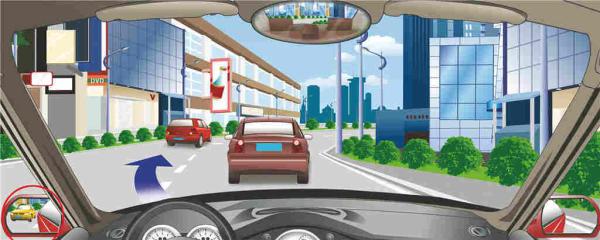
A. Right
B. Wrong
Answer: B