

1. When the motor vehicle stops on an uphill section, how should the driver use the foot brake?
A. Earlier than on a level road
B. Later than on a level road
C. As timely as on a level road
D. Strongly depress the foot brake pedal
Answer: B
2. Motor vehicle drivers don?ˉt need to fasten their seatbelt
A. Right
B. Wrong
Answer: B
3. When braking failure happens to a fast-moving motor vehicle, what should be done by the driver to brake?
A. Continuously depressing the brake pedal
B. Immediately changing to a low gear to reduce speed and using the handbrake
C. Swiftly depressing the clutch pedal
D. Swiftly pulling up the handbrake
Answer: B
4. How many kinds of law-breaking acts are displayed in flash 3?
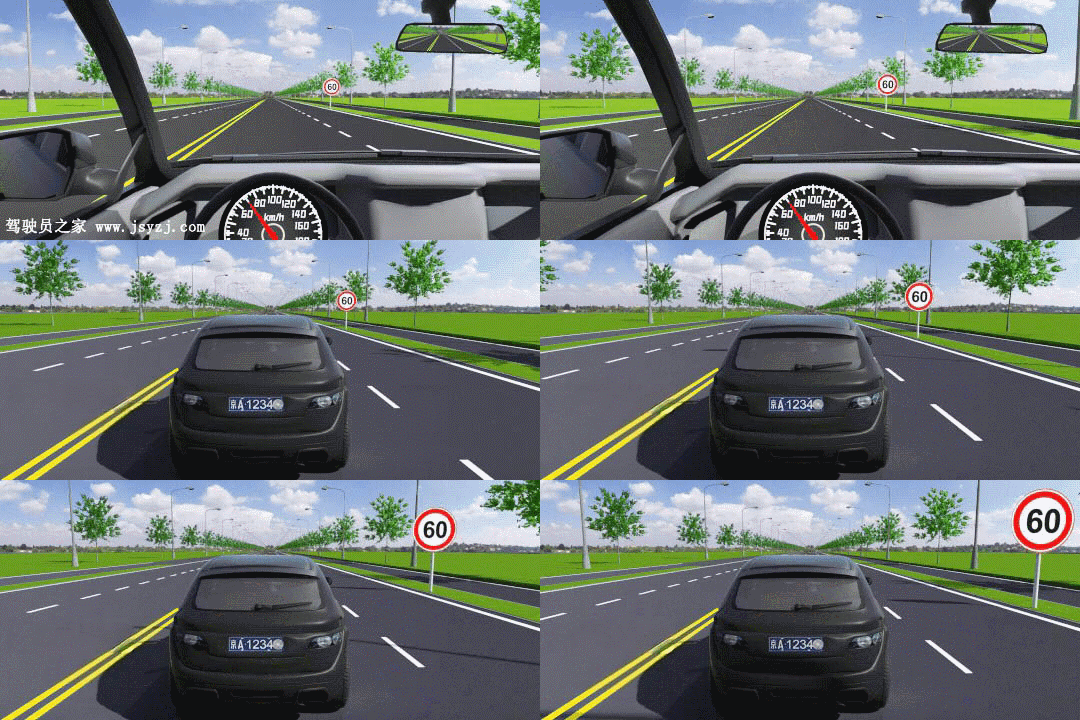
A. One
B. Two
C. Three
D. Four
Answer: B
5. When driving on a snowy day, drivers should follow the tracks on the road before them.
A. Right
B. Wrong
Answer: A
6. When such circumstances happen suddenly, drivers should reduce speed in a timely fashion or stop to yield.
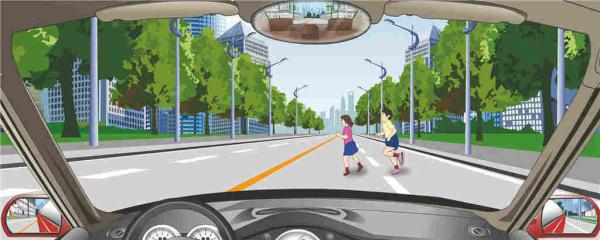
A. Right
B. Wrong
Answer: A
7. When running on an expressway with three lanes in each direction, which one of the following lanes is not appropriate for the motor vehicle to use if its speed ranges between 90 kilometers per hour and 110 kilometers per hour?
A. The far left lane
B. The middle lane
C. The far right lane
D. Any lane
Answer: A
8. If a motor vehicle misses an exit on the expressway, the driver may reverse along the road shoulder.
A. Right
B. Wrong
Answer: B
9. Upon encountering this traffic signal, how should a driver react?
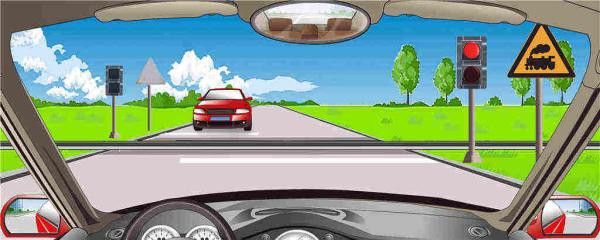
A. Observe the traffic situation and pass at a reduced speed
B. Pass at an increased speed without changing gears
C. Pass before the train comes
D. Crossing the stop line is prohibited
Answer: D
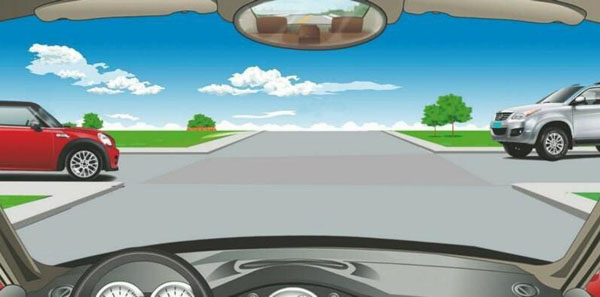
10. How to pass the intersection when running straight
A. turn on the hazard lights and pass
B. directly speed up and pass straight
C. yield to the vehicle from the right road
D. yield to the vehicle from the left road
Answer: C
11. The diamond-shaped sign on the road indicates a crosswalk on the road ahead.
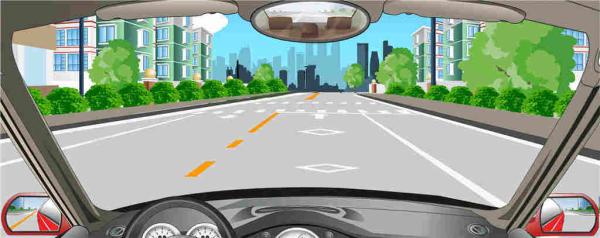
A. Right
B. Wrong
Answer: A
12. The sign on the left indicates that drivers should stop to take a pass card at the toll station ahead.
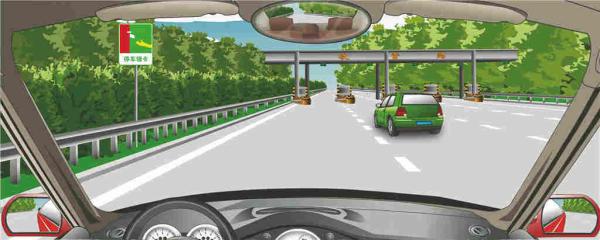
A. Right
B. Wrong
Answer: A
13. What should be done by the driver who intends to overtake but the motor vehicle in front neither reduces its speed nor allows the right of way?
A. Continuously sounding the horn and accelerating to overtake
B. Accelerating and continuing to overtake
C. Refraining from overtaking
D. Following the vehicle in front closely and finding a chance to overtake
Answer: C
14. When a motor vehicle accidentally hits a guardrail of a highway, the driver should stabilize and adjust the steering wheel properly, and refrain from turning the steering wheel drastically.
A. Right
B. Wrong
Answer: A
15. What is the main impact of foggy weather on safe driving?
A. Easy to slide sideways
B. Low visibility
C. Increase the resistance
D. Widen the field of vision
Answer: B
16. Which of the following is a bad habit when changing lanes?
A. Turning on the indicator in advance
B. Observing closely before changing a lane
C. Change lanes at will
D. Not obstructing the passing of other normally moving vehicles
Answer: C
17. The sign on the right warns of an abrupt slope section ahead.

A. Right
B. Wrong
Answer: A
18. When the engine suddenly stalls on the road, what should the driver do?
A. Stop the vehicle and overhaul it immediately
B. Immediately turn on the hazard lamps
C. Move the vehicle to a place where it will not obstruct the traffic flow
D. Set up a breakdown warning sign
Answer: BCD
19. What should the driver do if he wants to turn right at this intersection?
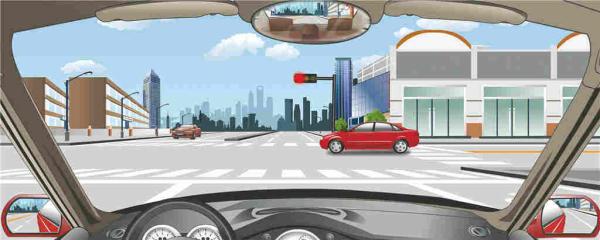
A. Turn right along the straight-going lane
B. Wait behind the stop line
C. Turn right along the right lane
D. Borrow the non-motor vehicle lane and turn right
Answer: C
20. When a motor vehicle leaves an expressway, which of the following lamp should be turned on?
A. The left-turn indicator
B. The right-turn indicator
C. The hazard warning lamp
D. The headlamp
Answer: B