

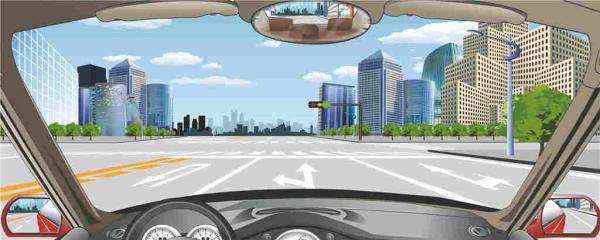
1. Before making a U-turn at the intersection ahead, motor vehicle drivers should drive to the lane for turning left and going straight.
A. Right
B. Wrong
Answer: B
2. Mr. Qian drove a large sleeper coach with 45 passengers (capacity 40 people) at a speed of more than 40 kilometers per hour. On a long slope with sharp curves in Basu County, the coach fell into a 100-meter-deep valley, killing 17 people and injuring 20. What is the main illegal act committed by Mr. Qian?
A. Making a cellphone call while driving
B. Speeding
C. Carrying more people than permitted
D. Fatigued driving
Answer: BC
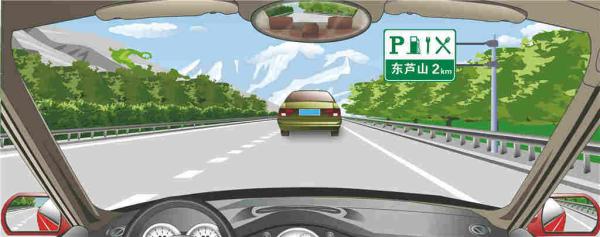
3. The sign on the right indicates a 2-kilometer distance from the Donglushan Service Area on the highway.
A. Right
B. Wrong
Answer: A
4. When driving, besides paying attention to keeping a safe distance from the vehicle in front, drivers should also be prudent when braking so as to avoid a rear-end collision caused by a vehicle behind.
A. Right
B. Wrong
Answer: A
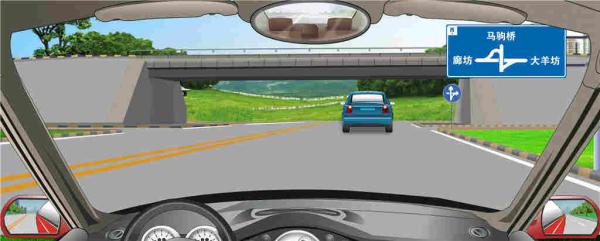
5. The sign in front is an advance announcement of the directions led by the interchange.
A. Right
B. Wrong
Answer: A
6. If a motor vehicle has an accident on a foggy day and stops on an expressway, which of the following acts is dangerous?
A. Leaving the motor vehicle as soon as possible
B. Standing outside the guardrail as much as possible
C. Turning on the hazard lamp and fog lamp
D. Placing a warning sign behind the vehicle in the oncoming direction
Answer: D
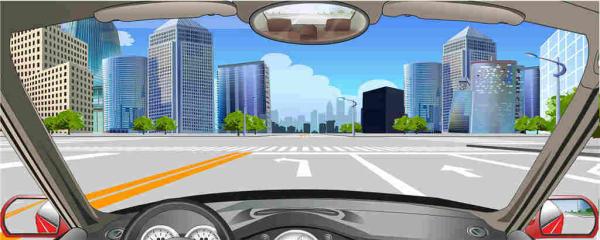
7. The guide arrow on the road surface of this lane indicates that only left turns are permitted at the intersection ahead.
A. Right
B. Wrong
Answer: A
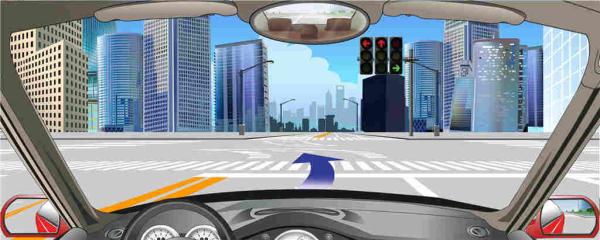
8. As shown in this picture, the vehicles intending to turn left are allowed to drive into the left-turn waiting area directly to wait for the green light.
A. Right
B. Wrong
Answer: B
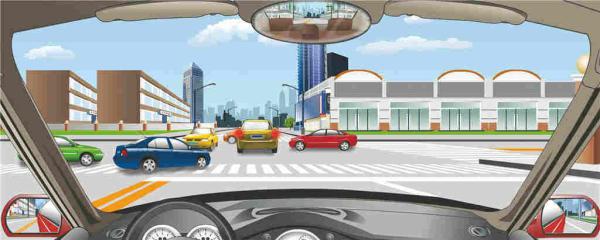
9. Under such circumstances, motor vehicle drivers should follow the vehicle in front and drive into the Intersection to wait.
A. Right
B. Wrong
Answer: B
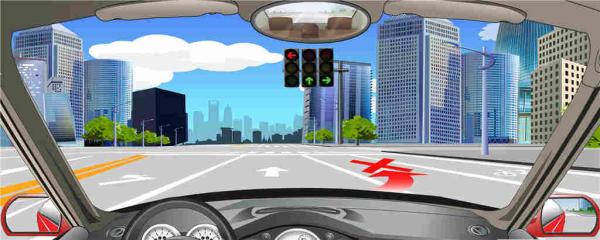
10. As shown in this picture, before driving to the intersection, vehicles are not allowed to change lanes by crossing the solid white line.
A. Right
B. Wrong
Answer: A
11. When a motor vehicle breaks down and cannot be moved away from the emergency lane or the road shoulder, the driver and all passengers should get off the vehicle and wait on the road side instead of leaving the expressway.
A. Right
B. Wrong
Answer: B
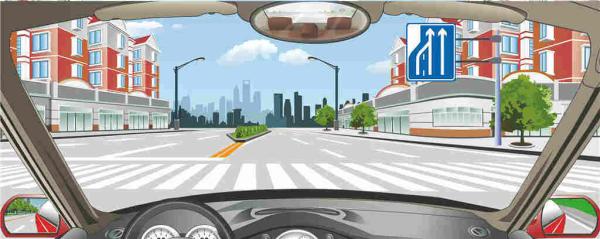
12. The sign on the right indicates that the number of the lanes ahead will increase.
A. Right
B. Wrong
Answer: B
13. A driver should accelerate in advance to overtake then it is likely to meet with oncoming vehicles.
A. Right
B. Wrong
Answer: B
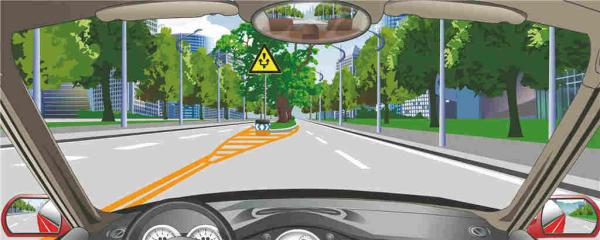
14. The slanted filled-in yellow marking in the middle of the road warns that there is a stationary obstacle ahead.
A. Right
B. Wrong
Answer: A
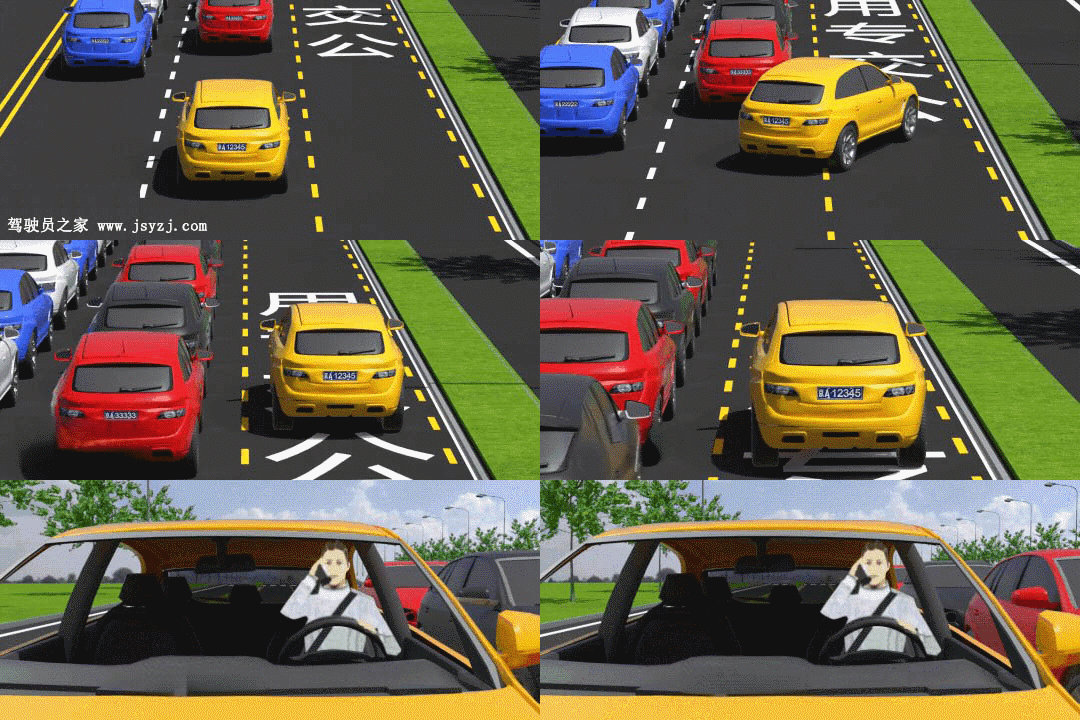
15. How many kinds of law-breaking acts are displayed in flash 2?
A. One
B. Two
C. Three
D. Four
Answer: B
16. When a bicycle occupies the motor vehicle lane and obstructs the traffic, the driver should sound the horn continuously and speed up to bypass on the left of the bicycle.
A. Right
B. Wrong
Answer: B
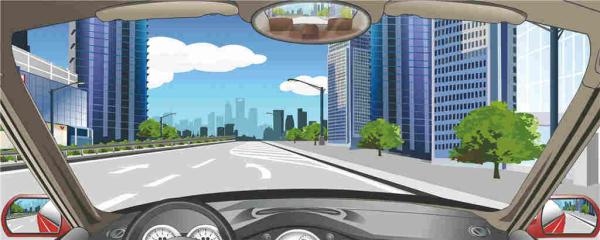
17. The guide arrow on the road surface of this lane indicates that the lanes ahead will merge to the left side.
A. Right
B. Wrong
Answer: A
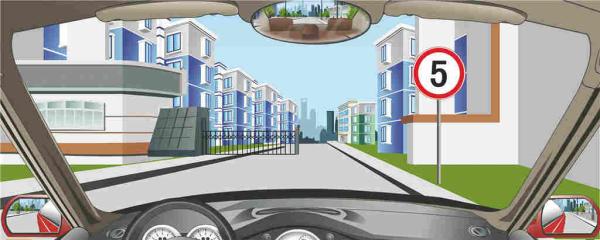
18. When driving in a residential area, the driver should not exceed the speed indicated by the speed limit sign.
A. Right
B. Wrong
Answer: A
19. The sign on the right indicates a section for ascertaining the distance between the vehicles 200 meters ahead.
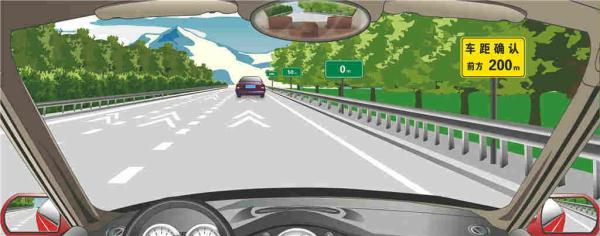
A. Right
B. Wrong
Answer: A
20. At this intersection, motor vehicle drivers may directly make a U-turn along the U-turn turning lane.
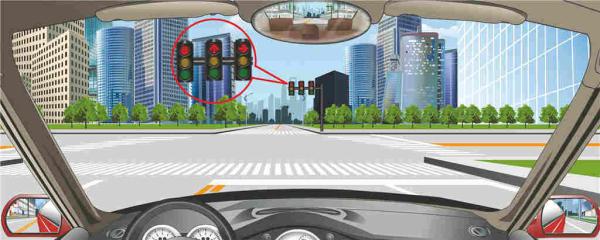
A. Right
B. Wrong
Answer: B