

1. When the motor vehicle stops on an uphill section, how should the driver use the foot brake?
A. Earlier than on a level road
B. Later than on a level road
C. As timely as on a level road
D. Strongly depress the foot brake pedal
Answer: B
2. The sign in front indicates the allocation of roads ahead.
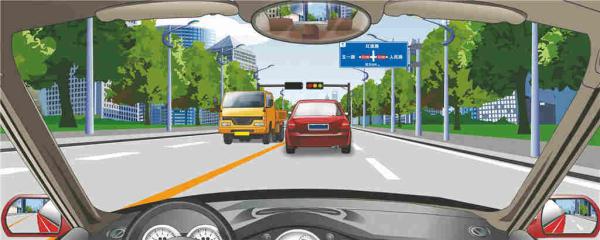
A. Right
B. Wrong
Answer: B
3. When a motor vehicle passes over an overflowing bridge, what should the driver do after stopping and observing closely?
A. Change to a high gear and pass rapidly
B. Constantly observe the changes of the flow
C. Prepare to stop at any time
D. Change to a low gear and pass through at a constant speed
Answer: D
4. When driving on an expressway, drivers should not frequently change lanes.
A. Right
B. Wrong
Answer: A
5. In which ones of the following ways can motor vehicle drivers effectively prevent braking failure?
A. Maintaining the braking system periodically
B. Checking the free brake pedal travel before driving
C. Using the braking system correctly to avoid brake-fade
D. For vehicles with hydraulic braking system, checking if the brake fluid leaks before driving
Answer: ABCD
6. Which of the following measures should be taken first when rescuing a wounded person suffering blood loss?
A. Observe
B. Dress the wounds
C. Stop bleeding
D. Inquire
Answer: C
7. When extinguishing a fire, the driver should refrain from breathing through mouth or crying loudly Otherwise, the fire and smoke will scorch the upper respiratory tract.
A. Right
B. Wrong
Answer: A
8. The sign on the right warns of a guarded railway intersection ahead.
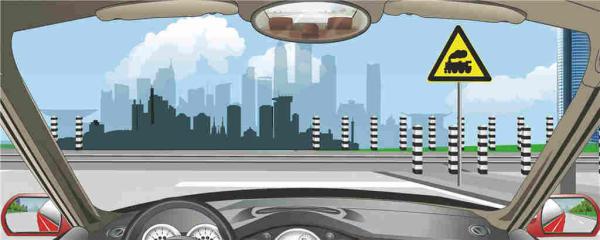
A. Right
B. Wrong
Answer: B
9. Under such circumstances, what should motor vehicle drivers do?
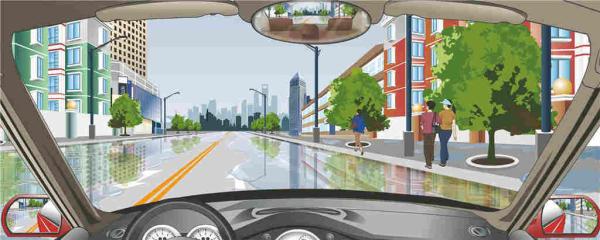
A. Pass slowly at a lower speed
B. Speed up and pass
C. Continuously sound the horn and pass
D. Pass at a normal speed
Answer: A
10. The sign on the right indicates an inspection station 100 meters ahead.
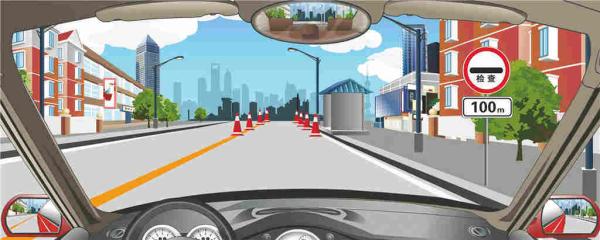
A. Right
B. Wrong
Answer: A
11. Mr. Tang drove a large bus with 74 passengers (capacity 30 people). When descending a long curving slope at a speed of 38 kilometers per hour, the bus overturned to a brook beside the road. As a result of the accident, 17 people were killed and 57 people injured. What is the main illegal act committed by Mr. Tang?
A. Driving after drinking
B. Carrying more passengers than permitted
C. Fatigued driving
D. Speeding
Answer: BD
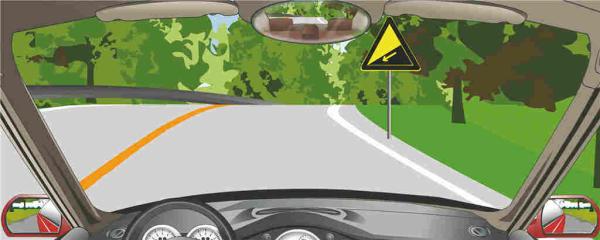
12. When encountering a road like this, motor vehicle drivers should downshift in advance and control speed by braking the engine.
A. Right
B. Wrong
Answer: A
13. It is illegal to change lanes without turning on indicators.
A. Right
B. Wrong
Answer: A
14. Which one of the following ways to pass this intersection is correct?
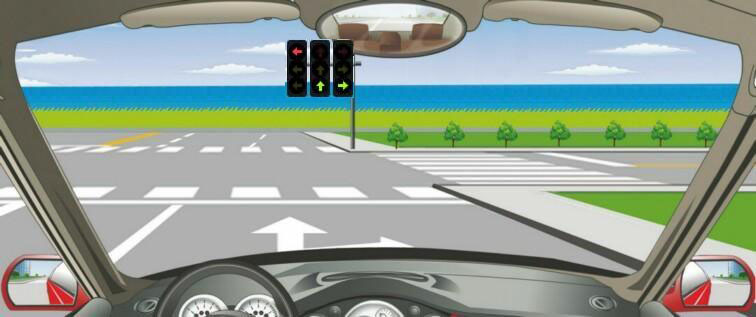
A. Turn left or right
B. Drive straight or turn left
C. Turn left
D. Drive straight or turn right
Answer: D
15. When a tire bursts suddenly on the road, the driver should refrain from violently depressing the brake pedal in panic. Instead, he should try his best to change to a low gear and use engine braking to reduce the speed of the vehicle.
A. Right
B. Wrong
Answer: A
16. When there is bleeding at the bone fracture of a wounded person, the first thing to do is to keep it in position before stopping the bleeding and dress the wound.
A. Right
B. Wrong
Answer: B
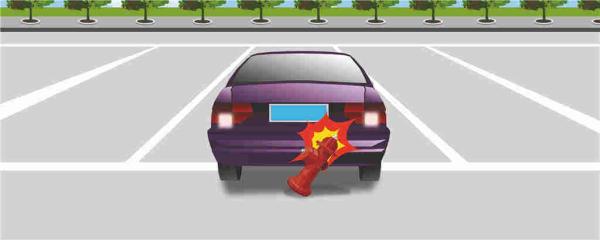
17. The leading cause of this accident is that the driver failed to make sure that it was safe to reverse before doing so.
A. Right
B. Wrong
Answer: A
18. Which of the following is a bad driving habit?
A. Using lights in accordance with relevant rules
B. Carrying both vehicle and driving license
C. Discarding rubbish from the side window
D. Follow the guidance of the traffic signals
Answer: C
19. Under the circumstances shown in the flash, what should the driver do?
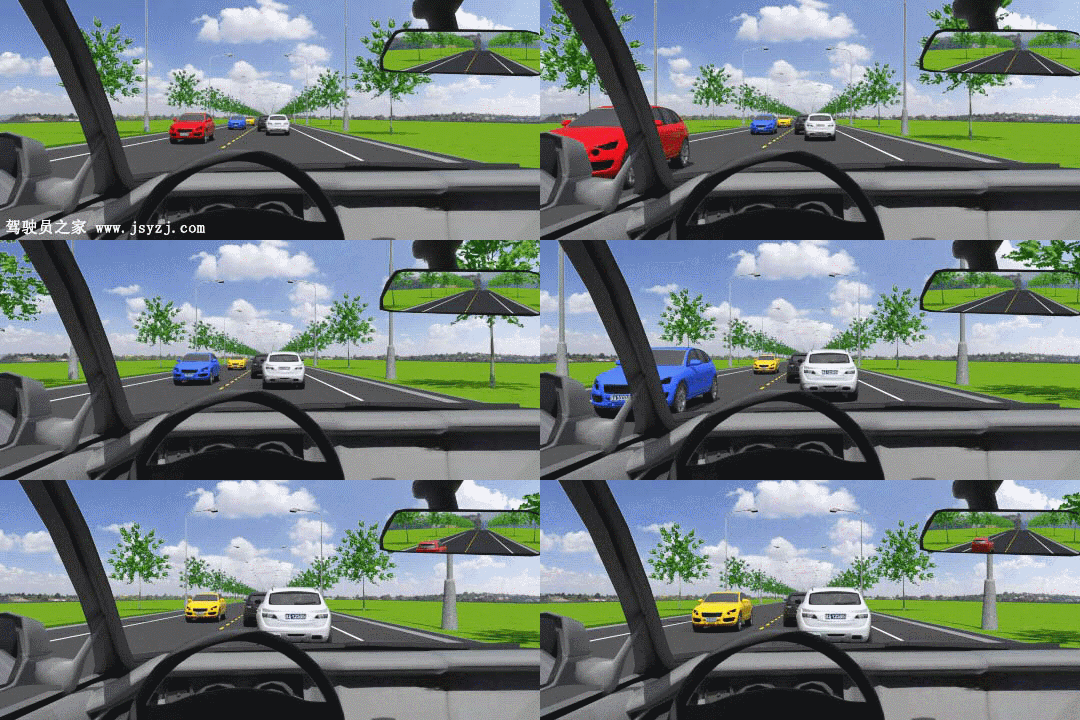
A. Find a chance to overtake the vehicle in front
B. Weave through motor vehicles ahead and pass
C. Reduce speed, stop, and wait in line
D. Sound the horn to urge vehicles in front
Answer: C
20. When removing a wounded person suffering spinal fracture, the rescuer should never help the wounded person to walk. He may be carried away with a soft stretcher.
A. Right
B. Wrong
Answer: B