

1. It is illegal for a driver to use a cell phone while driving.
A. Right
B. Wrong
Answer: A
2. You may speed up to go through the intersection in this case.Answer£o
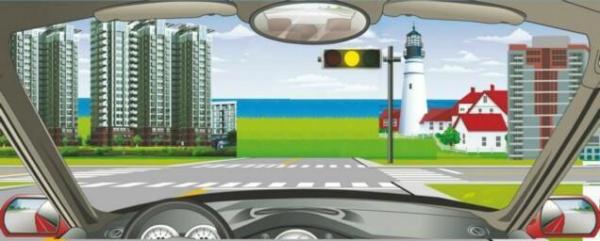
A. Right
B. Wrong
Answer: B
3. When a vehicle stops temporarily in a snowy day, the driver should turn on _______.
A. The head and tail fog light
B. The reserve light
C. The high beam light
D. The hazard lights
Answer: D
4. A motorized vehicle driver who does not hang the license plate is subject to a ________.
A. 6-point penalty
B. 12-point penalty
C. 2-point penalty
D. 3-point penalty
Answer: B
5. Whats the meaning of this sign?
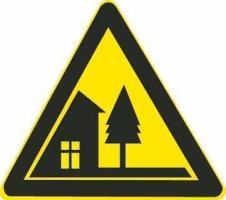
A. watch for pedestrians
B. crosswalk
C. village or town
D. primary school
Answer: C
6. What device does the switch of this symbol control?
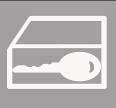
A. window glasses of both sides
B. electric door
C. door unlock
D. child safety lock
Answer: C
7. When driving a small vehicle downhill, the driver may coast down by stopping the engine.
A. Right
B. Wrong
Answer: B
8. Within the validity of the Admission Form, the times of test reservation for Driving Skills of subject 2 and subject 3 can not exceed ______
A. 3 times
B. 4 times
C. 5 times
D. 6 times
Answer: C
9. Whats the meaning of this sign?
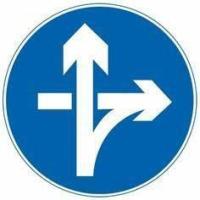
A. going straight and turning left
B. going straight and turning right
C. going straight and turning right at an interchange
D. going straight and turning left at an interchange
Answer: C
10. When the motor vehicle installed ABS system brakes, the braking distance will be greatly shortened, so you do not have to keep a safe distance between vehicles.
A. Right
B. Wrong
Answer: B
11. Whats the meaning of this sign?
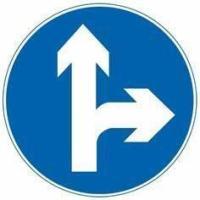
A. going straight and left turn
B. going straight and right turn
C. no going straight and no right turn
D. left turn and right turn only
Answer: B
12. What is this manipulation device?
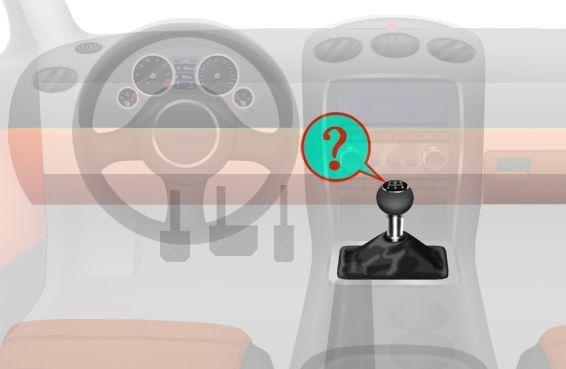
A. the handbrake
B. the air throttle lever
C. the gear lever
D. the clutch lever
Answer: C
13. Whats the meaning of this sign?
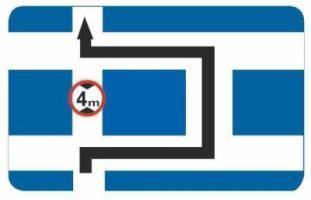
A. no left turn
B. dead-end road
C. no passing
D. bypass if overheight
Answer: D
14. It lights to indicate that ______

A. windscreen wash lacks
B. braking oil lacks
C. cooling system malfunction
D. coolant lacks
Answer: D
15. Before entering a level crossing, the vehicle should reduce speed and change to a lower gear, and _____ after entering the level crossing.
A. Cannot change gear
B. Can change gear
C. Can change to a higher gear
D. Stop and look
Answer: A
16. Whats the meaning of this sign?
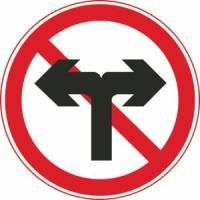
A. no U turn at intersection
B. no changing lane from both sides
C. no left or right turn
D. no going straight
Answer: C
17. When overtaking a vehicle stopping on the right side, the driver should ________ in case that vehicle starts up suddenly or opens the door.
A. Speed up and pass
B. Keep honking
C. Maintain the normal speed
D. Keep a safe horizontal distance from that vehicle, reduce speed and pass
Answer: D
18. Whats the meaning of the yellow broken line on curbstone?
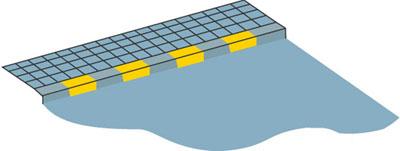
A. no temporary stopping
B. no taking and dropping people
C. no loading and unloading cargos
D. no long stopping
Answer: D
19. Whats the meaning of this guide arrow?

A. changing to left lane
B. going straight ahead
C. left turn ahead
D. right turn ahead
Answer: C
20. Traffic signals include Traffic lights, Traffic signs and Command of the traffic police.
A. Right
B. Wrong
Answer: A