

1. What does this sign on the fly-over junction indicate?
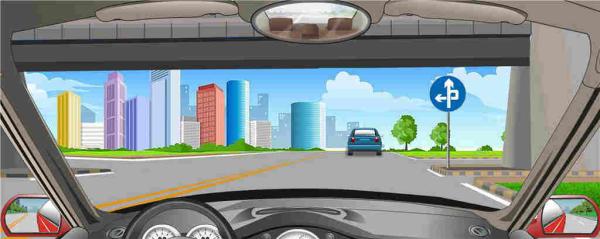
A. Turn right
B. Drive straight or turn left
C. Drive straight or turn right
D. Take a U-turn under bridge
Answer: B
2. The sign on the right warns of right-hand S-shaped bend ahead.
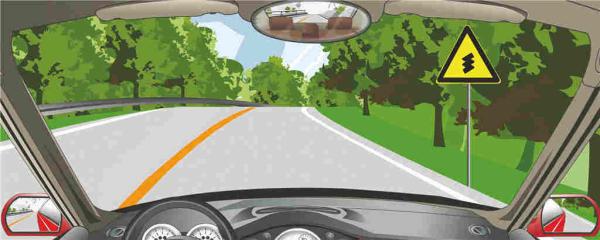
A. Right
B. Wrong
Answer: B
3. When a motor vehicle turns left at this intersection the driver should change to the left lane in advance by the guide arrow.
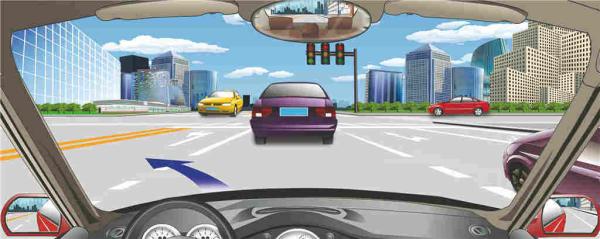
A. Right
B. Wrong
Answer: A
4. Which is the correct way to use a fire extinguisher?
A. Stand on the leeward side
B. Direct the fire extinguisher at the source of fire
C. Try to approach the source of fire as close as possible
D. Direct the fire extinguisher at the flames
Answer: B
5. What should the driver pay attention to in this situation?
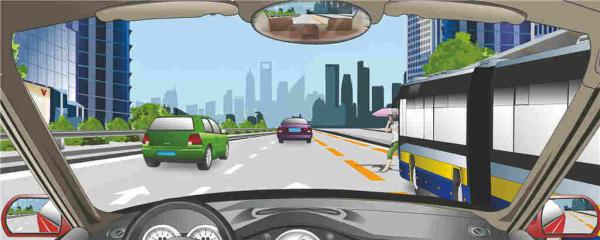
A. Pedestrians passing behind the vehicle
B. Pedestrians passing in front of the vehicle
C. Public buses suddenly reversing
D. Public buses suddenly setting off
Answer: B
6. When putting out a fire disaster that gives out corrosive steam or poisonous gas, the firefighters should wear gas masks and other related protective articles and operate from the windward side.
A. Right
B. Wrong
Answer: A
7. Which one of the following measures is correct when a motor vehicle intends to overtake but the vehicle in front refuses to yield?
A. Use a long-sounding horn
B. Follow the vehicle in front while turning high-beam
C. Wait for it to yield while keeping a safe distance
D. Use high-beam and low-beam alternatively
Answer: C
8. These traffic police signals indicate that passing is prohibited.
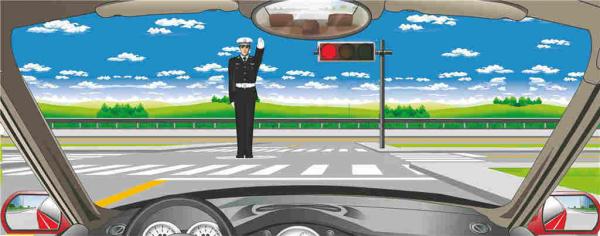
A. Right
B. Wrong
Answer: A
9. The sign on the right warns of low-lying road ahead.

A. Right
B. Wrong
Answer: A
10. When encountering a road like this, motor vehicle drivers should downshift in advance and control speed by braking the engine.
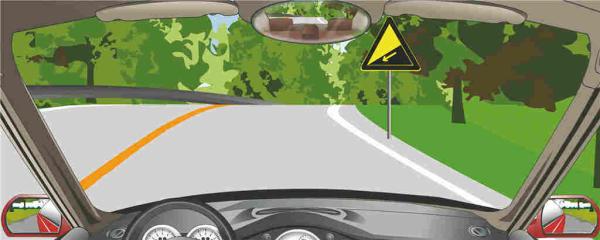
A. Right
B. Wrong
Answer: A
11. In which of the following ways can motor vehicles avoid a tire burst?
A. Lowering tire pressure
B. Checking tires regularly
C. Removing foreign matters from the tire tread grooves timely
D. Replacing the tires that have cracks or deep cuts
Answer: BCD
12. What should the driver do when seeing these hand signals?
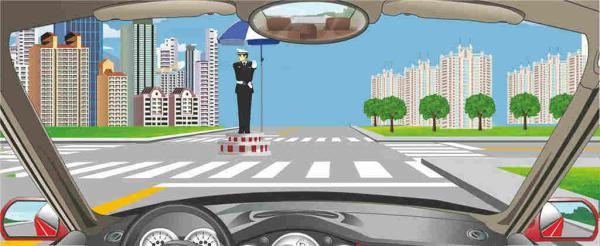
A. Turn left at the intersection
B. Stop and wait
C. Go straight at the intersection
D. Drive to the waiting area for turning left
Answer: B
13. When a head-on collision with another vehicle is unavoidable, what should the driver do?
A. Change head-on collision to side collision
B. Immediately turn the steering wheel to the right side to evade
C. Immediately apply emergency braking
D. Immediately turn the steering wheel to the left side to evade
Answer: C
14. When there is bleeding at the bone fracture of a wounded person, the first thing to do is to keep it in position before stopping the bleeding and dress the wound.
A. Right
B. Wrong
Answer: B
15. How should motor vehicle drivers make a U-turn at the intersection ahead?
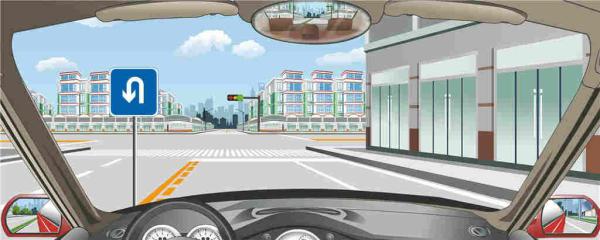
A. Make a U-turn in the waiting area for turning left
B. Make a U-turn at the broken line area of the Intersection
C. Wait until the left-turn indicator is on
D. Wait until the straight-going signal is on
Answer: B
16. The sign on the right warns of an abrupt slope section ahead.
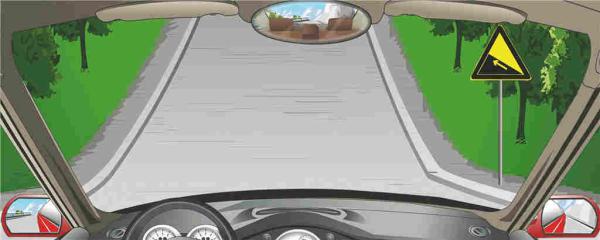
A. Right
B. Wrong
Answer: A
17. When encountering a road like this, motor vehicle drivers should downshift in advance to maintain the dynamic of the motor vehicle.
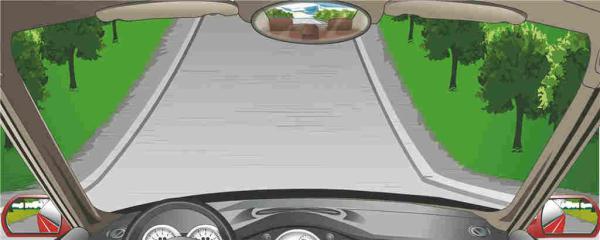
A. Right
B. Wrong
Answer: A
18. The sign on the right warns of a narrowed road on both sides ahead.
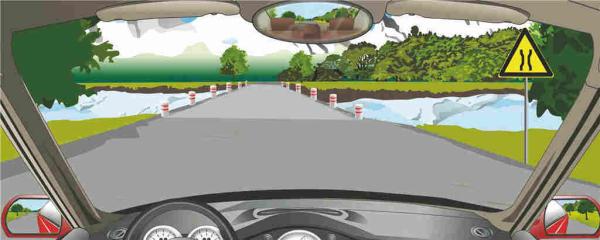
A. Right
B. Wrong
Answer: B
19. Having driven a large passenger vehicle (carrying 44 passengers, permitted carrying capacity 44) equipped with sleepers at 44km/hour on a frozen road, at 58 km mark by 500m on 540 County Road in Yanhe County, Mr. Luo sideslipped and left the road, killing 15 people and injuring 27. Which of the following law-breaking acts did Mr. Luo commit?
A. Exceeding the carrying capacity of the passenger vehicle
B. Speeding
C. Fatigued driving
D. Improper driving
Answer: B
20. What should drivers keep in mind when driving on a mountainous road?
A. Keep a safe distance
B. Avoid occupancy of another lane when making a turn
C. Downshift in advance when ascending an abrupt slope
D. Taking full advantage of engine braking when descending a long slope
Answer: ABCD