

1. How many kinds of law-breaking acts are displayed in flash 5?
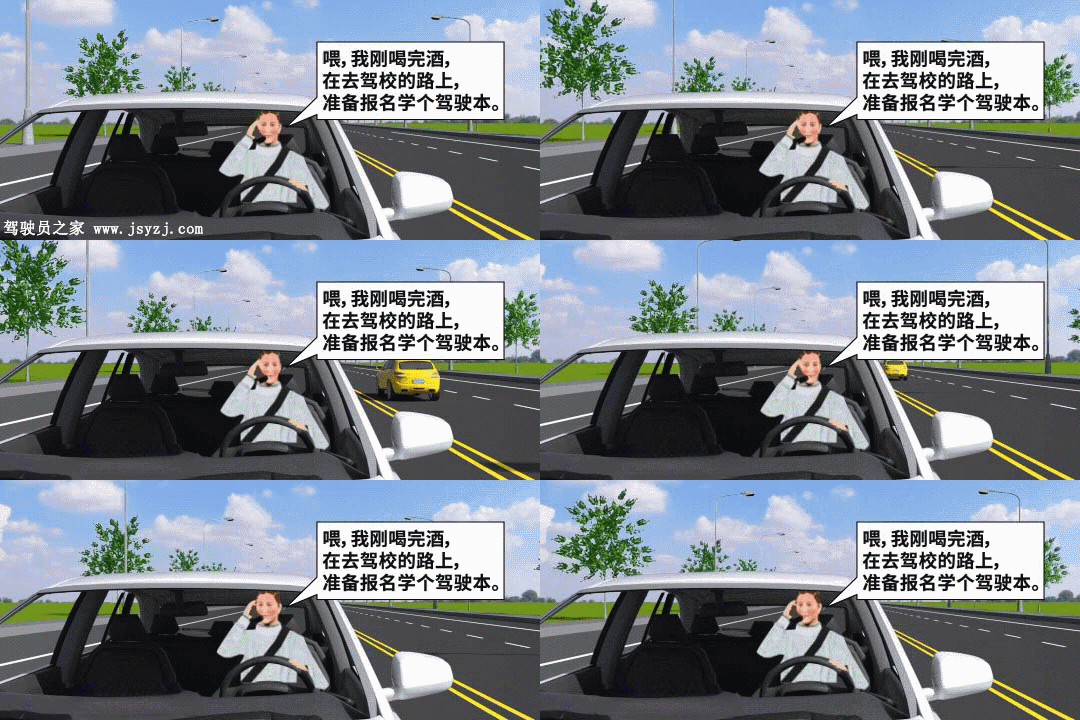
A. One
B. Two
C. Three
D. Four
Answer: C
2. Motor vehicles should accelerate when driving into an intersection with this traffic signal.
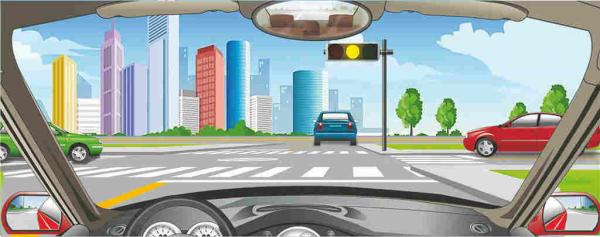
A. Right
B. Wrong
Answer: B
3. Mr. Shi drove a low-speed cargo vehicle (capacity 1.2 tons)with 4.05 tons of cargo. At the spot of 51 kilometers mark by 260 meters on the No. 314 County Road in Ningjin County, the cargo vehicle had a head-on collision with a normally running midsize bus( capacity 11 people and carrying12) from the opposite direction after passing the central line of the road and overtaking the front vehicle in the same direction. As a result of this accident, 10 people were killed and 2 injured. What are the illegal acts in this case?
A. The cargo vehicle carried more cargo than capacity
B. The cargo vehicle illegally overtook other vehicles
C. The bus carried more passengers than capacity
D. The driver of the bus kept driving when tired
Answer: ABC
4. After entering the acceleration lane of an expressway, the driver should increase the speed to how many kilometers per hour?
A. More than 30 km/hour
B. More than 40 km/hour
C. More than 50 km/hour
D. More than 60 km/hour
Answer: D
5. When rescuing a wounded person who has been poisoned by toxic gas, the first measure is to send him to a place with fresh air so that he will not continue to be poisoned.
A. Right
B. Wrong
Answer: A
6. When putting out a fire disaster that gives out corrosive steam or poisonous gas, the firefighters should wear gas masks and other related protective articles and operate from the windward side.
A. Right
B. Wrong
Answer: A
7. Turning on the high-beam is an effective way to improve visibility in fog weather.
A. Right
B. Wrong
Answer: B
8. When a motor vehicle catches fire, the driver should manage to park the vehicle in an open place far away from urban areas, buildings, trees, other motor vehicles and flammable materials.
A. Right
B. Wrong
Answer: A
9. Which of the following is a bad habit when changing lanes?
A. Turning on the indicator in advance
B. Observing closely before changing a lane
C. Change lanes at will
D. Not obstructing the passing of other normally moving vehicles
Answer: C
10. The road marking on the right lane indicates that drivers may temporarily borrow the special lane for buses.
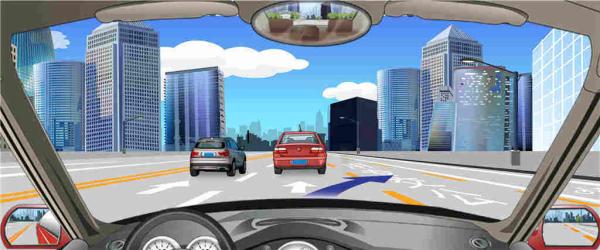
A. Right
B. Wrong
Answer: B
11. When a motor vehicle temporarily stops in fog, which lamp should be turned on?
A. Hazard lamp, clearance lamp and rear position lamp
B. Left-turn indicator, clearance lamp and rear position amp
C. Headlamp, clearance lamp and rear position lamp
D. Reverse lamp, clearance lamp and rear position lamp
Answer: A
12. What should the driver do upon finding a burst rear tire?
A. Adjust by swiftly turning the steering wheel
B. Control the direction while reducing speed slowly
C. Swiftly turn the steering wheel to the opposite direction
D. Swiftly take braking measures
Answer: B
13. After setting off from the roadside, motor vehicle drivers should speed up as soon as possible and make a sharp left-turn in order to drive into the normal lane.
A. Right
B. Wrong
Answer: B
14. When a motor vehicle reaches a muddy or burst-and-muddy section of the road, the driver should stop, observe and select a level and solid section or a section with vehicle tracks.
A. Right
B. Wrong
Answer: A
15. As shown in this picture, the intersection guide line is designed to help drivers make turns.

A. Right
B. Wrong
Answer: A
16. What should the driver do to ensure the motor vehicle passes the level crossing safely?
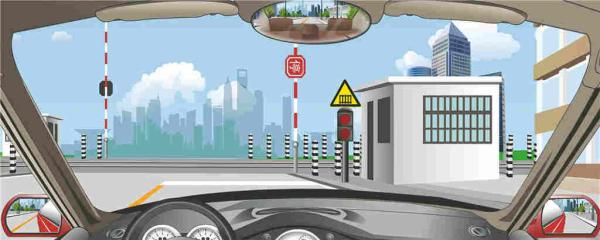
A. Change to neutral gear and slide over
B. Switch to low gear after entering the level crossing
C. Decelerate and lower the gear before entering the level crossing
D. Stop and observe inside the level crossing
Answer: C
17. When a gas tanker is leaking heavily, which of the following measures is wrong?
A. Cut off the power
B. Wear gas mask and protect gloves
C. Turn off the valve to stop leaking
D. Evacuate people to the leeward side
Answer: D
18. Under such circumstances, the motor vehicle driver should voluntarily reduce speed and let the vehicle behind overtake.
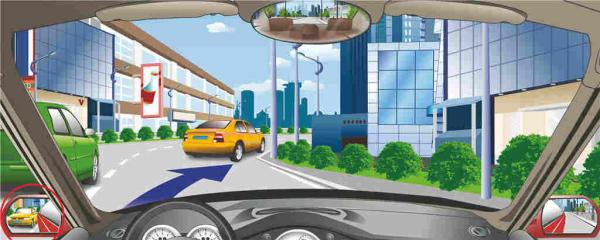
A. Right
B. Wrong
Answer: A
19. Under such circumstances, the driver should stop the vehicle and yield to pedestrians.

A. Right
B. Wrong
Answer: A
20. It is an illegal act for the driver to make calls while driving.
A. Right
B. Wrong
Answer: A