

1. What should the driver do when the motor vehicle counters this situation?
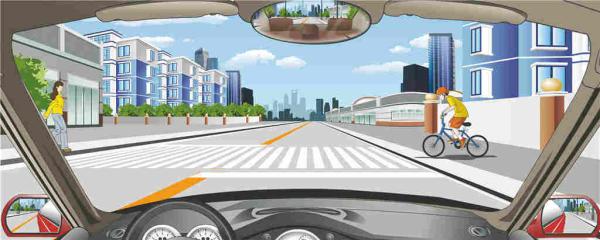
A. Sound the horn continuously to warn
B. Speed up and bypass from the front
C. Slow down when encountering any risks
D. Slow down voluntarily and yield
Answer: D
2. When a tire bursts suddenly on the road, the driver should refrain from violently depressing the brake pedal in panic. Instead, he should try his best to change to a low gear and use engine braking to reduce the speed of the vehicle.
A. Right
B. Wrong
Answer: A
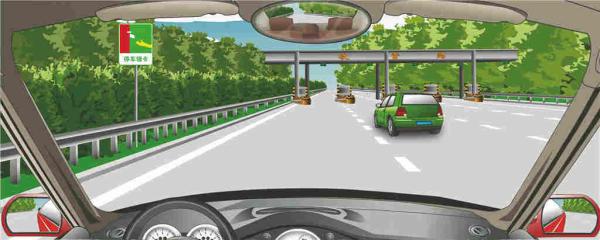
3. The sign on the left indicates that drivers should stop to take a pass card at the toll station ahead.
A. Right
B. Wrong
Answer: A
4. What should the driver do to follow other motor vehicles on a mountain road?
A. Closely follow the vehicle in front
B. Increase the safety distance
C. Reduce the vertical distance between vehicles
D. Try to overtake the vehicle in front as soon as possible
Answer: B
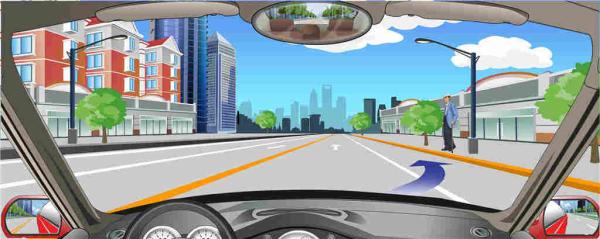
5. The solid yellow line on the curb indicates that temporary stopping or parking is allowed at the roadside.
A. Right
B. Wrong
Answer: B
6. What should the driver do in this condition?

A. Go through normally on the right side
B. Sound the horn and speed up to go through the tunnel
C. Stop and yield to the oncoming vehicle
D. Turn on the headlamp to warn the oncoming vehicle to yield
Answer: C
7. After a motor vehicle falls into water, the driver won?ˉt be able to open the side doors or windows to escape until water nearly fills up the compartment.
A. Right
B. Wrong
Answer: A
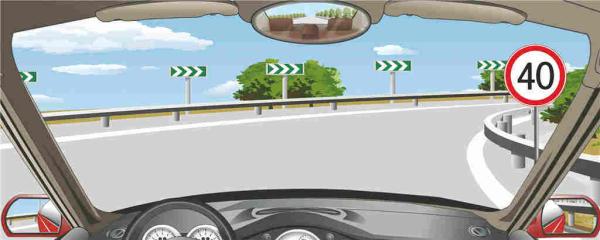
8. The driver should speed up to 40 kilometers per hour when he sees this traffic sign.
A. Right
B. Wrong
Answer: B
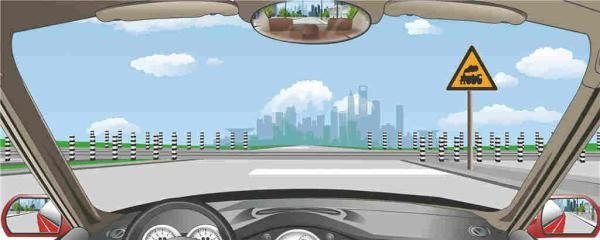
9. A motor vehicle should not pass the level crossing rapidly in this situation.
A. Right
B. Wrong
Answer: A
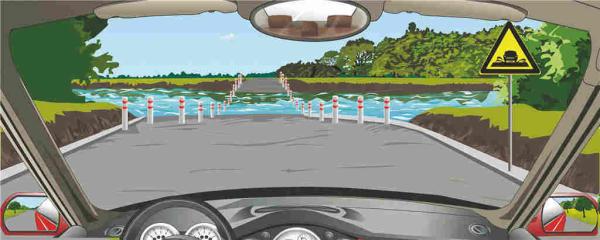
10. The sign on the right warns of a wet road surface ahead.
A. Right
B. Wrong
Answer: A
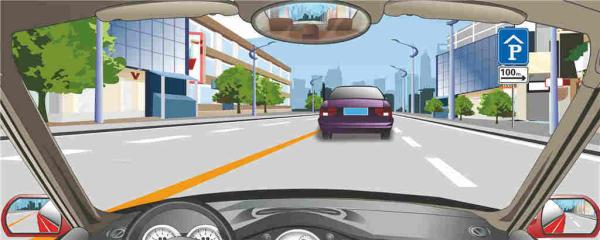
11. The sign in front indicates an indoor parking ground 100 meters ahead.
A. Right
B. Wrong
Answer: A
12. When driving in a heavy rain, drivers should contro their speed to prevent their vehicles from sliding.
A. Right
B. Wrong
Answer: A
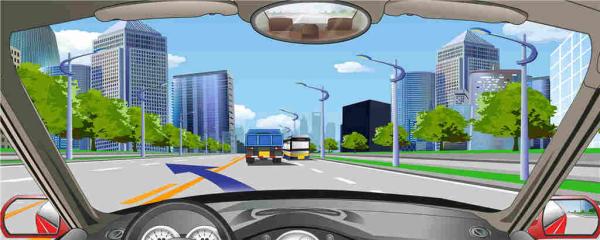
13. Drivers may cross these central solid and broken yellow lines when overtaking.
A. Right
B. Wrong
Answer: B
14. When a motor vehicle turns left at this intersection the driver should change to the left lane in advance by the guide arrow.
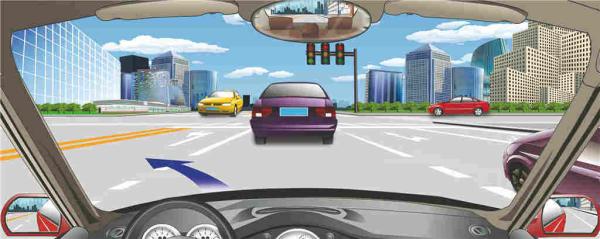
A. Right
B. Wrong
Answer: A
15. When carrying a wounded person in a coma, rescue personnel should try to let the unconscious person remain in the supine position.
A. Right
B. Wrong
Answer: B
16. The sign on the right warns of a wildlife protection area ahead.
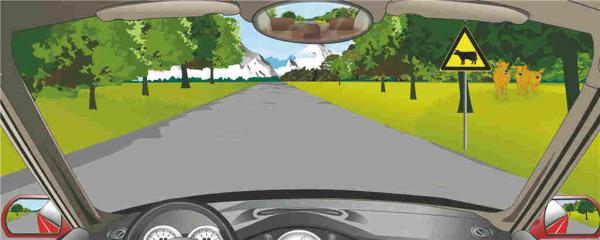
A. Right
B. Wrong
Answer: B
17. What should be done to keep safe when a motor vehicle driver is overtaking in this condition?
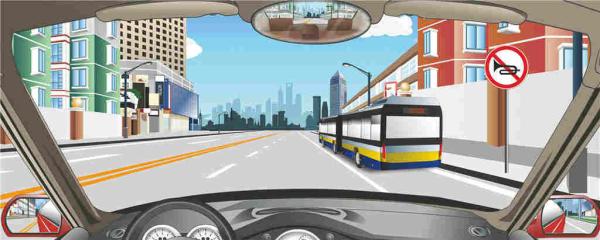
A. Reducing speed and keeping a safe distance
B. Continuously sounding the horn to indicate the vehicle in front
C. Accelerating to pass while keeping a certain distance
D. Overtaking by occupying the opposite lane
Answer: A
18. When a motor vehicle encounters an accident on an expressway, the driver and all passengers should not get off the vehicle and walk around at will.
A. Right
B. Wrong
Answer: B
19. Motor vehicles on this kind of road are only allowed to overtake the vehicle in front from left.
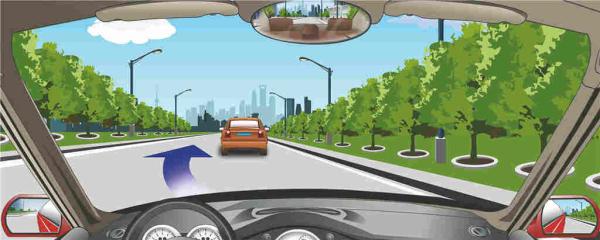
A. Right
B. Wrong
Answer: A
20. The diamond-shaped sign on the road indicates a crosswalk on the road ahead.
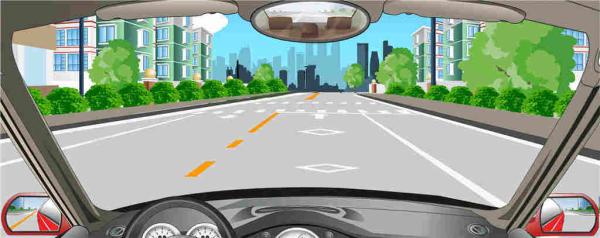
A. Right
B. Wrong
Answer: A