

1. What is the main impact of foggy weather on safe driving?
A. Easy to slide sideways
B. Low visibility
C. Increase the resistance
D. Widen the field of vision
Answer: B
2. When encountering a school bus which stops at the right roadside and students are embarking or disembarking, and there are two motor vehicle lanes in each direction, motor vehicle drivers on the left lane behind the bus should stop and wait.
A. Right
B. Wrong
Answer: A
3. After a tire bursts and before the driver can control the speed of the vehicle, he should not risk using the foot brake to stop the vehicle. Otherwise, a horizontal swing of the vehicle can cause greater danger.
A. Right
B. Wrong
Answer: A
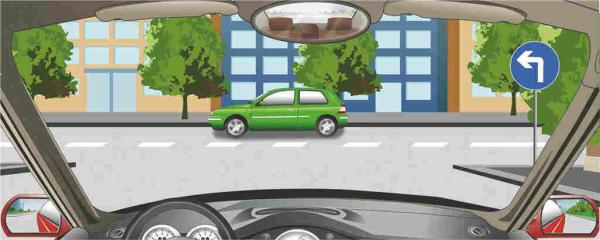
4. The sign on the right indicates left turn only at the intersection ahead.
A. Right
B. Wrong
Answer: A
5. At 13: 10 pm, Mr. Luo set out in his medium bus from 0 km mark on the highway, and by 14: 10 had passed the 125km mark by 200 meters, he caused a rear-end collision with a motor vehicle that ran into the side slope on the southwest side, killing 11 people and injuring 2. Which of the following law-breaking acts did Mr. Luo commit?
A. Speeding
B. Driving not in accordance with traffic markings
C. Exceeding carrying capacity
D. Fatigued driving
Answer: A
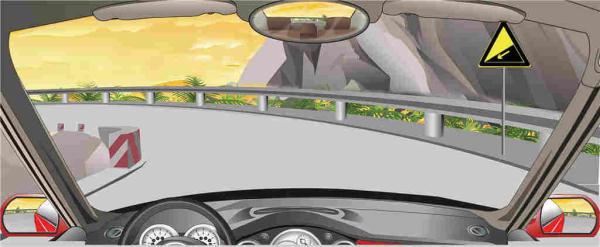
6. The sign on the right warns of a continuous downhill section ahead.
A. Right
B. Wrong
Answer: B
7. When a motor vehicle leaves an expressway, which of the following lamp should be turned on?
A. The left-turn indicator
B. The right-turn indicator
C. The hazard warning lamp
D. The headlamp
Answer: B
8. If a motor vehicle misses an exit on the expressway, the driver may reverse along the road shoulder.
A. Right
B. Wrong
Answer: B
9. When the vehicle engine catches fire, what should the driver do first?
A. Turn off the engine as soon as possible
B. Extinguish the fire with water
C. Open the hood to extinguish the fire
D. Extinguish the fire from the leeward direction
Answer: A
10. When driving on an expressway in rain, the driver should slow down to avoid steering failure arising from water slide
A. Right
B. Wrong
Answer: A
11. The sign on the right warns of a ferry crossing 100 meters after turning right at the intersection ahead.

A. Right
B. Wrong
Answer: A
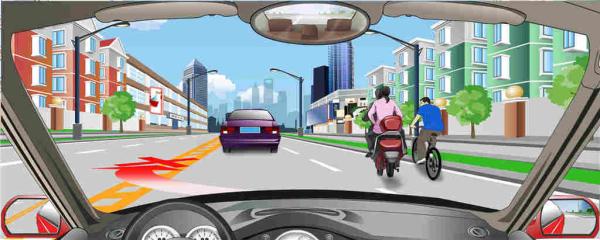
12. Drivers are not allowed to drive on or across these filled-in slanted yellow lines.
A. Right
B. Wrong
Answer: A
13. What influence does smoking have upon driving?
A. Harmful for safe driving
B. Increase concentration
C. Help relaxation
D. No effect on driving
Answer: A
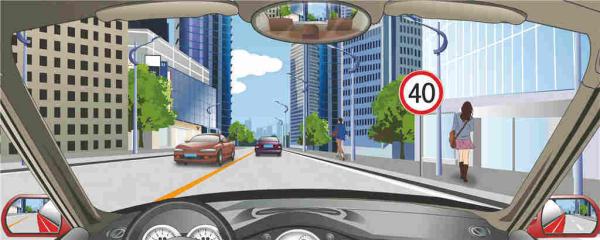
14. The sign on the right indicates that the speed limit of 40km/hour is lifted on the road ahead.
A. Right
B. Wrong
Answer: B
15. When there is no bandage for rescuing a wounded person, towels, handkerchiefs, bed sheets and stockings can all be used for dressing.
A. Right
B. Wrong
Answer: A
16. The sign on the left indicates that drivers should stop to take a pass card at the toll station ahead.
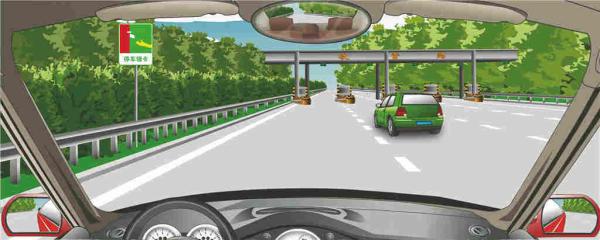
A. Right
B. Wrong
Answer: A
17. Which one of the following is the safest way to pass the oncoming vehicle on this road?
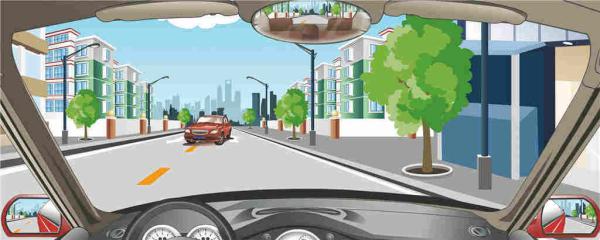
A. Driving along the central line
B. Driving with headlamp on
C. Yielding by the right side of the road
D. Yielding by the left side of the oncoming vehicle
Answer: C
18. When steering failure happens to a fast moving motor vehicle, what should the driver do?
A. Apply emergency braking
B. Immediately change to a low gear
C. Reasonably use the driving brake and the stopping brake and refrain from applying emergency braking
D. Turn on the hazard lamps
Answer: BCD
19. How many kinds of law-breaking acts are displayed in flash 5?
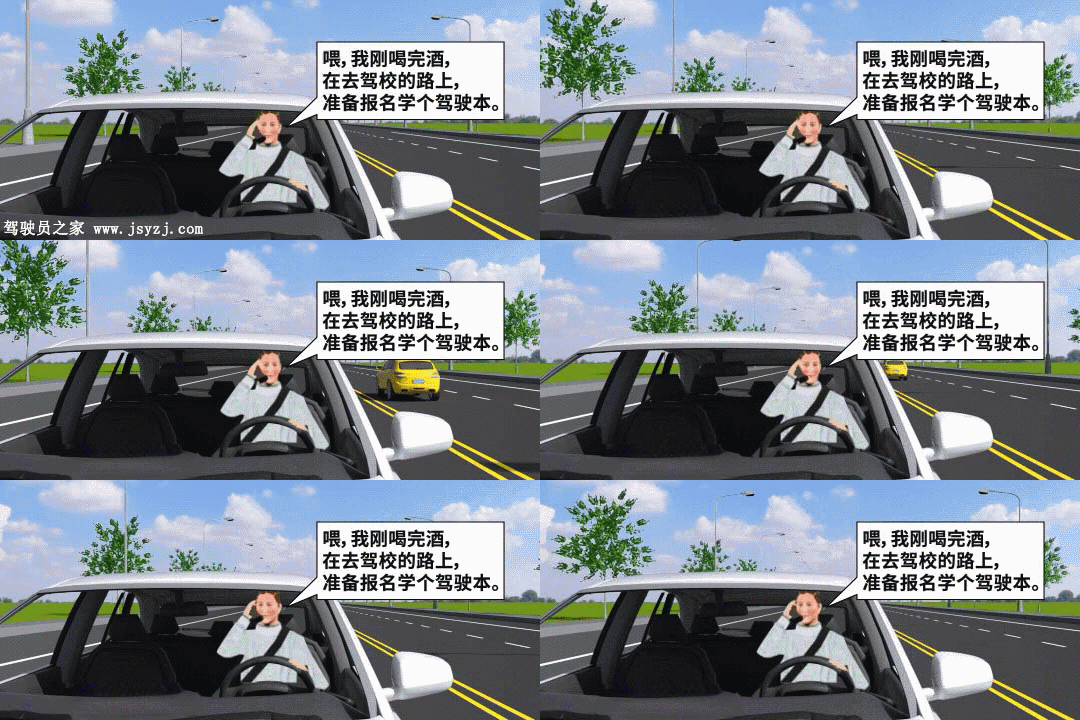
A. One
B. Two
C. Three
D. Four
Answer: C
20. If a motor vehicle experiences a water sliding phenomenon when running on an expressway in rain, what should the driver do?
A. Slow down by suddenly depressing the brake pedal
B. Slow down by slowly releasing the accelerator pedal
C. Turn the steering wheel immediately to adjust the direction
D. Speed up to increase the displacement of the wheels
Answer: B