

1. This sign warns to bypass from either side to avoid roadblock.

A. Right
B. Wrong
Answer: A
2. Under such circumstances, what should be done by motor vehicle drivers in order to yield to the pedestrians politely?
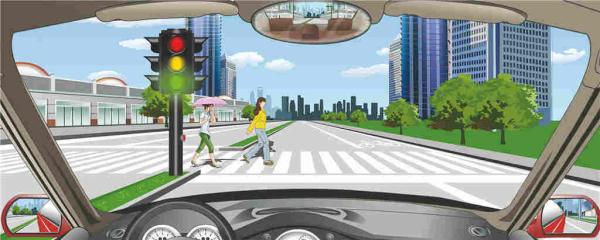
A. Set off after pedestrians pass
B. Set off and bypass in front of the pedestrians
C. Sound the horn to warn the pedestrians to yield
D. Set off and approach the pedestrians slowly
Answer: A
3. The sign in front indicates a one-kilometer distance from the next left exit.
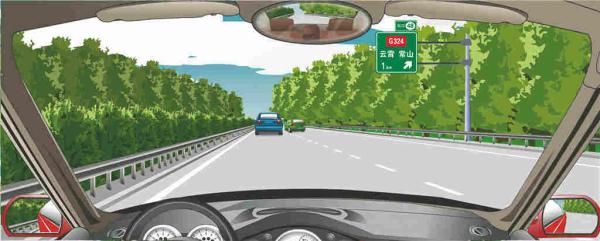
A. Right
B. Wrong
Answer: B
4. The sign on the right indicates a T-shaped intersection head.
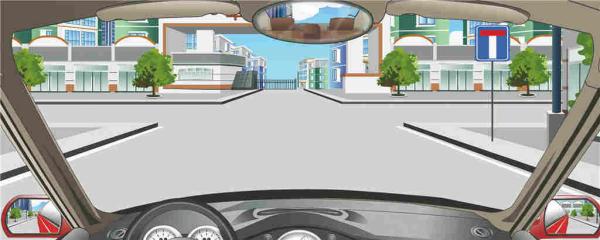
A. Right
B. Wrong
Answer: B
5. Which one of the following is a safe way for motor vehicles to pass an intersection marked with this sign?
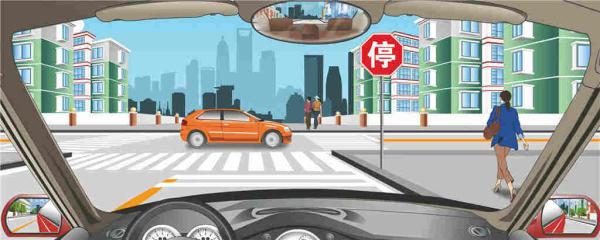
A. Stopping and observing the traffic situation around the intersection
B. Approaching the intersection by speeding up
C. Approaching the intersection at a reduced speed
D. Observing the traffic situation on the left rear side
Answer: A
6. The sign in front indicates that the highway entry is on the right side of the road.
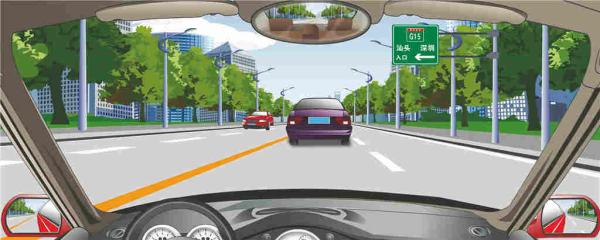
A. Right
B. Wrong
Answer: B
7. When overtaking on a rainy day, drivers should turn on headlamps and sound a long horn.
A. Right
B. Wrong
Answer: B
8. When a motor vehicle passes over an inundated road the driver should change to a low gear and pass at a constant speed.
A. Right
B. Wrong
Answer: A
9. When the vehicle engine catches fire, what should the driver do first?
A. Turn off the engine as soon as possible
B. Extinguish the fire with water
C. Open the hood to extinguish the fire
D. Extinguish the fire from the leeward direction
Answer: A
10. What should the driver do to ensure the motor vehicle passes the level crossing safely?
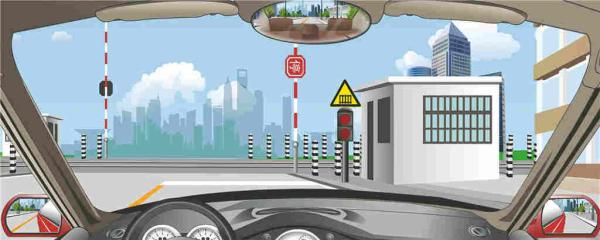
A. Change to neutral gear and slide over
B. Switch to low gear after entering the level crossing
C. Decelerate and lower the gear before entering the level crossing
D. Stop and observe inside the level crossing
Answer: C
11. When a tire suddenly bursts on the road, the driver should violently depress the brake pedal to reduce speed and stop the vehicle.
A. Right
B. Wrong
Answer: B
12. A motor vehicle should not obstruct other vehicles when it enters the driving lane from an acceleration lane.
A. Right
B. Wrong
Answer: A
13. The sign on the right indicates that turning right is not permitted at the intersection ahead.

A. Right
B. Wrong
Answer: A
14. Having driven his vehicle at 110km/hour on an urban road, Mr. Lin is trying to leave the scene after a rear-end collision but is held back by bystanders. The alcohol concentration in his blood, tested in an alcohol test by the traffic police, is 135.8mg per hundred milliliters. Which of the following law-breaking acts did Mr. Lin commit?
A. Drunk driving
B. Speeding
C. Fatigued driving
D. Hit-and-run driving
Answer: ABD
15. The driver should pay attention to the left side when the motor vehicle passes this intersection.
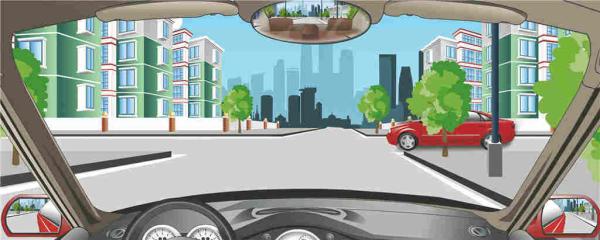
A. Right
B. Wrong
Answer: B
16. On a mountain road, what should the driver do in this situation?
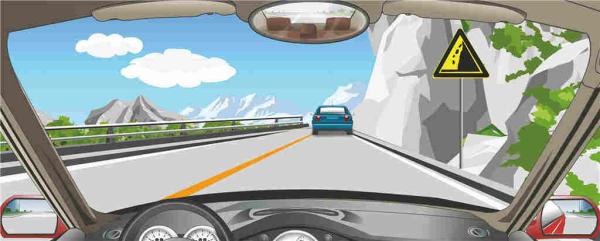
A. Drive on the left and speed up to bypass
B. Stop to observe and pass slowly
C. Observe closely and pass as soon as possible
D. Sound the horn several times and pass slowly
Answer: C
17. What should the driver do when he encounters an oncoming ambulance in the same lane?
A. Keep to the side and reduce speed or stop to yield
B. Drive ahead by occupying another lane
C. Yield by speeding up and changing lanes
D. Drive ahead in the original lane
Answer: A
18. When approaching motor vehicles ahead running at a normal speed on the highway, drivers behind may find a chance and weave through them swiftly.
A. Right
B. Wrong
Answer: B
19. Which one of the following statements is the safest measure for a motor vehicle driver to take on this kind of road?
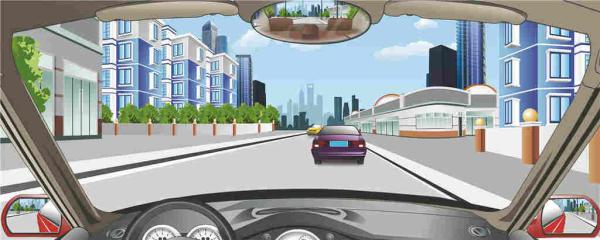
A. Accelerate to overtake the vehicle in front as soon as possible
B. Sound the horn to warn the vehicle in front to yield
C. Follow the vehicle in front and keep a certain distance
D. Overtake the vehicle in front from its righthand
Answer: C
20. Mr. Yang drove an adapted minibus (capacity 9 people and carrying 64 passengers, including 62 kindergarten pupils). When driving in Ma Caogou Village of Yu Linzi County, the bus used the lane for oncoming traffic and had a head-on colision with a heavy dump truck. As a result of this accident, 22 people were killed and 44 injured. What are the main illegal acts in this case?
A. The truck exceeded the speed limit
B. Illegal adaptation of a motor vehicle
C. The minibus carried more passengers than capacity
D. Driving in the opposite direction lane
Answer: BCD