

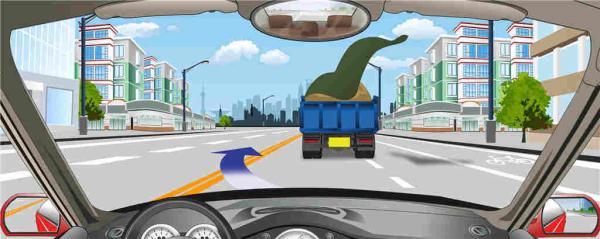
1. Drivers may temporarily cross these central solid double yellow lines when overtaking.
A. Right
B. Wrong
Answer: B
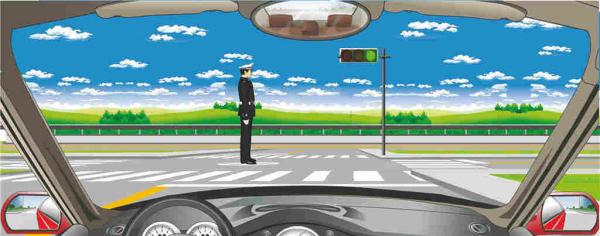
2. Drivers may go ahead when traffic polices posture is like this.
A. Right
B. Wrong
Answer: A
3. When a motor vehicle falls into water and the side door cannot be opened, which of the following methods is correct for self-rescue?
A. Smash the window glass
B. Close the windows
C. Make calls for help
D. Try to open the door with a tool
Answer: A
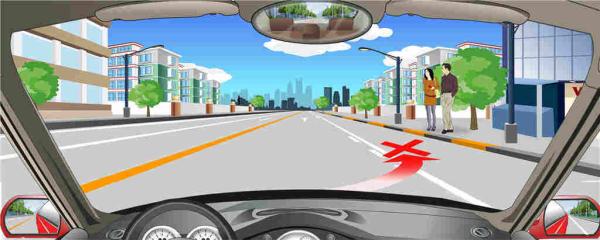
4. The yellow broken line on the curb indicates that vehicles are not allowed to stop and let passengers embark or disembark or load and unload freight at the roadside.
A. Right
B. Wrong
Answer: B
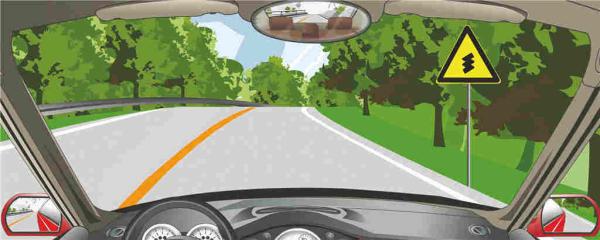
5. The sign on the right warns of right-hand S-shaped bend ahead.
A. Right
B. Wrong
Answer: B
6. When a motor vehicle catches fire, the driver should swiftly turn off the engine and open the hood to extinguish the fire.
A. Right
B. Wrong
Answer: B
7. When parking temporarily in this situation, motor vehicle drivers are allowed to turn the steering wheel left to avoid sliding.

A. Right
B. Wrong
Answer: A
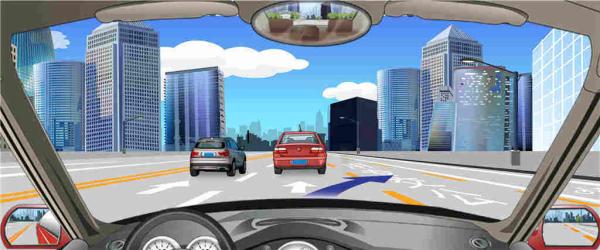
8. The road marking on the right lane indicates that drivers may temporarily borrow the special lane for buses.
A. Right
B. Wrong
Answer: B
9. When a motor vehicle catches fire, the driver should manage to park the vehicle in an open place far away from urban areas, buildings, trees, other motor vehicles and flammable materials.
A. Right
B. Wrong
Answer: A
10. When this signal is constantly flashing, how should a driver react?
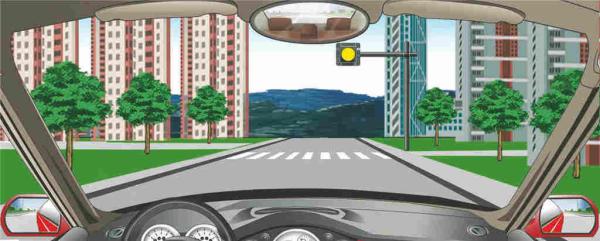
A. Speed up as soon as possible
B. Pull over and wait
C. Observe the traffic situation around to make sure of safe driving
D. Refrain from passing
Answer: C
11. When a motor vehicle breaks down and has to be stopped on the highway, what should the driver do?
A. Set up a breakdown warning sign 150 meters behind the vehicle
B. Set up a breakdown warning sign 100 meters behind the vehicle
C. If it happens at night, turn on the clearance lamp and rear position lamp
D. Turn on the hazard lamps
Answer: ACD
12. When a bus encounters an unexpected situation or an accident, the driver should do his best to minimize the loss and should never cause a secondary accident or even greater loss for the sake of avoiding danger.
A. Right
B. Wrong
Answer: A
13. When a motor vehicle deviates from the normal direction due to steering failure, what should the driver do?
A. Immediately steer and adjust
B. Reduce speed and stop the vehicle as early as possible
C. Steer to the side where there is no obstacle to evade
D. Steer to the side where there is an obstacle to evade
Answer: B
14. When encountering a school bus which stops at the right roadside and students are embarking or disembarking, and there are three motor vehicle lanes in each direction, motor vehicle drivers on the left lane behind the bus should stop and wait.
A. Right
B. Wrong
Answer: B
15. Under such circumstances, what should motor vehicle drivers do?
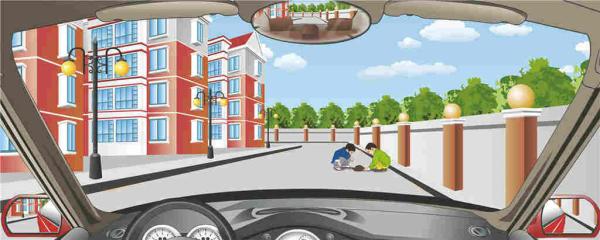
A. Continuously sound the horn
B. Pass quickly
C. Pass at a lower speed
D. Bypass from either side
Answer: C
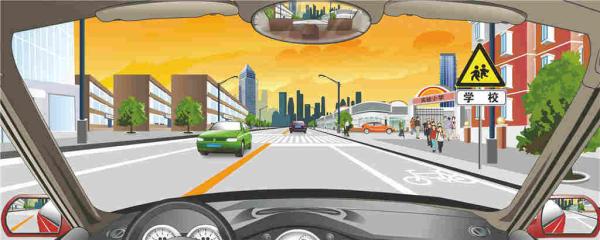
16. When encountering this situation at the gate of a school, the driver should prepare to stop.
A. Right
B. Wrong
Answer: A
17. Once inflammable gas causes a fire disaster, it should be put out with water in good time.
A. Right
B. Wrong
Answer: B
18. When encountering such a situation, the motor vehicle driver should change to the left lane rapidly.
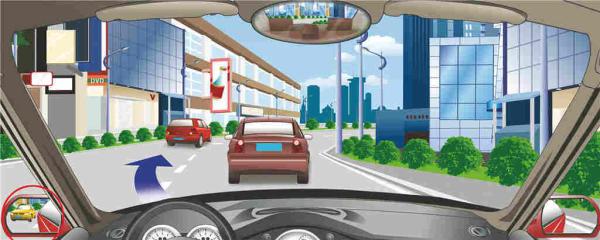
A. Right
B. Wrong
Answer: B
19. What kind of harmful effect will be brought about by continuously using the foot brake on a long downhill road?
A. Shorten the engine?ˉs service life
B. Make the driver feel tired
C. Easily cause the vehicle to overturn
D. Reduce the braking efficiency
Answer: D
20. The sign in front is an advance announcement of the directions led by the interchange.
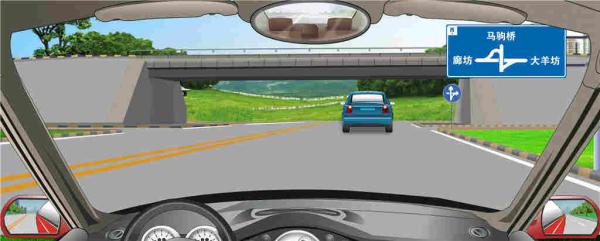
A. Right
B. Wrong
Answer: A